Snowboarding feels like a natural part of winter in the mountains today.
A board, bindings, boots, a bright jacket, goggles, snow and a mountain slope - for millions of people around the world, this has become a familiar image of winter recreation.
But the history of snowboarding reveals just how young the sport actually is.
Skiing has a history stretching back thousands of years. Snowboarding in its modern form developed largely during the second half of the 20th century.
And interestingly, it did not originate within traditional skiing.
Its roots can be found in surfing, skateboarding and the simple desire to slide sideways across snow.
Within just a few decades, snowboarding evolved from homemade boards and a winter pastime into an Olympic sport, a professional competition scene, a huge equipment industry and a distinctive cultural movement.
Before Snowboarding: People Had Already Tried Riding Boards on Snow
It would be misleading to say that someone simply invented the snowboard on a single day.
Experiments with boards and board-like constructions for sliding over snow appeared well before modern snowboarding.
One of the earliest documented examples dates back to 1917. American Vern Wicklund experimented with a modified sled-like construction as a child and later patented his idea.
However, these early experiments remained isolated.
The real development of modern snowboarding began much later.
And one of the most important dates in that story is 1965.

The Snurfer - The Board That Started the Modern Story
In 1965, American inventor Sherman Poppen wanted to create something for his children to enjoy during the winter.
He took two children's skis, joined them together and attached a rope to the front so the rider could hold it and steer.
The result was the Snurfer.
The name was a combination of:
snow + surfer.
The idea was simple - bring the feeling of surfing to snow.
Poppen was not trying to create a professional sport. At first, the Snurfer was simply a new kind of winter toy.
But it became remarkably successful.
In 1966, Poppen licensed the invention to Brunswick, which began manufacturing it. Snurfing competitions followed, and the design became an important predecessor of the modern snowboard.
This is where the story of snowboarding as a distinct phenomenon really begins.
Why Was the Snurfer Not Yet a Modern Snowboard?
At first glance, the Snurfer looked surprisingly similar to a snowboard.
But there was one major difference.
It did not have proper bindings to secure the rider's feet.
The rider stood on the board and used the rope attached to the front for control.
This significantly limited what could be done.
There was no way to properly lock the feet to the board, perform modern maneuvers or use the kind of control that today's snowboarders take for granted.
And bindings would eventually become one of the most important elements in the evolution of snowboarding.

The 1970s: Snowboarding Begins to Take Shape
During the 1970s, a new generation of riders began doing more than simply riding Snurfers.
They started changing the concept of the board itself.
Among the most important names of this period were Dimitrije Milovich, Tom Sims and Jake Burton Carpenter.
Interestingly, each approached snowboarding from a slightly different direction.
Dimitrije Milovich - From Surfing to Snow
Milovich was a surfer who brought ideas from surfing into the mountains.
In 1972, he founded Winterstick.
His boards were designed not only for flat or groomed slopes but also for deep snow and more challenging terrain.
Important technological developments appeared in these designs, including laminated fiberglass constructions, steel edges and foot bindings.
This represented a major step away from the Snurfer and toward what we now recognize as a snowboard.
Tom Sims - Skateboarding Comes to Snow
Tom Sims was a professional skateboarder.
His approach was therefore different.
For Sims, snowboarding was a natural extension of skateboarding - a board that could be used for tricks and to interact with the terrain.
In 1976, Sims founded SIMS Snowboards.
The company became one of the important centers of freestyle snowboarding development.
Jake Burton - From Snurfer to Modern Snowboarding
Jake Burton Carpenter started with the Snurfer.
But he was interested in making the board more controllable.
One of the key areas of development was the binding system.
Burton helped transform the Snurfer from a simple sliding board into a more controlled sporting tool.
In 1977, he founded Burton Snowboards.
Interestingly, snowboarding was far from mainstream in its early years. Many ski resorts were reluctant to allow snowboarders onto their slopes and lifts.
But that would gradually change.
Bindings Changed Everything
Today, it seems obvious that the rider's feet should be attached to the board.
For early snowboarders, however, this was one of the central technological challenges.
Once the rider's feet could be secured to the board, control improved dramatically.
This changed almost everything:
-
turns became more precise;
-
speed control improved;
-
more advanced tricks became possible;
-
riders could make better use of the edges;
-
boards became more versatile across different snow conditions and terrain.
The snowboard was no longer simply a board for sliding.
It was becoming specialized sporting equipment.
From a Simple Board to a Complex Construction
Early snowboards were relatively simple.
A modern snowboard is a sophisticated layered construction in which each component has a specific role.
A typical snowboard contains a wooden core.
Around it are various composite materials, including fiberglass.
The bottom is the sliding base.
Steel edges run along the sides.
The top layer carries the graphics and protects the structure.
All of these elements work together.
The wood core provides the structural foundation and contributes to the board's flex.
Fiberglass affects stiffness and handling.
The steel edges allow the rider to grip the snow during turns.
The base provides the sliding surface.
As technology advanced, manufacturers experimented with different types of wood, composite materials, geometries and construction techniques.
The result is that there is no single "standard" snowboard today.
Camber, Rocker and Snowboard Geometry
One of the most visible differences between modern snowboards is their profile.
Camber
Traditional camber has an elevated central section with contact points closer to the nose and tail.
This profile provides strong edge control and precise energy transfer.
Rocker
Rocker works in the opposite direction - the center sits closer to the snow while the ends rise upward.
This can be particularly useful in deep powder.
Hybrid Profiles
Modern manufacturers often combine different profiles.
For example, a snowboard may use camber under the rider's feet and rocker toward the nose.
The goal is to combine control, stability and versatility.
This is why choosing a modern snowboard is not simply a matter of selecting the right length.
Riders also consider:
-
riding style;
-
body weight and height;
-
stiffness;
-
width;
-
shape;
-
profile;
-
snow conditions;
-
intended use.
Why Are There So Many Different Snowboards?
Because snowboarding itself has developed into many different disciplines and riding styles.
A park snowboard does not need to behave like a board designed for high-speed riding.
A powder board has completely different requirements from a board designed for groomed slopes.
And a splitboard is designed for an entirely different type of adventure.
Major categories include:
All-Mountain
Versatile boards designed for a variety of conditions.
Freestyle
Tricks, jumps, terrain parks, rails and other features.
Freeride
Riding away from groomed slopes and using natural terrain.
Powder
Boards designed specifically for deep, soft snow.
Racing
Stiff boards designed for speed and competitive racing.
Splitboarding
A snowboard that can be separated into two parts for uphill travel and then reassembled for the descent.
And splitboarding demonstrates just how far snowboarding has evolved from its original concept.
Splitboarding - When a Snowboard Becomes Skis
The idea behind a splitboard seems almost paradoxical.
The board separates lengthwise into two parts.
During the ascent, the two halves function much like skis.
For the descent, they are connected again and become a snowboard.
This made snowboarding much more suitable for backcountry travel and ski-touring-style approaches.
It also brought snowboarding closer to mountaineering and mountain expeditions.
Today, a snowboard does not necessarily mean riding a resort.
For some riders, it is a tool for traveling deep into the mountains and exploring terrain far beyond groomed slopes.
Snowboarding as a Culture
But the history of snowboarding is not just a story about technology.
Few modern winter sports have created such a recognizable subculture.
From the beginning, snowboarding was closely connected with surfing and skateboarding.
Later, punk, hip-hop, alternative music, street fashion and the visual culture of mountain resorts became part of the scene.
Snowboarders developed their own language, clothing, music and aesthetic.
And that is why snowboarding became something more than a sport.
It became a form of self-expression.
Snowboard Graphics - When Equipment Becomes Art
One of the most interesting parts of snowboard culture is the design of the boards themselves.
Looking through snowboard history reveals an enormous evolution in graphics.
From simple wooden surfaces and restrained logos to:
-
colorful illustrations;
-
graffiti;
-
street art;
-
abstract graphics;
-
photography;
-
minimalism;
-
complex original artwork;
-
collaborations with artists.
The snowboard effectively became a canvas.
And that makes sense.
If you spend hours riding a particular board, it becomes part of your identity.
The graphics on a snowboard can say almost as much about its rider as their clothing.
Snowboard Clothing
The same thing happened with clothing.
Snowboard style gradually moved far beyond the mountains.
Baggy pants, oversized jackets, bright colors, technical materials, goggles and distinctive silhouettes became part of streetwear.
This influence was particularly visible during the 1990s and 2000s.
Today, the boundary between technical snowboard clothing and everyday fashion is much less clear.
Snowboard culture has influenced winter clothing far beyond the slopes themselves.
From Subculture to Professional Sport
At the same time, snowboarding gradually became an organized sport.
Competitions, federations and professional teams began to appear.
In 1979, the first World Snurfing Championship was held in Grand Rapids, Michigan.
Jake Burton also participated, riding a board equipped with his own binding system.
During the 1980s and 1990s, snowboarding rapidly expanded beyond its original subculture.
International competitions and professional riders emerged.
Then came the event that firmly established snowboarding as a major international sport.
Snowboarding at the Olympics
In 1998, at Nagano, snowboarding made its Olympic debut.
It was a remarkably symbolic moment.
A sport that had developed as a youthful alternative to traditional skiing had reached the biggest stage in international sport.
The Olympic debut helped establish snowboarding as a truly global competitive discipline.
What Are the Main Snowboarding Disciplines?
Today, snowboarding includes a wide range of disciplines.
Halfpipe
Riders move through a large halfpipe structure, launching from its walls and performing aerial tricks.
Judges evaluate factors such as difficulty, height, technique and execution.
Slopestyle
The course contains jumps, rails, boxes and other features.
Riders move through the course while performing a sequence of tricks.
Big Air
The athlete approaches a single large jump and performs a major aerial trick.
Big Air is one of the most spectacular forms of competitive snowboarding.
Snowboard Cross
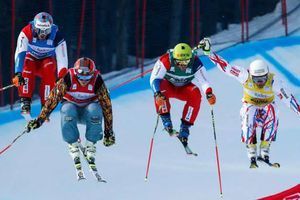
Several riders race simultaneously on the same course, which includes turns, jumps, rollers and other obstacles.
Here, performing tricks is not enough.
You have to be faster than the other riders.
Parallel Giant Slalom
Two riders compete simultaneously on parallel courses, racing against each other.
It represents one of the most speed-focused forms of competitive snowboarding.
Together, these disciplines demonstrate just how broad modern snowboarding has become.
From Resorts to High Mountains
Snowboarding did not remain confined to groomed resort slopes.
Freeride and backcountry riding developed their own culture.
Here, the environment itself becomes the main feature:
slopes, couloirs, ridges, forests and large fields of snow.
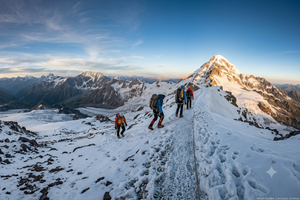
For more demanding terrain, however, snowboarding requires much more than riding skills.
Avalanche awareness, navigation, terrain assessment and mountaineering knowledge can all become essential.
This is where snowboarding increasingly intersects with ski mountaineering and alpine climbing.
The snowboard becomes one of several tools used to travel through complex mountain terrain.
The Snowboard as a Symbol
Perhaps this is why snowboarding now means much more to many people than a piece of sporting equipment.
It can represent a first season in the mountains.
A particular slope.
Friends.
A journey.
Freedom of movement.
Or that moment when you leave the lift, push off and begin the descent.
The symbolism of snowboarding has long moved beyond the board itself.
It appears in clothing, posters, tattoos, accessories and jewelry.
For example, the Snowboard silver pendant by Travel Jewelry takes the recognizable silhouette of a snowboard and turns it into a small piece of jewelry.
Not something for riding.
Something for those moments when you want to carry a little piece of the mountains with you even when the season is over.
What Is Snowboarding Today?
Today, snowboarding is many different things at once.
It is:
-
an Olympic sport;
-
professional competition;
-
freeride;
-
backcountry exploration;
-
part of mountain culture;
-
youth culture;
-
design;
-
fashion;
-
a technology-driven industry;
-
a form of self-expression.
And perhaps this diversity is exactly what explains its lasting appeal.
For some people, it is about the terrain park and huge jumps.
For others, it is speed on a groomed slope.
For someone else, it is deep powder.
For another rider, it is a long backcountry journey on a splitboard.
And for some, one winter day is enough to understand why this board has become a symbol of freedom for millions of people.
The history of snowboarding began with a simple idea - to bring the feeling of surfing to snow.
Within a few decades, that idea became an entire world.
From the Snurfer to Olympic medals.
From a simple wooden board to sophisticated composite constructions.
From a small youth subculture to a global culture of sport, design and mountain life.
And despite all the technology, shapes and rules, the essence remains the same.
A board. Snow. A mountain. And the descent.
The History of Skis: Evolution, Types, Technology and Skiing in Sport
What to Gift a Snowboarder: Practical and Meaningful Gift Ideas for Winter Adventure Lovers
The Climbing Carabiner: The Story of One of the Most Important Inventions in Mountaineering