When people first come across the abbreviation UIAA, they may see it in very different places: on climbing equipment, in route grading tables, in materials about mountaineering, rock climbing or ice climbing, and in discussions about equipment safety.
Behind these four letters stands one of the best-known international organizations in the world of mountains.
UIAA stands for the International Climbing and Mountaineering Federation. Founded in 1932, it brings together national mountaineering and climbing federations and organizations from around the world.
But UIAA is about much more than traditional mountaineering. Its activities include safety, education, equipment standards, ethics, mountain protection, youth programs and the development of different mountain activities.
What is UIAA?
The abbreviation UIAA comes from the French name Union Internationale des Associations d'Alpinisme - International Union of Alpinist Associations.
Today, the organization's official English name is International Climbing and Mountaineering Federation.
The main idea behind UIAA is international cooperation in the development of mountaineering and climbing. Individual countries have their own federations, climbing schools, traditions, training systems and approaches to mountain activities. UIAA provides an international platform where these organizations can cooperate, exchange experience and develop common approaches to important issues.
Today, UIAA brings together 99 organizations from 77 countries across six continents. Its work is organized through specialized commissions dealing with areas such as mountaineering, safety, training, medicine, mountain protection, youth and ice climbing.
In other words, UIAA can be seen as a large international network covering many aspects of mountain life - from technical equipment standards to the protection of mountain ecosystems.
The history of UIAA: from Chamonix to an international federation
The history of UIAA began in Chamonix, France, in August 1932.
Representatives of 20 mountaineering organizations from different countries gathered for an international alpine congress. On August 27, 1932, they decided to establish an international federation to deal with issues shared by the mountaineering community.
For its time, this was an ambitious idea. Mountaineering already had a long history, but individual countries and clubs had developed their own traditions, training methods and approaches to climbing.
During its early years, UIAA worked on issues such as mountaineering education, avalanche research, youth programs and mountain protection.
After the Second World War, the organization resumed its activities and gradually expanded its scope. In 1960, UIAA began developing safety standards and testing climbing ropes. This work eventually developed into the modern UIAA Safety Label system.
The 1960s were also important for mountain protection. UIAA became involved in discussions about the impact of infrastructure development on mountain environments.
Another important development was the formalization of the Welzenbach grading system as the UIAA Scale in the 1960s.
Over the following decades, UIAA continued developing equipment standards, training programs, international competitions, mountain protection initiatives and ethical principles.
What does UIAA do today?
Today, UIAA's activities can be divided into several major areas.
Safety
Safety is one of the oldest and most important areas of UIAA's work.
The organization develops international standards for mountaineering and climbing equipment, works with accredited laboratories and regularly reviews its requirements.
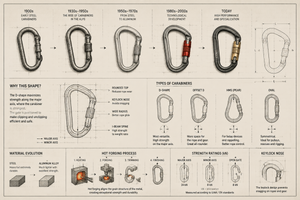
The standards cover equipment such as ropes, carabiners and other connectors, harnesses, helmets, crampons, ice axes, ice and snow anchors, slings, protection devices, pulleys, belay devices and other categories of climbing equipment.
UIAA also examines practical experience and safety-related incidents in order to improve existing standards and develop new ones.
Training
UIAA also works on international approaches to the training of mountain instructors.
One of its main systems is the Mountain Qualification Label, or MQL - an international accreditation system for training programs offered by UIAA member federations.
There is an important distinction here: UIAA does not directly certify individual instructors. Instead, it evaluates and accredits training programs run by member federations when they meet the required international standards. The relevant national federation then provides the qualification to people who successfully complete the program.
The MQL system covers a wide range of mountain activities, including:
-
mountain walking and trekking;
-
winter mountain walking and snowshoeing;
-
mountaineering and alpine climbing;
-
ski mountaineering;
-
sport climbing;
-
rock climbing;
-
ice climbing;
-
canyoning.
This is a good illustration of how broad the modern concept of mountain activity has become.
Medicine
UIAA has a dedicated Medical Commission dealing with health and safety issues related to mountain environments.
Mountains create specific challenges that are not always present in everyday environments: altitude, cold, physical exertion, remoteness and the difficulty of evacuation can all affect medical situations.
Mountain protection
For UIAA, mountains are not simply places for sport.
Its Mountain Protection Commission works on sustainable development in mountain regions, ecosystem protection, the impact of tourism and climate change.
Mountain protection has been part of UIAA's work for decades. In 1982, the organization adopted the Kathmandu Declaration, calling for action against the degradation of mountain environments.
Ethics and culture
UIAA also works with the less tangible side of mountain culture.
This includes honesty in climbing and route reporting, respect for other people, local communities and cultures, responsible behavior in natural environments, and the preservation of mountaineering traditions.
As a result, UIAA is concerned not only with questions such as "How difficult is this route?" or "How strong is this rope?", but also with the broader culture surrounding mountain activities.
The UIAA Scale: how climbing difficulty is graded
One of the best-known concepts associated with UIAA is the UIAA Scale, a system used to describe climbing difficulty.
Its history goes back to the system developed by Austrian mountaineer Willo Welzenbach. UIAA later formalized the system as its own grading scale.
The classic UIAA Scale uses Roman numerals:
I, II, III, IV, V, VI, VII and beyond.
The symbols "+" and "-" can be used for greater precision.
As climbing developed and the level of performance increased, the scale expanded. It remains open-ended, meaning that higher grades can be added as climbing difficulty continues to progress.
However, the UIAA Scale is far from being the only climbing grading system in the world.
Different countries and climbing traditions use different systems. The French system, for example, uses grades such as 5a, 5b, 5c, 6a, 6b and 7a. There are also British, American and other grading systems.
Mountaineering routes can also be described using broader overall difficulty classifications such as F, PD, AD, D, TD and ED.
This is important because a single grade cannot fully describe the character of a mountain route. Length, protection, exposure, rock conditions, weather, altitude and many other factors can influence the actual difficulty of a climb.
UIAA Safety Label: what does the UIAA mark on climbing equipment mean?
Another very visible part of UIAA's work is the UIAA Safety Label.
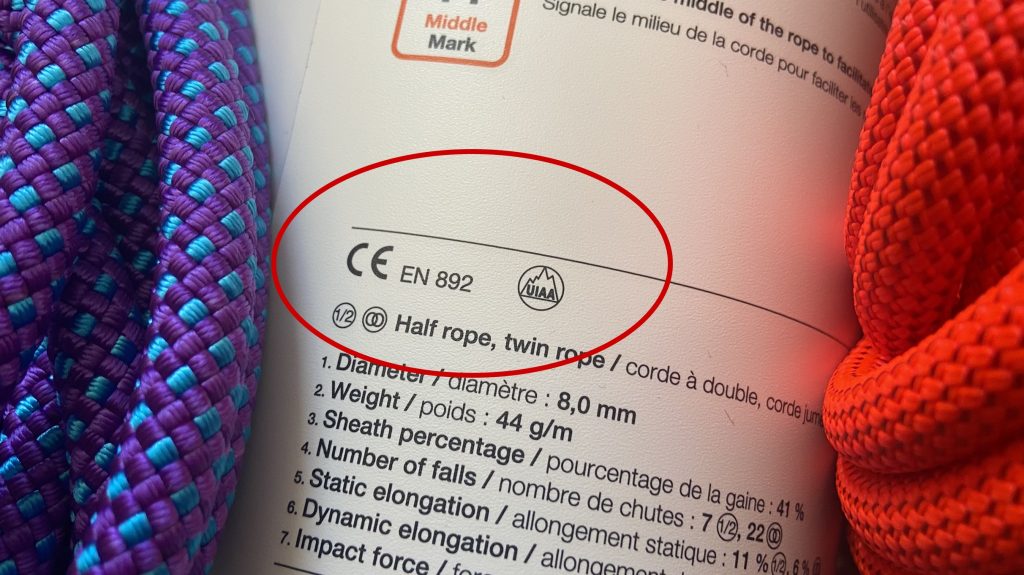
When climbing or mountaineering equipment carries the UIAA Safety Label, the relevant product has been tested by an accredited independent laboratory and found to comply with the requirements of the applicable UIAA safety standard.
This distinction is important.
UIAA does not manufacture ropes, carabiners, helmets or other climbing equipment. Instead, the organization establishes technical requirements and operates a system of independent testing and certification.
As of 2026, UIAA has 26 safety standards, 15 accredited laboratories and more than 2,000 registered Safety Labels covering more than 70 manufacturers.
At the same time, a UIAA Safety Label does not mean that equipment will be safe under every possible circumstance. Laboratory testing cannot reproduce every situation that can occur in real mountains.
A standard is therefore an important part of a safety system, but it does not replace proper equipment use, training and experience.
An interesting fact: there is a "UIAA knot"
UIAA also has an interesting connection with something as basic as a climbing rope.
In climbing and mountaineering, a belay technique is known by several different names, including Munter hitch, Italian hitch and mezzo barcaiolo. In some traditions, it is also referred to as the UIAA knot.
The technique uses a rope and a carabiner to create controlled friction and allow the rope to be managed during belaying.
The history of the name is particularly interesting. Historical UIAA material refers to this technique as the "UIAA knot". At the same time, different climbing traditions developed their own names for it, including Munter hitch and Italian hitch.
There is an important detail here: this should not be confused with an official "UIAA list of approved knots". UIAA itself has explained that it has never established a definitive list of officially approved climbing knots.
The "UIAA knot" is therefore an interesting example of how the name of an international mountaineering organization became part of climbing terminology.
UIAA, IFSC and ISMF: what is the difference?
At this point, it is easy to become confused because several major international organizations operate in the world of climbing and mountain sports.
UIAA, IFSC and ISMF share part of their history, but today they have different areas of responsibility.
UIAA
UIAA - International Climbing and Mountaineering Federation.
Its scope is broader than competitive sport. It works with mountaineering and climbing, safety, equipment standards, training, ethics, mountain protection and other aspects of mountain culture and activity.
IFSC
IFSC - International Federation of Sport Climbing.
Its main focus is sport climbing and international competitions.
Sport climbing historically developed within the UIAA structure. In the 2000s, the competitive side of sport climbing was separated from UIAA, and the independent IFSC was established in 2007.
ISMF
ISMF - International Ski Mountaineering Federation.
It is responsible for ski mountaineering as a competitive sport and for international competitions in this discipline.
This field also has a common history with UIAA. In 2008, the structure responsible for competitive ski mountaineering within UIAA became an independent international federation.
The difference can therefore be simplified as follows:
UIAA - the broader international world of mountaineering, climbing, safety, training and mountain culture.
IFSC - sport climbing and international competitions.
ISMF - ski mountaineering and international competitions.
These organizations are not simply competitors. They have different areas of responsibility and cooperate on issues where their fields overlap.
UIAA and Ukraine
Ukraine is also part of the international UIAA system.
Ukraine is represented in UIAA by the Federation of Mountaineering and Climbing of Ukraine - FAIS. Its English name is Ukrainian Mountaineering and Climbing Federation.
FAIS and Ukrainian Mountaineering and Climbing Federation are therefore two names for the same organization - Ukrainian and English respectively. The domain fais.org.ua is a transliteration of the Ukrainian abbreviation FAIS.
The Ukrainian federation is an active UIAA member, and its membership dates back to 1991.
This connection became particularly important after Russia's full-scale invasion of Ukraine.
In March 2022, UIAA issued a statement supporting the Federation of Mountaineering and Climbing of Ukraine. The organization also suspended the participation of Russian officials in UIAA structures, excluded Russian representatives and athletes from sanctioned UIAA events and cancelled planned ice climbing competitions in Russia.
This episode shows that international federations are not only about competition calendars and technical rules. In critical situations, they can also represent the position of an international sporting and mountaineering community.
What kinds of mountain activities does UIAA cover?
One of the most interesting things about modern UIAA is the breadth of activities within its field.
It is not limited to traditional mountaineering.
The UIAA Mountain Qualification Labels system includes areas such as mountain walking and trekking, winter mountain walking and snowshoeing, sport climbing, rock climbing, ice climbing, canyoning, mountaineering and ski mountaineering.
Each of these activities involves its own skills, techniques and traditions.
This diversity shows how differently people can be connected to mountains. Some are drawn to high peaks and mountaineering, others to rock climbing or ice climbing, while others prefer skiing, snowboarding, trekking or simply travelling through mountain landscapes.
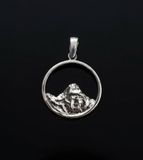
A similar diversity can be found in Travel Jewelry. The brand's collections include jewelry inspired by mountain peaks, mountaineering, climbing, skiing, snowboarding and other activities connected with mountains and travel.
UIAA and the future of the mountains
Today, UIAA's work goes far beyond the traditional idea of an alpine federation.
On one side, it deals with very concrete matters: rope, carabiner, helmet and belay-device standards, instructor training and climbing grades.
On the other, it addresses much broader questions: mountain protection, climate change, ethics, access to mountain regions, culture and the future of mountaineering itself.
This is a natural development for an organization that has existed for more than 90 years.
Mountains change. Equipment, technology, sporting disciplines and the way people travel all continue to evolve. What remains important is the need for cooperation, shared knowledge, safety standards and responsible relationships with the mountains.
That is the central role of UIAA - bringing the international mountain community together and helping it develop while maintaining a connection with tradition, safety and the mountains themselves.
What to Gift a Rock Climber: 20 Thoughtful Gift Ideas They'll Actually Use
The Climbing Carabiner: The Story of One of the Most Important Inventions in Mountaineering
Edelweiss: The Legendary Mountain Flower That Never Fades from Memory
Piolets d'Or - The Golden Ice Axe: History, Awards and Legendary Climbs