Snowboarding has long been more than simply riding a board down a mountain. Today, it is a broad culture with different riding disciplines, specialized equipment, competitive formats, and major international events.
One rider may spend the entire day on groomed slopes, working on precise turns. Another may look for fresh snow away from the marked runs. Some riders are interested in jumps, tricks, and terrain parks, while others focus on speed and racing.
Each of these approaches has its own riding characteristics and equipment.
At the same time, a riding discipline, a snowboard type, and a competitive event are not the same thing. Understanding the difference makes the modern world of snowboarding much easier to navigate.
Snowboarding Disciplines and the Boards Used for Them
The best place to start is with how and where a snowboard is going to be used. The board's shape, flex, profile, and geometry are designed around particular riding conditions.
All-Mountain - Versatile Riding
All-Mountain is one of the most versatile approaches to snowboarding. It involves riding on different types of terrain - groomed slopes, light powder, natural features, and sometimes terrain-park elements.
All-Mountain boards are designed to balance stability, maneuverability, speed, and versatility.
For riders who do not want to limit themselves to a single discipline, this is one of the most practical choices.
Freeride - Riding Beyond the Groomed Slopes
Freeride focuses on natural terrain - open mountain slopes, steep sections, chutes, and ungroomed snow.
There is no perfectly prepared course with identical turns. The terrain constantly changes, and the rider chooses their own line.
Freeride snowboards are often directional, meaning the nose and tail have different shapes and the board has a preferred direction of travel.
This geometry can provide greater stability at speed and better performance in deeper snow.
Powder - Deep Snow
Powder riding can be considered a specialized part of freeride and backcountry snowboarding.
In deep snow, a conventional board can sink more easily, so powder boards often feature a wider nose, specialized geometry, and a stance positioned farther toward the tail.
The goal is to provide better flotation and a smooth ride through deep snow.
Freestyle - Tricks, Terrain Parks, and Jumps
Freestyle is centered around tricks, jumps, spins, rails, boxes, and other terrain-park features.
Riders may use jumps, rails, boxes, and other constructed features to create combinations of tricks.
Twin-tip or twin-shaped boards are particularly common in freestyle. Their front and rear ends are symmetrical or nearly symmetrical, which makes riding switch - with the opposite foot forward - much easier.
Freestyle is also closely connected to competitive disciplines such as Slopestyle, Halfpipe, and Big Air.
Carving - Clean Turns on Groomed Slopes
Carving is a technique and riding approach focused on making turns primarily on the edge of the snowboard.
Instead of allowing the board to slide sideways through the turn, the rider aims to maintain strong edge engagement and create clean arcs across the slope.
On a well-groomed run, this can produce extremely fast and precise turns.
Carving boards can be designed with specific geometry and flex characteristics for this purpose. Alpine snowboarding is an even more specialized form of riding that places a strong emphasis on speed and precise turning.
Race - Speed and Competition
Race snowboarding is not simply about riding fast. It is a competitive discipline with defined rules and courses.
Race boards are generally longer, narrower, and stiffer than all-purpose snowboards. Their construction is designed to provide stability at high speed and precise edge control.
This type of riding is closely associated with FIS alpine snowboard disciplines such as Parallel Giant Slalom and Parallel Slalom.
Splitboarding - Snowboarding in the Backcountry
A splitboard is a specialized snowboard that can be separated lengthwise into two sections.
During an ascent, the two halves are used similarly to skis. Before the descent, they are connected back together to form a snowboard.
Splitboards are primarily designed for backcountry travel, where there are no lifts or prepared runs.
Splitboarding combines snowboarding with mountain travel and requires a much higher level of self-sufficiency than riding at a conventional ski resort.
Snowboard Shape and Construction
It is important to understand that a "freeride snowboard" and a "directional snowboard" are not the same thing.
The first describes the intended use of the board. The second describes its geometry.
A modern snowboard can combine several characteristics at once. For example, a board can be designed for freeride, have a directional shape, and use a particular camber profile.

Directional
A directional snowboard has a clearly defined front and rear.
The nose is often longer or wider than the tail, while the stance may be set farther toward the rear.
This geometry is particularly useful for high-speed riding and deep snow.
Twin
A twin snowboard is designed to be symmetrical from front to back.
This makes it particularly suitable for freestyle riding, tricks, spins, and riding switch.
Directional Twin
Directional Twin combines characteristics of both approaches.
The board maintains good performance in its primary direction of travel while remaining suitable for freestyle and switch riding.
Camber
Camber is a traditional snowboard profile in which the center of the board rises slightly above the snow when the unloaded board is placed on a flat surface.
Camber provides strong edge contact, stability, and energy when coming out of a turn.
Rocker
Rocker is a profile in which the board curves upward toward the nose and/or tail.
Depending on the design, rocker can make a board more forgiving and easier to maneuver. It can also improve flotation in powder.
Flat
A flat profile has little or no pronounced camber or rocker through the central section of the board.
It offers a compromise between traditional camber and rocker characteristics.
Hybrid
Modern snowboards often combine several profiles.
For example, a board may use camber underneath the rider's feet while transitioning into rocker toward the nose and tail.
This is why modern snowboards cannot simply be divided into "camber" and "rocker". Many boards use more sophisticated combinations.
Manufacturers also combine different shapes, profiles, flex patterns, and geometries according to the intended use. Burton, for example, distinguishes between Twin Shape, All Mountain Directional, and Freeride Directional designs.
Competitive Snowboard Disciplines
A riding discipline is not necessarily the same as a competitive discipline.
Professional snowboarding uses specific rules, courses, scoring systems, and formats to determine the winner.
Snowboard Cross
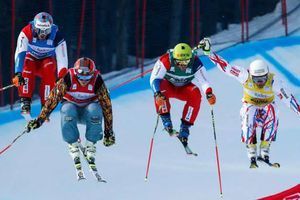
Snowboard Cross is one of the most spectacular snowboard disciplines.
Several riders start simultaneously on a course containing turns, jumps, rollers, and other obstacles.
Success requires more than speed and technique. Positioning and race tactics are also extremely important.
Parallel Giant Slalom
In Parallel Giant Slalom, two athletes race simultaneously on parallel courses containing gates.
The winner is the rider who completes the course faster.
Precise turns, stability, and speed are essential.
Parallel Slalom
Parallel Slalom follows a similar head-to-head format, but the course has a different configuration and generally requires more frequent changes of direction.
Halfpipe
Halfpipe takes place in a specially constructed U-shaped snow structure.
Riders travel from one wall to the other, performing jumps, spins, grabs, and other tricks.
Judges evaluate factors such as difficulty, amplitude, execution, and overall quality.
Slopestyle
Slopestyle takes place on a course containing a series of jumps, rails, boxes, and other features.
The rider creates a combination of tricks within the course. Technical difficulty is important, but so are execution, creativity, and overall performance.
Big Air
Big Air is built around one major jump.
The rider launches from a large ramp and has a single major aerial opportunity to perform a highly technical combination of spins, flips, and grabs.
It is one of the easiest snowboard disciplines for spectators to understand, but performing it at the highest level requires extraordinary technical ability.
Street Style and Rail Events
Street Style and rail competitions use features inspired by urban environments - rails, handrails, boxes, and other structures.
This format is particularly closely connected to the roots of freestyle snowboarding.
FIS continues to develop this part of the sport. Street Style is already included in its international calendar, while rail events have been receiving increasing attention at international competitions. FIS - Snowboard competition calendar and disciplines
Snowboarding at the Olympic Games
Snowboarding became an Olympic sport at the 1998 Nagano Winter Olympics.
Since then, the Olympic snowboard program has expanded considerably.
At Milano Cortina 2026, snowboarding featured 11 medal events:
-
Men's Parallel Giant Slalom
-
Women's Parallel Giant Slalom
-
Men's Halfpipe
-
Women's Halfpipe
-
Men's Snowboard Cross
-
Women's Snowboard Cross
-
Men's Slopestyle
-
Women's Slopestyle
-
Men's Big Air
-
Women's Big Air
-
Mixed Team Snowboard Cross
The Olympic program therefore covers several very different sides of snowboarding - from high-speed racing to freestyle.
Mixed Team Snowboard Cross is particularly interesting because it combines male and female athletes in the same team competition.
The official FIS qualification system for Milano Cortina 2026 confirms the 11 snowboard events included in the Olympic program. FIS - Milano Cortina 2026 Snowboard Qualification System
FIS World Championships and World Cup
The Olympics are far from the only major snowboard competitions.
FIS organizes the Snowboard World Cup, with athletes competing at different venues throughout the season and across multiple disciplines.
There are also FIS World Championships, where world champions are determined in individual snowboard disciplines.
The FIS competition calendar is considerably broader than the Olympic program. Alongside Halfpipe, Slopestyle, Big Air, and Snowboard Cross, it includes Parallel Slalom, Parallel Giant Slalom, Street Style, and other competitive formats.
In other words, "Olympic snowboarding" represents only part of the modern competitive snowboard world.
Freeride World Tour and Mountain Competitions
Freeride has historically existed somewhat outside the traditional structure of competitive snowboarding.
There is no standardized course with identical gates. Athletes ride natural mountain terrain and choose their own lines.
One of the best-known international freeride competitions is the Freeride World Tour.
Another major development came in 2026 with the first FIS Freeride World Championships.
The championship took place in Andorra on the Basser Negre face, bringing together leading freeride athletes in an official world championship format.
Each competitor had a single run in which to demonstrate their ability to choose and execute a line on the mountain.
This represents an important development for the sport, bringing freeride further into the international FIS competition structure.
Historical Snowboard Disciplines
Modern competitive snowboarding may look relatively established, but its competitive program has changed considerably over time.
One interesting historical discipline was snowboard ballet.
Inspired by ski ballet, it involved performing a series of movements, spins, and technical elements on relatively gentle terrain.
Snowboard ballet eventually disappeared from major international competition, while disciplines that better demonstrated the evolution of snowboarding - including Halfpipe, Slopestyle, and Big Air - became more prominent.
It is a good example of how snowboarding has continuously evolved alongside equipment, technique, and riding culture.
Choosing a Snowboard for Different Disciplines
There is no single snowboard that performs equally well in every possible environment.
| Riding discipline | Typical snowboard | Main characteristics |
|---|---|---|
| All-Mountain | All-Mountain | versatility and balance |
| Freeride | Directional / Freeride | stability and flotation |
| Powder | Powder / Directional | flotation and wide nose |
| Freestyle | Twin / Directional Twin | maneuverability and switch riding |
| Carving | Carving / Alpine | stiffness and precision |
| Race | Race / Alpine | speed and stability |
| Backcountry | Splitboard | touring and downhill riding |
| Park | Freestyle / Twin | tricks and spins |
The categories can overlap.
For example, a snowboard can be designed for all-mountain riding, have a directional shape, and use a hybrid profile.
That is why choosing a snowboard is not simply a matter of looking for one label. The overall combination of shape, profile, flex, geometry, and intended use matters.
Snowboarding as Part of Winter Culture
Snowboarding has long moved beyond the boundaries of competitive sport.
For many people, it is a way to spend time in the mountains, travel, discover new places, and become part of a particular outdoor culture.
Like other mountain and outdoor disciplines, snowboarding has its own visual language and symbols.
A snowboard, bindings, goggles, clothing, helmet, or even a small piece of jewelry can become connected with a particular lifestyle and personal experience.
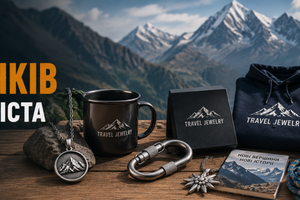
This is one reason Travel Jewelry's winter collection is not built simply around generic winter imagery.
The collection includes the "Snowboard" silver pendant, a minimalist snowboard-inspired design made of 925 silver.
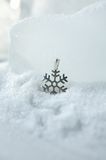
The same winter collection also includes the "Snowflake" silver pendant, a more universal symbol of winter, snow, and the mountains.
Both designs are available in the Travel Jewelry winter collection.
Snowboarding Today
Modern snowboarding is no longer a single way of riding a board down a mountain. It is a large ecosystem of different disciplines.
There is versatile All-Mountain riding, technical carving, high-speed racing, natural-terrain freeride, deep-powder riding, freestyle, and self-sufficient splitboarding.
Professional competition adds another layer - Snowboard Cross, Halfpipe, Slopestyle, Big Air, Parallel Slalom, and Parallel Giant Slalom.
And between organized sport and mountain adventure lies a huge world of backcountry riding and freeride, where the main challenge is not necessarily another competitor, but the mountain itself.
That diversity is what makes snowboarding so fascinating.
The history of snowboarding shows where the sport came from. Its modern disciplines show just how far it has evolved.
What to Gift a Snowboarder: Practical and Meaningful Gift Ideas for Winter Adventure Lovers
The History of Snowboarding: Origins, Evolution, Technology and Culture
The History of Skis: Evolution, Types, Technology and Skiing in Sport
Types of Skis and Skiing Disciplines: From Cross-Country Skiing to Freeride and Speed Records
Ski Travel: The History of Ski Touring, Ski Expeditions and Winter Journeys