In September 2026, the jury of the international Piolets d'Or mountaineering awards announced the laureates for ascents completed in 2025. Four teams were recognised for opening new routes in the Karakoram, the Andes and the Himalayas. French climber Tiphaine Dupérier received a special mention for her contribution to women's mountaineering, while Austrian alpinist Peter Habeler was honoured for his lifetime achievements.
This year's selection reflects several aspects of modern mountaineering: pioneering difficult faces, exploring remote mountain regions, undertaking technically demanding climbs at high altitude and completing full mountain traverses. All four main awards recognise ascents from 2025, and the jury presents them without a ranking or a hierarchy.
The full descriptions of the awarded climbs are available on the official Piolets d'Or website. Let's take a closer look at the laureates, their expeditions and what made each achievement stand out.
Ultar Sar: First Ascent of the Southeast Pillar

Ultar Sar, Karakoram, Pakistan.
The first team of laureates consists of Ethan Berman, Maarten van Haeren and Sebastián Pelletti. In June 2025, they completed the first ascent of the southeast pillar of Ultar Sar, a 7,388-metre peak in Pakistan's Karakoram range.
Their route was named Shooting the Moon. It follows a massive rock pillar stretching approximately 3,100 metres. The technical grade is M5 WI4, involving difficult mixed climbing on rock, ice and snow. The ascent took place from 6 to 11 June.
Ultar Sar lies near the Hunza Valley, but its proximity to inhabited areas does not make it an easy objective. Steep faces, complex terrain and unpredictable weather create serious challenges even for experienced climbers.
Berman, van Haeren and Pelletti successfully climbed the pillar to the summit. After reaching the top, they descended along the same route, completing their return to the foot of the mountain on 13 June.
The ascent followed years of attempts to climb this striking line. Previous expeditions had been unable to complete the pillar all the way to the summit. The team's success was therefore more than another climb on a well-known mountain: it was a significant first ascent in a demanding high-altitude environment.
Aikache Chhok: A New Route on the Northwest Face

Aikache Chhok, Karakoram, Pakistan.
The second awarded team comprises George Ponsonby from Ireland and James Price, a British-French climber. In October 2025, they made the first ascent of the northwest face of Aikache Chhok, a 6,673-metre peak.
They named their route Secrets, Shepherds, Sex and Serendipity. It is approximately 3,000 metres long, with a technical grade of M7 A2+ AI5. The ascent took place from 12 to 20 October.
Before this expedition, the summit had been reached only once, in 1983, by a different route. The British-French team was therefore operating in a relatively little-known mountaineering area with many challenges still to be explored.
During the expedition, the climbers faced difficult weather and the challenge of finding a viable line through the terrain. They had to adapt their plans before continuing towards the summit.
The descent was an important part of the achievement. After reaching the summit, Ponsonby and Price continued across the mountain and descended an unclimbed section of the southwest face before returning to base camp.
The expedition was therefore much more than a first ascent of a face. The team completed an integrated route that included a demanding climb, passage over the summit and a return by a different line. The scale and exploratory character of the achievement caught the jury's attention.
Yerupajá Grande: The First Complete Traverse of the Mountain

Yerupajá Grande, Cordillera Huayhuash, Peru.
The third awarded ascent took place in the Peruvian Andes. Bru Busom, Rubén Sanmartín and Marc Toralles climbed the east spur and east ridge of Yerupajá Grande, a 6,634-metre peak.
Their route, The Essence of Commitment, is approximately 1,400 metres long and includes difficult rock, ice and mixed terrain. Its technical difficulties reach 6c+, M6+ and WI5. The main ascent and traverse took place from 4 to 8 August 2025.
Yerupajá Grande is the highest peak in the Cordillera Huayhuash and the second-highest independent mountain in Peru. Despite its first ascent in 1950, it remains a demanding mountaineering objective because of its steep terrain and technical difficulties.
Busom, Sanmartín and Toralles set out to complete the mountain as one continuous route. After climbing the east spur and ridge to the main summit, they continued along the narrow ridge to the southern summit, Yerupajá Sur, at approximately 6,480 metres. From there, they descended the southeast face.
This was the first complete traverse of Yerupajá from the east. Rather than returning along their ascent route, the team continued across the mountain and completed the planned traverse by a different descent line.
The climb illustrates an approach in which the achievement is assessed not only by the difficulty of a particular face or the arrival at a summit, but by the entire sequence of the route. Preparation, route selection, movement between summits and descent all formed parts of one mountaineering project.
Jannu East: First Ascent of a 7,460-Metre Summit

Jannu East, Himalayas, Nepal.
The fourth awarded ascent took place in Nepal. French climbers Nicolas Jean and Benjamin Védrines made the first ascent of Jannu East, a 7,460-metre summit, following a route up the north face and along the east ridge.
They named the route Le Sommet des Pieux ("The Summit of the Devout"). It is approximately 2,300 metres long, with a technical grade of M6 WI5. The ascent took place from 12 to 15 October 2025.
Jannu East lies beside the main summit of Jannu, which rises to 7,710 metres. Despite being lower, its steep north face had remained a serious challenge for climbers for decades.
Jean and Védrines had already attempted the face in 2024 but were forced to retreat. For their next expedition, they prepared more thoroughly, acclimatised on neighbouring peaks and established a new route.
During the ascent, the climbers negotiated steep snowfields, ice and mixed terrain, where opportunities for secure protection were limited. After reaching the summit, they descended by the same route, using ropes to negotiate the difficult sections on the way down.
Jannu East is the highest summit among the four main award-winning ascents. The jury recognised the climbers' technical skill, lightweight alpine style and ability to complete a demanding objective in a remote high-altitude environment.
Tiphaine Dupérier: Special Mention for Women's Mountaineering

Tiphaine Dupérier during the expedition to Nanga Parbat.
French climber Tiphaine Dupérier received a special mention for her contribution to women's mountaineering in 2026. The award recognised her ascent of Nanga Parbat, at 8,125 metres, followed by a ski descent from the summit.
In 2025, Dupérier climbed the Schell Route on the Rupal Face with French climber Boris Langenstein and German climber David Göttler. This was the first ascent of the route in alpine style. The team reached the summit without supplementary oxygen, fixed ropes or a chain of high-altitude camps.
After the ascent, Dupérier and Langenstein completed the first ski descent from the summit of Nanga Parbat. Göttler took a different way down, paragliding from approximately 7,700 metres to base camp.
The project combined a demanding high-altitude ascent with a separate achievement in ski mountaineering. The special mention therefore recognises more than reaching the summit: it acknowledges the broader undertaking completed during the expedition.
The climb also demonstrates how mountaineering and skiing can complement each other. Our article on the history of ski mountaineering and major ski descents explores the development of this discipline in more detail.
Peter Habeler: Lifetime Achievement Award

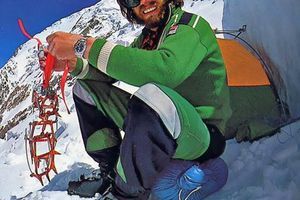
Peter Habeler, Austrian mountaineer and recipient of the lifetime achievement award.
The 2026 Piolets d'Or Lifetime Achievement Award, also known as the Walter Bonatti Award, was presented to Austrian mountaineer Peter Habeler.
Born in 1942 in Mayrhofen, in the Tyrolean Alps, Habeler became one of the climbers who helped change perceptions of what humans could achieve at extreme altitude.
His best-known achievement came with Reinhold Messner. In 1978, they became the first people to summit Everest without supplementary oxygen. At the time, many considered climbing at such an altitude without bottled oxygen impossible or excessively dangerous.
Earlier, in 1975, Habeler and Messner had completed the first alpine-style ascent of Gasherbrum I, an 8,000-metre peak. This approach emphasises minimal external support, limited reliance on a network of high-altitude camps and a high degree of independence for the climbing team.
The lifetime achievement award recognises not a single ascent, but a mountaineer's broader contribution to the sport and their influence on subsequent generations. Habeler's career became an important part of modern mountaineering history through his determination to expand the limits of what was possible while preserving independence and responsibility in the mountains.
Piolets d'Or 2026: What This Year's Selection Says About Modern Mountaineering
Taken together, the four main awards recognise different types of achievement. Ultar Sar represents the first ascent of a difficult pillar; Aikache Chhok combines exploration of a little-known area with a new route and a descent by a different line; Yerupajá Grande is a complete mountain traverse; and Jannu East is the first ascent of a technically demanding summit above 7,400 metres.
The common thread is not simply technical difficulty. In each case, the team developed its own mountaineering objective and had to carry it through from beginning to end, making independent decisions in an environment where outside assistance was limited.
Aikache Chhok and Yerupajá Grande are particularly illustrative. On Aikache Chhok, the descent differed from the ascent and followed an unclimbed section of the mountain. On Yerupajá Grande, the team planned from the outset not merely to reach the main summit, but to traverse to the southern summit and descend by another face.
This broader perspective makes it possible to assess an achievement as more than an isolated summit reached. Route choice, the sequence of the climb, the relationship between ascent and descent, team autonomy and the ability to complete the entire route all become important.
The Planetmountain overview of the 2026 laureates also highlights the diversity of this year's projects, from technically demanding first ascents to complex climbs involving traverses and ski descents.
At the same time, the laureates do not represent a single universal style of climbing. The Jannu East team descended by the same route they had climbed, while the Ultar Sar team also returned along its ascent line. A traverse or a different descent route is therefore not a requirement for an award. What matters is the coherence of the objective and the quality of its execution.
Dupérier's special mention adds another dimension to this picture: her expedition combined a high-altitude ascent with the first ski descent from Nanga Parbat's summit. It is another example of different disciplines forming parts of one mountaineering project.
The award to Peter Habeler is a reminder that progress in mountaineering is not limited to new routes. Style, independence, exploration and the lasting influence of a climber remain important as well.
A Mountain Symbol for Those Who Live for the Mountains
For a mountaineer, a mountain is often much more than a geographical point. It represents preparation, partnership, decisions made under pressure and a route that remains in memory long after the expedition ends.
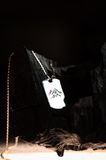
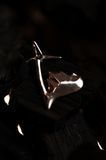
These are the ideas behind Travel Jewelry's mountain-inspired jewellery. The collection includes pieces inspired by mountain summits, climbing equipment and the culture of travel.
For example, the Ice pendant featuring an ice axe and a mountain brings together two recognisable symbols of mountaineering. The ice axe represents the technical side of climbing, while the mountain stands for the objective that draws climbers into the high-altitude world.
Piolets d'Or 2026 is a reminder that modern mountaineering is about more than summits and altitude. It is also about exploration, style, teamwork and complete expeditions that leave their mark on mountain history.
Sea to Summit: How Tim Macartney-Snape Walked from the Sea to the Summit of Everest
The History of Mountaineering: From the First Ascents to Speed Records
UIAA: History, Activities, Standards, Grading Systems and Its Role in Modern Mountaineering
Piolets d'Or - The Golden Ice Axe: History, Awards and Legendary Climbs
Edelweiss: The Legendary Mountain Flower That Never Fades from Memory
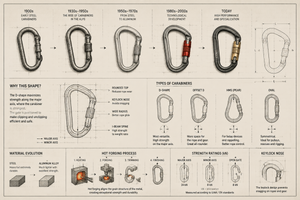
The Climbing Carabiner: The Story of One of the Most Important Inventions in Mountaineering