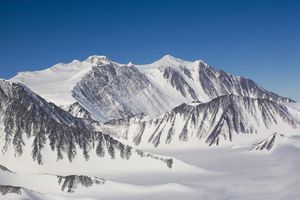
Antarctica has a way of turning space itself into a test. A person can travel for hours across a white wilderness without seeing a landmark beyond a compass, navigation instruments and their own tracks. Wind erases footprints, snow conceals crevasses, and whiteout conditions merge sky and ground. Even an ordinary task - pitching a tent, melting snow, checking equipment - takes time and energy.
On a solo expedition, every decision becomes a personal responsibility. There is no partner to take over a task, notice a mistake or help after an injury. And when the route runs far from research stations and aircraft support, the cost of an error can be enormous.
Yet “solo expedition” does not always mean the same thing. Some explorers have reached the South Pole alone without crossing the entire continent. Others have travelled from one side of Antarctica to the other. Some carried all their supplies from start to finish; others received pre-positioned food and fuel. And some used a kite to help pull them across the snow on skis. To compare these achievements fairly, it is important to distinguish between travelling alone, being unsupported and the method of travel.
Børge Ousland: The man who crossed Antarctica alone

Børge Ousland in polar clothing in an archival portrait published to mark the anniversary of his historic Antarctic crossing.
Photo: Laurent Gillieron / EPA, via UPI. This is an archival portrait, not a confirmed photograph taken on the crossing itself.
Norwegian explorer Børge Ousland was no casual adventure seeker. Before his Antarctic crossing, he had already completed demanding autonomous journeys: in 1994, he reached the North Pole alone from the Russian Arctic coast. He was drawn to routes where success depended not on a large team, but on preparation, endurance and the ability to make decisions in isolation.
In 1995, Ousland had already attempted a solo crossing of Antarctica. He reached the South Pole region but had to abandon the journey because of frostbite and an infection. It was a painful retreat, but it taught him how narrow the margin can be between an ambitious plan and the body's limits. The following season, he returned with a revised approach.
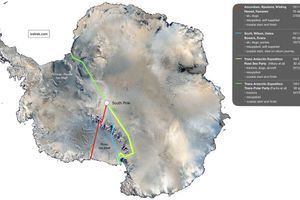
On 15 November 1996, Ousland set off from Berkner Island in the Weddell Sea. Ahead lay the Ronne and Ross ice shelves, the climb onto the high polar plateau, the South Pole and the route towards the McMurdo Sound area. His sled weighed roughly 180-185 kilograms at the start, carrying food, fuel, a tent, a sleeping bag, spare clothing and equipment essential to his survival.
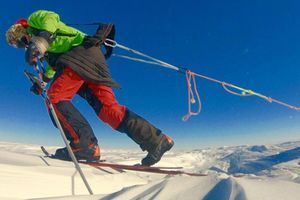
Ousland did not simply haul his sled on skis. He used a kite that, in suitable winds, helped pull him across the snow. That did not mean the wind did all the work: he still had to control the kite, hold his course, read the terrain and negotiate areas broken by hard, wind-shaped ridges known as sastrugi. In such places, progress could become an exhausting obstacle course.
On 17 January 1997, Ousland reached the area of Scott Base. Guinness World Records lists his crossing as lasting 63 days, although some contemporary accounts rounded it to 64. The distance is generally given as about 2,999 kilometres. He became the first person to make a solo crossing of Antarctica without external resupply. His journey was nevertheless wind-assisted: the kite helped him travel, a detail that later became important in debates over how records should be classified.
Ousland’s achievement is not simply a story of willpower. It shows how supply planning, wind assessment, pace and the ability to adjust tactics can matter as much as physical fitness. Being solo did not mean rejecting technology; it meant that he alone was responsible for using it.
Read more: the first unsupported solo crossing of Antarctica.
Henry Worsley: When the goal is only a few dozen kilometres away
British Army officer and polar explorer Henry Worsley was fascinated by Ernest Shackleton’s story and wanted to complete what earlier Antarctic expeditions had failed to achieve. In 2015, he set out on a solo crossing, planning to travel from Berkner Island via the South Pole to the Ross Ice Shelf. The journey was also intended to honour the centenary of Shackleton’s attempt to cross Antarctica.
Worsley began in November 2015. He hauled a sled of supplies and advanced day after day across the frozen interior. Every day meant setting up camp, preparing food, melting snow for water, caring for his feet, drying equipment and setting off again. Even when the weather allowed progress, the body continued to lose strength.
After 71 days and about 1,469 kilometres, Worsley could go no farther. Roughly 48-50 kilometres remained before his planned finish. He called for help and was evacuated; later, in a hospital in Chile, he died from bacterial peritonitis. His final message was an honest acknowledgement of the limits of his endurance.
Worsley’s tragedy illustrates one of the hardest aspects of solo expeditions: someone can be remarkably close to a goal, yet the final kilometres may demand energy that is no longer available. Persistence must be balanced with the ability to recognise when continuing has become dangerous.
His story formed an important backdrop to the expeditions of 2018. Colin O’Brady and Louis Rudd both set out to cross the continent alone, and Rudd had a personal connection to Worsley, carrying the memory of a friend who had died trying to complete a similar journey.
Colin O’Brady and Louis Rudd: Two solo journeys become a race

Colin O’Brady during his solo journey across Antarctica in 2018.
Photo: Colin O’Brady, published by Popular Mechanics in its coverage of the Antarctic crossing.
In November 2018, American explorer Colin O’Brady and British polar traveller Louis Rudd set out from nearby starting points in Antarctica. Each had his own route, sled and supplies; they were not teammates and did not intend to travel together. Their goal was to cross the continent alone without replenishing supplies en route.
O’Brady carried a substantial supply of food because he expected to burn thousands of calories a day. His sled weighed around 180 kilograms at the start. As he travelled south, the terrain rose towards the high polar plateau, and the journey to the South Pole demanded constant attention to calories, water, fuel and pace.
Rudd was ahead during the first five days. On the sixth, O’Brady caught up with him. They spoke briefly, but Rudd did not want to turn his expedition into a joint trek. He wanted to preserve the solitude of his journey and focus on his own plan. For a time, they travelled within roughly a kilometre of each other, but Rudd later chose to let his rival move ahead.
The encounter reveals a paradox of solo travel. Each explorer was technically alone, yet knowing that another person with the same goal was nearby inevitably affected the psychology of the journey. The media quickly framed the parallel expeditions as a race. Still, it would be inaccurate to say the competition was entirely accidental: both men knew of the other’s attempt, and journalists were following their progress from the outset. They were separate journeys that gradually took on the character of an informal contest.
O’Brady reached the South Pole on 12 December. On 26 December, he completed his route near the Leverett Glacier, at the edge of the Ross Ice Shelf. His crossing covered about 1,500 kilometres and took 53 days according to Guinness World Records; O’Brady’s own accounts often describe it as a 54-day expedition, depending on how the days are counted. The most famous part was his final push: he covered the last roughly 125 kilometres without sleep over about 32 hours.
Louis Rudd completed his crossing on 29 December, three days after O’Brady. For him, the journey was also a tribute to Henry Worsley, whom he had served with and known personally. Rudd was not simply trying to be faster: he was continuing a route his friend had been unable to finish, carrying his memory with him.
The expedition also highlighted the difficulty of defining records. O’Brady emphasised that he travelled using his own physical effort, without a kite or other means of traction. However, part of his route followed the South Pole Overland Traverse, a route regularly marked and prepared for transport. Under the Polar Expeditions Classification Scheme, using such a route counts as a form of support. His achievement should therefore be described according to specific criteria, rather than unconditionally labelled the first solo crossing of Antarctica: Ousland had crossed the continent earlier, using a kite.
Read more about the parallel journeys: National Geographic’s report on O’Brady and Rudd.
Women who travelled alone: from the South Pole to crossing the continent
The history of solo polar expeditions has long been told mainly through men’s names. Yet women have independently covered vast distances, crossed the polar plateau and set records of their own. Each journey needs to be considered on its own terms: reaching the South Pole alone is an extraordinary feat, but it does not necessarily mean crossing the entire continent.
Felicity Aston: The first woman to ski across Antarctica alone
British polar explorer Felicity Aston set off in late November 2011 from the Ross Ice Shelf region. She planned to cover about 1,744 kilometres to Hercules Inlet on the opposite side of the continent. She hauled two sledges carrying roughly 85 kilograms of food, fuel and equipment, travelled on skis, and did not use a kite or mechanical traction.
On 23 January 2012, Aston completed the crossing after 59 days. Her route was not fully unsupported, however: supplies were delivered by aircraft at two points, including near the South Pole. This does not diminish the achievement, but it means the most accurate description is a solo ski crossing without mechanical traction, rather than a crossing with no external support of any kind.
Aston travelled through the Transantarctic Mountains and climbed onto the high polar plateau. Her expedition became an important milestone, showing that a solo crossing of the continent could be completed without a kite.
Anja Blacha: 1,381 kilometres from the coast to the South Pole

Anja Blacha travelling on skis during a polar expedition.
Photo: zeb Consulting / interview with Anja Blacha.
German adventurer Anja Blacha began her solo expedition on 19 November 2019 from the northern part of Berkner Island. Her aim was to reach the geographic South Pole without external resupply. Her sled carried about 110 kilograms of food and equipment - supplies that had to last for the entire journey.
Blacha travelled on skis for almost two months, covering roughly 24 kilometres a day. Temperatures ranged from about minus five to around minus forty degrees Celsius. In a whiteout, the horizon could disappear, making even the task of keeping direction psychologically exhausting.
On 9 January 2020, Blacha reached the South Pole after nearly 58 days on the trail, covering 1,381 kilometres. She became the first woman to ski solo and unsupported from the coast to the South Pole, and at the time was also the youngest person to complete that feat. It was not a full transcontinental crossing, but it remains one of the most remarkable solo expeditions to the Pole.
Preet Chandi: Three expeditions and new limits of speed

Preet Chandi after completing a solo polar expedition.
Photo: Guinness World Records / feature on her record-setting journey.
Preet Chandi, a British Army physiotherapist also known as Polar Preet, first travelled solo to the South Pole in the 2021-2022 season. She became the first woman of Asian heritage to complete a solo ski expedition to the Pole. She later returned to Antarctica with a more ambitious goal: crossing the continent from coast to coast.
In the 2022-2023 season, Chandi travelled 1,484.53 kilometres over 70 days and 16 hours, but poor weather and time constraints forced her to end the attempt about 160 kilometres short of her planned finish. She did not complete the full crossing she had intended, but at the time set a record for the longest solo unsupported one-way ski expedition in the polar regions.
In November and December 2023, Chandi returned to the South Pole, this time focusing on speed. She travelled from Hercules Inlet to the Pole in 31 days, 13 hours and 19 minutes, hauling a sled weighing about 75 kilograms and skiing for an average of 12-13 hours a day. Her story matters not because every attempt went according to plan, but because she returned, learned from experience and set new goals.
Liv Arnesen and Ann Bancroft: An important contrast to solo expeditions
Not every important story about women in Antarctica is a solo one. Norwegian explorer Liv Arnesen reached the South Pole alone and unsupported on skis in 1994. In 2000-2001, she and American explorer Ann Bancroft completed the first crossing of the Antarctic landmass by an all-women expedition: 2,747 kilometres in 94 days, from Queen Maud Land via the South Pole to the edge of the Ross Ice Shelf.
Arnesen and Bancroft were not alone on that route: they supported each other and made decisions together. Their expedition is a useful contrast. Independence and mutual support are not opposites, but they create different conditions and risks. Their crossing demonstrated that women could undertake demanding polar routes both as a team and alone.
More details: Guinness World Records on the first crossing of the Antarctic landmass by an all-women expedition.
Rudi Lang and the Vinson Massif: A solo climb in Antarctica’s highest mountains
Solo challenges in Antarctica are not limited to ski journeys. The continent also presents mountaineering challenges where danger is concentrated on a smaller stretch of terrain: steep slopes, ice, wind, technical protection and the absence of a partner who might help after a fall.
In 1991, German climber Rudi Lang made a solo ascent of the Vinson Massif, Antarctica’s highest mountain, by a direct route up its west face. Reference sources confirm the ascent, but do not provide enough detail about his preparation, the precise sequence of the route or his equipment. It would therefore be misleading to invent details or write as though a full expedition diary were available.
The example shows another form of solo journey. On a long ski route, food, pace and monotony are central concerns; in technical mountaineering, even a brief mistake can have immediate consequences. In both cases, being without a partner changes how risk must be assessed.
Wintering and isolation: when solitude lasts for months
Donna Oliver: The only woman among the wintering crew
In 1976-1977, researcher Donna Oliver spent a full year in Antarctica, working at McMurdo Station. When the last aircraft left the station on 20 February 1977, she became the only woman on the continent for that period. It is important to clarify, however, that she was not the only person in Antarctica: male colleagues were also wintering at the station.
Oliver studied the seabed beneath the frozen Ross Sea and also explored the psychological effects of isolation, stress and prolonged life in a confined environment. Her experience shows that polar isolation is not only a struggle with temperature. It also means a repetitive schedule, a limited social circle, the long darkness of winter and no quick way to leave the station if psychological strain or conflict arises.
Oliver’s story matters to the history of women in science, too: she worked in an environment where the presence of women wintering over was still met with resistance. Her expedition was not a solo traverse across the ice, but a long test of professional resilience and psychological adaptation.
Jerri Nielsen: The doctor who had to organise her own treatment
In 1999, physician Jerri Nielsen wintered at Amundsen-Scott South Pole Station. She was not alone; the station had a crew. But winter communications with the outside world were severely limited, and evacuation could be dangerous or impossible for long periods because of the weather.
During the winter, Nielsen discovered a lump in her breast that raised concern about cancer. She consulted doctors in the United States by email, while a colleague at the station - a welder - performed a biopsy after practising under her guidance on fruit and vegetables. Samples were sent for analysis, and treatment was arranged with remote medical advice. She was later evacuated when conditions allowed a high-risk rescue flight.
This is not the story of someone who spent the winter alone. It is a different kind of solitude: medical responsibility and uncertainty became a personal burden, while help existed but was separated by thousands of kilometres and extreme weather.
What makes a solo expedition so difficult?
It is easy to focus on distances and records and overlook the daily work that makes up a polar journey. A solo traveller must act as athlete, navigator, cook, equipment mechanic and expedition leader every day.
- Energy balance. The body burns enormous amounts of energy moving, keeping warm and hauling a heavy sled. If food needs are underestimated, the accumulated deficit can make it impossible to finish.
- Water and fuel. Water is all around as snow, but it must be melted. That requires fuel and time, so supplies must be carefully calculated.
- Whiteouts and navigation. When the horizon disappears, the terrain no longer helps with orientation. Explorers must trust their instruments while remaining alert to crevasses and changes in the surface.
- Cold and moisture. Frostbite and skin injuries can gradually undermine the ability to move. On a solo route, there is no partner to spot a problem before the traveller does.
- Psychological monotony. For weeks, the landscape may look almost identical, with only wind and the sound of breathing for company. Small daily goals and a strict routine help maintain concentration.
- The decision to turn back. A successful expedition is not always one that reaches its planned endpoint. Sometimes the right decision is to stop, as Henry Worsley did or as happened during Preet Chandi’s attempt to cross the continent.
Can someone still set out alone in Antarctica today?
Such expeditions are still possible, but they require serious preparation, funding, logistics and an emergency response plan. Being solo on the route does not mean having no organisational support at all: flights to the starting point and from the finish, permits, communications, insurance, rescue coordination and weather assessment often depend on specialist operators.
Autonomy mainly concerns what happens after the start: whether the traveller receives resupplies, uses a prepared route, flies a kite or moves solely under their own power. That is why records must be read together with their criteria. Distance alone does not tell the whole story.
A solo expedition is not a contest in which a person must defeat nature. It is a sequence of decisions in which endurance matters as much as discipline, and the willingness to abandon an original goal can be the clearest sign of experience.
A snowflake shaped by nature: a symbol of the icy world
There is a paradox in polar journeys: routes may seem endlessly uniform, yet no day, gust of wind or pattern on the snow is ever exactly repeated. Antarctica reminds us of nature’s scale and, at the same time, of how fragile human experience is in its presence.
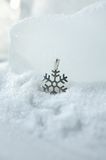
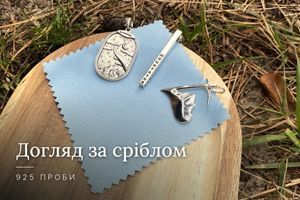
The “Snowflake” pendant by Travel Jewelry carries that idea into a piece of jewellery. Its form echoes the geometry of winter - patterns created by the cold that are never entirely identical. It is a small symbol of a vast icy world where every journey has its own story.
View the “Snowflake” pendant on the Travel Jewelry website.
Conclusion
The stories of Børge Ousland, Henry Worsley, Colin O’Brady, Louis Rudd, Felicity Aston, Anja Blacha and Preet Chandi reveal different sides of solo polar exploration. For some, the challenge was crossing the continent without resupply; for others, it was reaching the South Pole or testing the limits of speed. Donna Oliver and Jerri Nielsen remind us that isolation can remain a profound trial even when a person is physically surrounded by others.
Their achievements cannot be reduced to a single record. Behind every distance lie preparation, uncertainty, mistakes, revised plans and the ability to make decisions when there is no one nearby to make them for you. In Antarctica, human limits are tested not in one heroic moment, but through hundreds of daily steps - and by knowing when to continue and when to stop.
Crossing Antarctica: The Most Challenging Routes Across the Continent
Women in the History of Antarctic Exploration: Pioneers, Scientists and Polar Explorers
Mountaineering in Antarctica: Mountains, Volcanoes and Unclimbed Peaks
Skiing in Antarctica: From Early Polar Expeditions to Descents from Mountain Summits
Ski Descents from the Eight-Thousanders: The Story of Great Descents from the World's Highest Peaks
Sea to Summit: How Tim Macartney-Snape Walked from the Sea to the Summit of Everest
Ski Travel: The History of Ski Touring, Ski Expeditions and Winter Journeys
Gift Ideas for a Skier: Practical and Meaningful Presents for Winter Enthusiasts