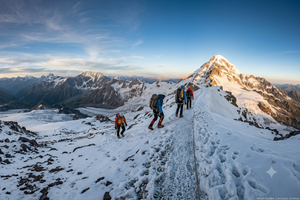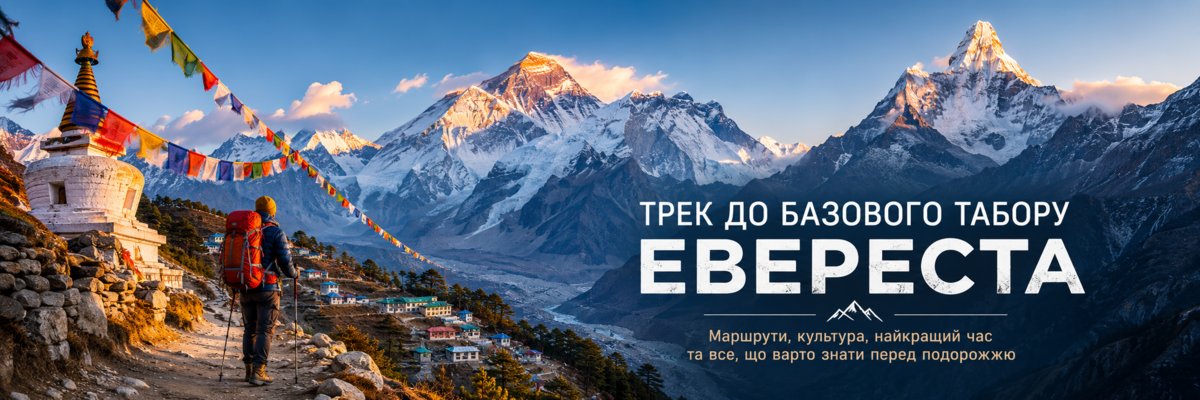
For many people, the Himalayas begin long before the first step on the trail.
They begin with a dream.
A dream of seeing the world's highest mountain, walking the same paths as legendary mountaineers, discovering Sherpa culture, and becoming part of a landscape where time is measured not by hours, but by mountain villages and daily hikes.
The Everest Base Camp Trek (EBC Trek) is considered one of the world's most iconic trekking routes. Every year, thousands of travelers from around the globe come to Nepal to experience the Khumbu Valley, admire Mount Everest, and immerse themselves in the unique atmosphere of the Himalayas.
Yet the journey is about far more than reaching the base of the world's highest mountain.
It is an unforgettable combination of breathtaking scenery, ancient Buddhist monasteries, glaciers, Sherpa traditions, and some of the most spectacular mountain landscapes on Earth.
Where is Everest Base Camp?
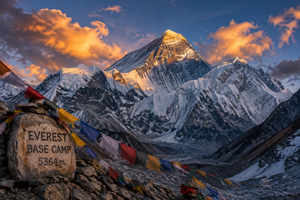
Everest Base Camp (EBC) is located at an altitude of 5,364 meters (17,598 ft) directly on the Khumbu Glacier in Nepal.
Every spring, climbers from around the world establish their expedition camps here before attempting to summit Mount Everest via the South Col route.
For trekkers, Base Camp is the ultimate destination. Standing on the moving glacier while surrounded by colorful expedition tents is an unforgettable experience unlike anywhere else on Earth.
Although Base Camp itself offers an incredible atmosphere, the best panoramic view of Mount Everest is actually from Kala Patthar (5,644 m / 18,519 ft), the highest point visited by most trekkers.
Beginning the Journey
Most Everest treks begin in Kathmandu.
After preparing permits and equipment, travelers board a short mountain flight to Lukla, located at 2,860 meters above sea level.
The flight lasts only around thirty minutes but has become legendary among hikers. Lukla Airport is famous for its short runway, rapidly changing mountain weather, and dramatic surroundings, making it one of the world's most unique airports.
For many, this is where the Himalayan adventure truly begins.
Lukla - The Gateway to Everest
Lukla is a small mountain town that serves as the main entrance to the Everest region.
Its streets are filled with trekking shops, lodges, bakeries, cafés, and local businesses preparing visitors for their journey into Sagarmatha National Park.
Most trekkers make their final equipment checks here before beginning the walk toward Everest Base Camp.
Namche Bazaar - The Heart of Sherpa Country
After approximately two days of trekking, travelers reach Namche Bazaar (3,440 m).
Often called the capital of the Sherpa people, Namche is the largest town in the Khumbu region and the traditional acclimatization stop for Everest trekkers.
Today, the town offers comfortable lodges, cafés, bakeries, outdoor gear stores, museums, and even small art galleries.
It is also one of the first places where trekkers enjoy spectacular views of Everest, Lhotse, Ama Dablam, and Thamserku.
Buddhist Culture and Sherpa Traditions
One of the highlights of the Everest trek is experiencing the culture of the Sherpa people.
For centuries, Sherpas have lived among these mountains, preserving traditions deeply connected to Tibetan Buddhism.
Throughout the trail you'll encounter prayer wheels, mani walls, colorful prayer flags, and ancient stupas.
Visitors are expected to walk clockwise around religious monuments as a sign of respect.
A special place along the route is Tengboche Monastery, the spiritual center of the Khumbu region. The peaceful atmosphere, chanting monks, incense, and surrounding Himalayan scenery make it one of the most memorable stops on the trek.
Ama Dablam - The Jewel of the Himalayas
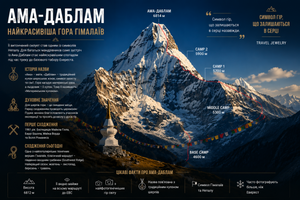
Although Mount Everest is the main goal for most visitors, many experienced mountaineers consider Ama Dablam (6,812 m) to be the most beautiful mountain in the Himalayas.
Its elegant pyramid-shaped profile accompanies trekkers for much of the journey beyond Namche Bazaar, revealing a different character with changing light and weather.
The name Ama Dablam is often translated as "Mother's Necklace." According to local tradition, the mountain's long ridges resemble a mother's protective arms, while the hanging glacier symbolizes the traditional jewelry worn by Sherpa women.
Today, Ama Dablam is one of the world's most photographed mountains and an icon of Himalayan climbing.
Best Time to Trek
The two main trekking seasons are:
-
March to May - spring, blooming rhododendron forests, stable weather, and Everest climbing expeditions.
-
Late September to November - clear skies, outstanding visibility, and comfortable trekking conditions.
Winter offers fewer crowds but significantly colder temperatures, while the summer monsoon brings frequent rain, clouds, and possible flight delays to Lukla.
Route Option 1 - The Classic Everest Base Camp Trek
The traditional route follows:
Lukla - Namche Bazaar - Tengboche - Dingboche - Lobuche - Gorak Shep - Everest Base Camp - Kala Patthar.
Most trekkers complete the journey in 12 to 14 days, making it accessible for anyone in good physical condition without technical climbing experience.
Route Option 2 - Via the Gokyo Lakes
Many trekkers consider the Gokyo route even more beautiful than the classic trail.
It includes the stunning turquoise Gokyo Lakes, the Ngozumpa Glacier (Nepal's largest glacier), and the panoramic summit of Gokyo Ri (5,360 m).
After crossing the spectacular Cho La Pass, the route reconnects with the classic Everest Base Camp trail.
Route Option 3 - The Three Passes Trek
The Three Passes Trek is considered one of the finest trekking routes anywhere in the Himalayas.
It crosses three high mountain passes:
-
Kongma La (5,535 m)
-
Cho La (5,420 m)
-
Renjo La (5,360 m)
This route combines Everest Base Camp, Gokyo Valley, alpine lakes, glaciers, and many of the region's finest viewpoints.
Although it requires around 18 to 21 days and good fitness, it rewards trekkers with the most complete Himalayan experience.
Memories That Last Forever
The Everest Base Camp Trek is much more than reaching a destination.
It is about sunrise over Himalayan peaks, the sound of yak bells, warm tea after a long hiking day, welcoming Sherpa hospitality, and discovering one of the world's most remarkable mountain cultures.
Nearly everyone who completes this journey returns home changed.
And almost everyone dreams of coming back someday.
Keep the Himalayas Close to Your Heart
Some travelers return from Nepal with prayer flags.
Others bring home handmade souvenirs from Namche Bazaar.
Many simply carry unforgettable memories for the rest of their lives.
At Travel Jewelry, these emotions inspired our Himalayan jewelry collection.
Our Everest Pendant celebrates the highest mountain on Earth and the dream that inspires adventurers around the world.
Our Ama Dablam Pendant honors one of the most beautiful peaks in the Himalayas and a mountain that has become an enduring symbol of Nepal.
Whether you've already walked the Everest trail or are still dreaming about your first Himalayan adventure, these pieces are designed to keep those mountains close to your heart wherever life takes you.
Beyond the Limits: How Reinhold Messner Accomplished the First Solo Ascent of Everest Without Oxygen
Edelweiss: The Legendary Mountain Flower That Never Fades from Memory
The Climbing Carabiner: The Story of One of the Most Important Inventions in Mountaineering
Mount Everest: History, First Ascents, Routes and Modern Mountaineering