What does it mean to climb Mount Everest?
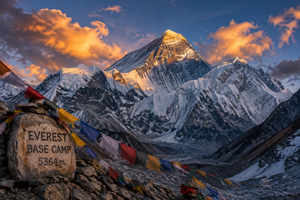
The usual answer seems obvious. You reach Base Camp, cross the Khumbu Icefall, move through the high camps, reach the South Col and make the final ascent to the summit.
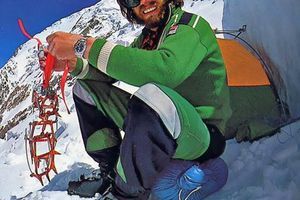
But in 1990, Australian mountaineer Tim Macartney-Snape decided to look at the question differently.
If Everest's elevation is measured from sea level, why should an ascent begin only at the foot of the mountain?
That question led to the Sea to Summit expedition - a journey that began on the shore of the Bay of Bengal, crossed India and Nepal, and ended on the highest point on Earth.
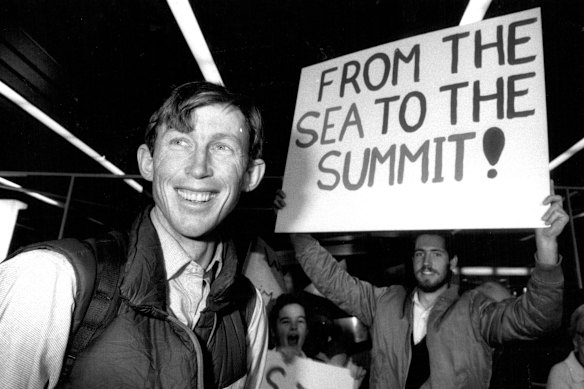
On 5 February 1990, Tim set off from sea level. On 11 May at 9:45 a.m., he stood on the summit of Everest.
It was the first ascent of Everest from sea level completed entirely under his own steam.
He Had Already Climbed Everest. But That Wasn't Enough
Before Sea to Summit, Tim Macartney-Snape was already one of Australia's best-known mountaineers.
He was born on 5 January 1956 in Iringa, then part of Tanganyika. In 1967, his family moved to Australia. Tim later studied at the Australian National University in Canberra, graduating with a Bachelor of Science in biology.
It was at university that mountaineering became a major part of his life. He joined the university mountaineering club, developed his rock climbing skills, went ski touring and gradually moved toward serious mountain expeditions.
His early career was closely connected with the mountains. He worked as a Himalayan trekking guide, became involved in expedition organization and eventually established Wilderness Expeditions, an adventure travel company operating trips in Australia, Nepal, Pakistan, Peru, Argentina and Japan.
In 1978, Tim joined an expedition to Dunagiri in the Indian Himalaya. When the expedition leader abandoned the attempt because of bad weather and illness among the team, Tim continued and reached the summit. The achievement helped him begin working as a mountain guide.
Ama Dablam, Annapurna II and other Himalayan climbs followed.
Then came the expedition that secured his place in Australian mountaineering history.
In 1984, Tim Macartney-Snape and Greg Mortimer became the first Australians to reach the summit of Everest. They climbed a new route through the North Face and Great Couloir, using a lightweight style and no supplementary oxygen.
It would have been perfectly reasonable to say:
"I have already climbed Everest."
But that was not how the story continued.

"You Haven't Really Climbed Everest Properly"
The idea behind Sea to Summit did not begin as a grand expedition plan.
It began almost as a joke.
After the 1984 Everest climb, Australian filmmaker and climber Michael Dillon challenged Tim with a simple thought: if Everest's height is measured from sea level, why do climbers begin their expedition far above sea level?
A truly "proper" ascent, he suggested, should begin at the sea.
The idea stayed with Tim. A few years later, it became a real expedition plan. Australian Geographic agreed to support the project, and Tim began preparing for another Everest climb.
Tim had not simply been resting between expeditions.
In 1986, he made the second ascent of Gasherbrum IV, following a new route on the northwest ridge. In 1989, he married Dr Ann Ward, whom he had met while working in the Himalaya.
His preparation for Sea to Summit took place far from the mountains.
Tim trained around Meekatharra in Western Australia, one of the country's hot and relatively flat regions. He ran in the heat and trained on local rock formations, preparing his body for the expedition ahead.
And that reveals something important about the expedition.
The climb began long before Tim reached the Himalaya.
From the Sea to the Himalaya
On 5 February 1990, Tim Macartney-Snape set off from the coast of the Bay of Bengal in India.
The expedition began near Ganga Sagar. From there, Tim headed north across India, toward Nepal, and then through the Himalayan foothills toward Everest.
This was not a conventional mountain expedition.
The first hundreds of kilometres crossed the plains of India. The landscape, climate, altitude, terrain and demands of travel gradually changed.
There was even a crossing of the Ganges.
In his report for the American Alpine Club, Tim described reaching Sahibganj, where the expedition crossed the Ganges by swimming. The swim was approximately three kilometres long.
Then another problem appeared.
At Jogbani, the expedition was denied permission to cross the border and had to change its route, adding approximately 300 kilometres via Kharkavitta.
Only after that did the mountain section of the journey begin.
Through Bhojpur, Bung and Lukla, Tim gradually approached Everest.
Everest Begins Far from Base Camp
For a conventional expedition, Base Camp is the beginning of the major climb.
For Tim, Base Camp was only the middle of the story.
He had already been walking from the sea for weeks.
That is what made Sea to Summit more than an unusual way of reaching Everest. It changed the scale of the ascent itself.
A normal expedition emphasizes the vertical dimension: gaining an enormous amount of elevation over a relatively short period.
Tim added a horizontal dimension.
Long-distance walking, changing climate, increasing altitude, sustained physical effort - and only then the hardest part of the journey at extreme altitude.
Today, we can draw a line on a map from the Bay of Bengal to Everest and see the route immediately.
In 1990, Tim had to walk that line.
The Original Plan Was Even More Ambitious
Tim did not intend simply to follow the standard Everest route.
His original plan was to climb via the West Ridge and then descend by the standard South Col route. On the mountain, he intended to climb alone, without Sherpa support and without supplementary oxygen.
In April, Tim climbed the West Shoulder to approximately 24,500 feet - around 7,470 metres - and spent two nights there.
Then the weather changed everything.
Heavy snowfall followed, and the West Shoulder became avalanche-prone. Continuing with the original route was no longer considered safe.
Tim therefore received permission to attempt the normal route via the South Col.
It is an important part of the story.
Sea to Summit was not an expedition in which everything went exactly according to plan.
Like almost every serious mountain expedition, it required the ability to change decisions according to real conditions.

The Final Thousands of Metres
On 7 May, Tim left Base Camp for Camp II.
The following day he continued toward the South Col, reaching it on 9 May.
The weather remained unsettled, so the final departure had to be delayed.
At 10 p.m. on 10 May, Tim began his summit push.
He had no supplementary oxygen.
No Sherpa was accompanying him on the final ascent.
There was no climbing partner beside him.
On this part of the route, Tim was alone.
And this is where the unusual nature of the expedition becomes especially clear.
He had already spent months travelling from sea level.
Now he had to cross the final vertical world, where the human body operates under extremely low atmospheric pressure.
11 May 1990
At 9:45 a.m., Tim Macartney-Snape reached the summit of Everest.
It was his second time standing on the highest point on Earth.
But this ascent had a completely different meaning.
He became the first person to travel from sea level to the summit of Everest entirely under his own steam.
Tim spent around two hours on the summit, filming, taking photographs and resting.
He then descended to the South Col.
There, he waited in case help was needed by a New Zealand climber suffering from snow blindness. Tim eventually continued his descent and returned to Base Camp with his equipment on 12-13 May.
Three months after starting beside the sea, the journey ended at the highest point on Earth.
Sea to Summit was complete.
What Does Sea to Summit Really Mean?
If we look only at the result, the story sounds simple:
Sea - Everest.
But between those two points were several completely different worlds.
The sea.
The plains of India.
The Ganges.
The border.
The foothills of Nepal.
The Himalaya.
The glaciers.
The high camps.
The South Col.
And the summit.
That is why Sea to Summit is interesting as more than an alpine record.
Tim changed the scale of what an ascent could mean.
He did not begin where most Everest expeditions begin.
He began where the measurement of the mountain begins.
And perhaps that is the best metaphor for the entire story.
Sometimes the most interesting question is not whether you can make something harder.
It is whether you can redefine what you are actually doing.
Did Anyone Try to Repeat Sea to Summit?
Yes.
But the different attempts need to be distinguished carefully.
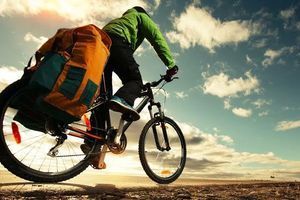
In 2020, when Tim was asked why nobody had repeated his ascent, he answered simply: "Because it's hard." He also mentioned Swedish adventurer Göran Kropp, whose journey to Everest by bicycle from Sweden was, in Tim's view, an even greater undertaking.
In 2025, new attempts returned to the Sea to Summit idea.
Bangladeshi adventurer Iqramul Hasan Shakil began his own expedition on 25 February 2025, walking from Cox's Bazar toward Everest. He planned to cover approximately 1,300 kilometres on foot and described the expedition as an attempt to follow in Tim's footsteps.
Then 2025 brought another remarkable story.
U.S.-based Ukrainian engineer Andriy Ushakov said he had travelled from sea level in New York to the summit of Everest in less than four days.
At first glance, this sounds like a new version of Sea to Summit. But the conditions were very different. Ushakov had used a hypoxic tent beforehand for acclimatization and used supplementary oxygen during the climb. Reuters also reported that the result had not been independently verified, and Nepal had no official body responsible for certifying such records at the time.
So these stories are interesting to compare, but they should not simply be described as exact repetitions of Tim's 1990 expedition.
The original Sea to Summit had a very specific set of conditions: travelling from sea level to the summit under his own steam, climbing the mountain alone and without supplementary oxygen. That is the achievement recorded by Guinness World Records.
More than three decades later, the idea is still difficult enough to attract new challengers.
How Sea to Summit Became a Brand
There is another fascinating chapter to the story.
The name Sea to Summit did not remain simply the name of an expedition.
Tim later co-founded an outdoor equipment company with gear designer Roland Tyson.
The company eventually became an international outdoor brand.
The official Sea to Summit story says that after the unusual 1990 Everest ascent, the Sea to Summit brand was born in 1991. Its name came directly from the journey of more than 1,126 kilometres from sea level to the Everest summit.
Today, Sea to Summit produces equipment for hiking, camping, mountaineering and other outdoor activities.
But the name still preserves the memory of that original journey.
The sea.
The mountains.
And everything in between.
From the Sea to the Summit - and Beyond
Perhaps that is why Tim Macartney-Snape's story is interesting even to people who will never climb Everest.
For some people, a love of mountains means a months-long expedition.
For others, it means a weekend hike.
For someone else, it may mean skiing, climbing, trekking or simply travelling somewhere they have never been before.
And sometimes mountains become such an important part of a person's life that they want to carry a reminder of them home.
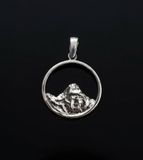
That feeling is at the heart of the Travel Jewelry Mountains Collection - jewelry inspired by mountains, travel and the freedom of being outdoors.
And in that sense, there is something that connects it to Sea to Summit.
You do not have to set a record.
You do not have to climb an eight-thousander.
Sometimes it is enough simply to have a place that keeps calling you back.
Mountains as a Direction
Tim Macartney-Snape began his journey through a university mountaineering club, went on to complete major Himalayan expeditions, stood twice on the summit of Everest and eventually turned one extraordinary expedition into the name of an international outdoor brand.
But Sea to Summit is remembered for more than numbers.
Its real strength is the idea itself.
What happens if you begin the journey not near the mountain, but far away from it?
In 1990, Tim answered that question with his own feet.
He began at the sea.
And ended on the summit of Everest.
Perhaps that is the most important thing about great mountain journeys: the summit is only the final point on the route.
The real journey begins much earlier.
What to Gift a Rock Climber: 20 Thoughtful Gift Ideas They'll Actually Use
Mount Everest: History, First Ascents, Routes and Modern Mountaineering
Ski Mountaineering: History, Evolution and the Most Challenging Ski Descents
Piolets d'Or - The Golden Ice Axe: History, Awards and Legendary Climbs
UIAA: History, Activities, Standards, Grading Systems and Its Role in Modern Mountaineering
Famous Bicycle Journeys Around the World: From Thomas Stevens to the Present Day