Among thousands of alpine plants, there is one that is recognized even by people who have never climbed a mountain.
Edelweiss.
A small white flower growing among rocks has become a timeless symbol of mountains, courage, freedom, and a love for the outdoors.
You rarely encounter it during an ordinary hike. That is precisely why edelweiss has inspired countless legends and has become a special emblem for mountaineers and travelers - a symbol of places that only a few people ever reach.
What Is Edelweiss?
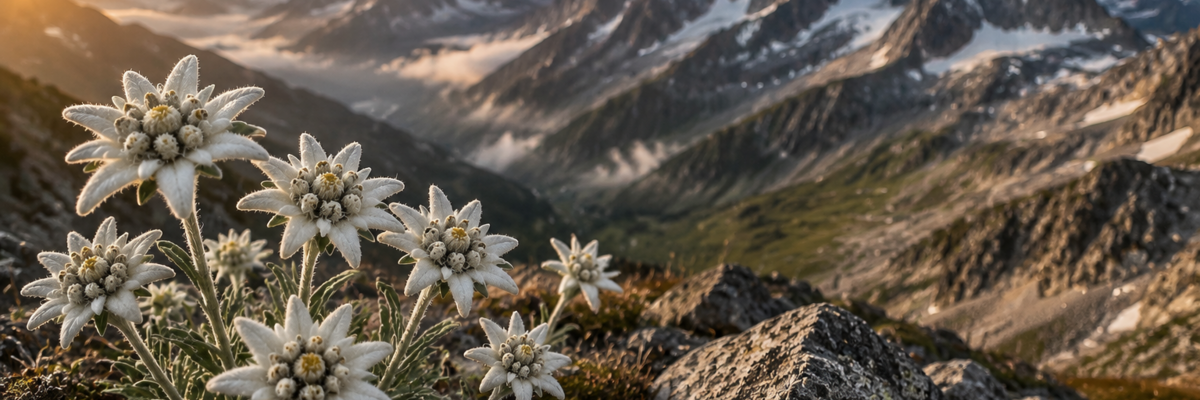
The Alpine edelweiss (Leontopodium alpinum) is a perennial mountain plant belonging to the daisy family (Asteraceae).
It is best known for its soft, silvery-white, velvety appearance. Those tiny hairs are not simply decorative - they are an ingenious natural adaptation.
They help the plant:
-
reflect intense ultraviolet radiation;
-
retain moisture;
-
protect against rapid temperature changes;
-
withstand strong mountain winds.
These adaptations allow edelweiss to survive where many other plants simply cannot.
Where Does Edelweiss Grow?
Edelweiss thrives in harsh alpine environments.
It grows on rocky slopes, limestone cliffs, and alpine meadows at elevations ranging from approximately 1,800 to over 4,000 meters (5,900-13,100 ft), depending on the species.
Different members of the Leontopodium genus can be found throughout the mountain ranges of Europe and Asia.
The Alps
The Alps are home to the world's most famous species, Leontopodium alpinum.
This is where edelweiss earned its legendary status and became one of the best-known symbols of mountain life.
The Carpathians
Edelweiss also grows in the Ukrainian Carpathians, although it is much rarer.
It survives only in a few high-altitude areas and is protected by law as a threatened species.
The Caucasus
Several species of edelweiss grow in the Caucasus Mountains.
They can be found on the slopes surrounding Mount Kazbek, Mount Elbrus, and many other high peaks.
The Tatra Mountains
In Poland and Slovakia, the Tatra Mountains have long associated edelweiss with alpine hiking, mountaineering, and national parks.
The Himalayas and Nepal
Although the classic Alpine edelweiss is native to Europe, numerous other Leontopodium species grow throughout the Himalayas.
They can be found in Nepal's high mountain regions, including areas near the Everest Base Camp Trek, the Annapurna region, and other Himalayan valleys.
Pamir and Tian Shan
Various species of edelweiss also grow throughout Central Asia.
The Pamir and Tian Shan mountain ranges provide ideal conditions thanks to their rocky terrain, cool temperatures, and harsh alpine climate.
Other Mountain Ranges of Asia
Species of Leontopodium are also found in the Karakoram, Hindu Kush, the Tibetan Plateau, and the mountains of western China.
Today, the genus includes more than 30 recognized species, most of which are native to Asia. While Alpine edelweiss remains the world's most famous species, Asia is actually the center of the genus's diversity.
Why Does Edelweiss Grow at High Altitudes?
High mountains present one of the harshest environments for plant life.
There are:
-
intense UV radiation;
-
dramatic temperature swings;
-
powerful winds;
-
short growing seasons;
-
rocky, nutrient-poor soil.
Edelweiss has evolved specifically to thrive under these conditions.
Its strong root system anchors itself between rocks, while its woolly leaves protect it from sunlight, cold, and dehydration.
Why Has Edelweiss Become a Symbol of the Mountains?
The answer is simple.
For centuries, only those willing to climb high into the mountains ever had the chance to see this remarkable flower.
Finding edelweiss often required crossing difficult terrain and reaching places inaccessible to most people.
As a result, it naturally became associated with:
-
courage;
-
endurance;
-
freedom;
-
adventure;
-
a passion for the mountains.
Eventually, it became one of the world's best-known symbols of mountaineering.
Legends of Edelweiss
Many legends surround this extraordinary flower.
One of the most famous tells the story of a young man who risked his life climbing dangerous cliffs to bring an edelweiss blossom to the woman he loved.
Other legends claim the flowers grew from the tears of mountain spirits or were gifts left behind by alpine fairies.
Although the stories differ, they all portray edelweiss as a symbol of devotion, bravery, and true love.
Edelweiss in Mountaineering
For mountaineers, edelweiss represents far more than a beautiful flower.
It appears on:
-
climbing club emblems;
-
mountaineering badges;
-
medals;
-
souvenirs;
-
expedition memorabilia.
For many climbers, it symbolizes unforgettable summits, difficult routes, and experiences that remain with them for life.
Edelweiss in Military History
Because of its connection with alpine environments, edelweiss became the traditional emblem of many mountain military units.
It has been used by:
-
Austrian mountain troops;
-
German mountain infantry (Gebirgsjäger);
-
various modern mountain units across Europe.
In these cases, the flower symbolizes endurance, professionalism, and the ability to operate in demanding alpine terrain.
Why Is Edelweiss a Symbol of Purity?
Its white appearance, delicate beauty, and remote habitat have made edelweiss a symbol of purity and untouched nature.
It is often associated with honesty, loyalty, and quiet inner strength - qualities that are not always immediately visible but carry lasting value.
Why Should You Never Pick Edelweiss?
Across much of Europe, edelweiss is a protected species.
It grows slowly, and climate change combined with heavy tourism has reduced many natural populations.
For that reason:
-
picking wild flowers is prohibited in many regions;
-
conservation programs protect their habitats;
-
fines may apply for disturbing protected plants.
The best way to appreciate edelweiss is to admire it where it naturally belongs.
Why Is Edelweiss So Difficult to Grow at Home?
Many people have tried to cultivate edelweiss in gardens or at home.
Unfortunately, it rarely thrives outside its natural habitat.
The plant depends on:
-
cool mountain nights;
-
abundant sunlight;
-
rocky, well-drained soil;
-
dry air;
-
short alpine summers.
Even when successfully cultivated, edelweiss often loses its compact shape and characteristic silvery appearance.
Interesting Facts About Edelweiss
-
The name Edelweiss comes from German and means "noble white."
-
The Leontopodium genus includes more than 30 different species, most of which grow in Asia.
-
Its woolly hairs protect the plant from intense ultraviolet radiation.
-
Edelweiss can grow directly among bare rocks where very few plants survive.
-
It has become one of the best-known symbols of the Alps and mountain culture around the world.
-
The flower has appeared in books, songs, films, and countless mountaineering traditions.
Edelweiss Jewelry by Travel Jewelry
For many people, edelweiss remains a reminder of the mountains long after they have returned home.
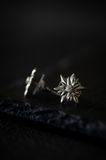
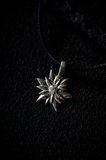
That idea inspired both the Edelweiss Pendant and the Edelweiss Earrings by Travel Jewelry.
They are more than jewelry inspired by a flower.
They represent freedom, adventure, mountain journeys, and the unforgettable feeling of standing among the peaks.
Conclusion
Edelweiss does not impress with bright colors or large blossoms.
Its beauty comes from where it grows.
Among rocks.
High above the valleys.
In places reached only by those willing to follow long mountain trails.
That is why this small white flower has remained one of the world's greatest symbols of the mountains - reminding us that the most meaningful things are often found at the end of the longest journeys.