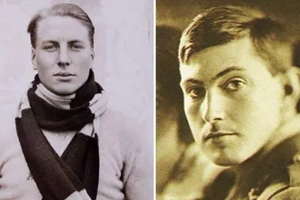
Peter Habeler: The Climber Who Changed the Meaning of "Without Oxygen"
Some mountaineers are remembered for a single summit. Others change the way an entire generation thinks about climbing. Peter Habeler belongs to the second group.
His name is inseparable from Reinhold Messner, but Habeler's own story is much broader than the famous Everest ascent of 1978. Yosemite big-wall climbing, the Eiger North Face, the first eight-thousander climbed in pure alpine style, several major Himalayan ascents and, decades later, a return to the Eiger at almost 75 - together they form a career built around lightness, speed, judgment and a very clear understanding of risk.

From Mayrhofen to the mountains
Peter Habeler was born on July 22, 1942, in Mayrhofen in Austria's Zillertal valley. He grew up surrounded by mountains and began climbing at a very young age. The local Alps became his natural training ground, but it quickly became clear that he was interested not only in reaching summits, but in moving efficiently through difficult terrain.
In 1965 he became a certified mountain guide. A year later he joined the Austrian training team for ski instructors. During the same period he was building a reputation through demanding climbs in the Alps and began forming the partnerships that would define his career.
Reinhold Messner and a new way of climbing
Habeler and Reinhold Messner formed one of the most influential climbing partnerships of the twentieth century. Their approach was simple in principle but radical in practice: carry less, move faster, and rely more heavily on the abilities of the climbers themselves.
This philosophy became especially important when they moved from the Alps to the highest mountains of Asia. But before that, Habeler was already testing the limits of what a European climber could do on the great walls of North America.
El Capitan and the Salathé Wall
In 1970 Habeler climbed the Salathé Wall on El Capitan in Yosemite with Doug Scott. The route was a major milestone in European big-wall climbing and helped establish Habeler as a climber capable of adapting the demanding techniques of Yosemite to his own alpine background.

The Eiger North Face: speed as a tool
In 1974 Habeler and Messner turned their attention to the Eiger North Face. They climbed the Heckmair Route in about ten hours after starting at 5 a.m.
The achievement was not simply a matter of setting a fast time. For Habeler and Messner, speed was a way of reducing exposure. Spending fewer hours in a dangerous wall meant spending less time exposed to falling rocks, changing weather and other objective hazards. Their light-and-fast approach was becoming a coherent alpine philosophy rather than simply a climbing style.
Hidden Peak: the first eight-thousander in alpine style
In 1975 Habeler and Messner travelled to the Karakoram and climbed Gasherbrum I, also known as Hidden Peak, reaching its 8,000-meter-plus summit by a new route.
The significance of the ascent went far beyond the summit itself. They climbed as a small two-person team in alpine style - without supplemental oxygen, without fixed ropes and without the system of large prepared high-altitude camps and support teams typical of major expeditions of the period.
The American Alpine Club's historical report on the Hidden Peak ascent records the climb as a landmark in the development of modern alpine-style Himalayan climbing.

Everest without supplemental oxygen
Three years later came the climb that made Habeler and Messner world famous.
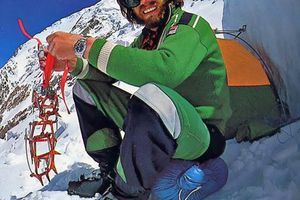
On May 8, 1978, Peter Habeler and Reinhold Messner reached the summit of Mount Everest without supplemental oxygen. It was the first confirmed ascent of Everest without bottled oxygen, and it became one of the defining moments in the history of high-altitude mountaineering.
It is important to understand what "without oxygen" means. It does not mean that there was no oxygen in the air. It means that the climbers did not use bottled oxygen to supplement the extremely thin atmosphere at altitude. Above 8,000 meters, the human body is operating in an environment where the reduced oxygen pressure makes sustained physical effort extraordinarily difficult.
Habeler's expedition was not an easy straight line to the summit. During an earlier attempt he suffered serious stomach problems and turned back. He later recovered, rejoined Messner and eventually reached the summit.

Guinness World Records documents the first ascent of Everest without supplemental oxygen.
What came after Everest?
Everest did not turn Habeler into a collector of all fourteen eight-thousanders. His ambitions were different. He continued climbing major mountains, but also devoted considerable time to his family, guiding and mountain education in the Zillertal.
His later Himalayan achievements included Nanga Parbat in 1985, Cho Oyu in 1986 and Kangchenjunga in 1988. These climbs showed that Everest was not the end of his high-altitude career - simply one of its most visible chapters.
Back to the Eiger at almost 75
In 2017, nearly four decades after his famous Eiger ascent with Messner, Habeler returned to the North Face. This time his partner was David Lama.
Habeler was almost 75 years old. The climb became a striking reminder that mountaineering is not simply a sport measured by age, speed or lists of achievements. Experience changes the way risk is perceived, and Habeler had spent a lifetime learning how to read mountains.
Archival coverage of his life records the 2017 Eiger ascent as one of the remarkable late chapters of his climbing career. See the archival photo gallery covering Peter Habeler's life and climbing career.
The ability to turn around
Perhaps one of the most valuable parts of Habeler's legacy is not a particular summit at all. It is his attitude toward turning back.
For an experienced climber, deciding not to continue can be harder than continuing. Ambition, weather, fatigue, time pressure and expectations can all push a person higher when the safer decision is to retreat.
Habeler's long experience illustrates an important distinction: turning around is not automatically failure. A mountain does not become less meaningful because the summit was not reached. Good judgment is part of the climb, and knowing when conditions are no longer acceptable can be one of the clearest signs of experience.
A lifetime achievement award
In 2026, the Piolets d'Or recognized Peter Habeler with its Lifetime Achievement Award, the Walter Bonatti Award. The choice reflects the breadth of his influence: from the Alps and Yosemite to the Karakoram and Everest, Habeler's career helped redefine what small-team, lightweight and technically demanding high-altitude climbing could look like.
The official Piolets d'Or announcement about Peter Habeler's 2026 Lifetime Achievement Award describes the recognition as a tribute to a career that has left a lasting mark on mountaineering.
A collection of mountains
Peter Habeler has spent his life collecting mountain stories - the Alps, Yosemite, the Karakoram, the Himalaya, eight-thousanders and routes that became part of climbing history.
At Travel Jewelry, we also believe that mountains can be collected - in memories, routes, photographs and jewelry. For one person, it may be a peak they have already climbed. For another, it may be a favorite mountain. For someone else, it may be a future expedition that has not happened yet.
In the Travel Jewelry "Mountains" collection, pendants dedicated to different peaks come together. Your own collection can grow gradually - one mountain, one story and one memory at a time.
More than an Everest story
It would be easy to remember Peter Habeler simply as one half of the team that first climbed Everest without supplemental oxygen. But that would leave out most of the story.
His real legacy is a way of thinking about climbing: light rather than overloaded, fast when speed improves safety, technically precise, flexible when conditions change and humble enough to turn around when necessary.
That philosophy remains relevant long after the records themselves have become history. Mountains change, equipment changes and generations change. The need for judgment does not.
Piolets d'Or 2026: Winners, Outstanding Ascents and Special Awards
Sea to Summit: How Tim Macartney-Snape Walked from the Sea to the Summit of Everest
UIAA: History, Activities, Standards, Grading Systems and Its Role in Modern Mountaineering
Piolets d'Or - The Golden Ice Axe: History, Awards and Legendary Climbs
Beyond the Limits: How Reinhold Messner Accomplished the First Solo Ascent of Everest Without Oxygen
Mount Everest: History, First Ascents, Routes and Modern Mountaineering