Skiing and snowboarding can simply be a way to enjoy winter mountains. But for some people, that is not enough.
Some try to go as fast as possible. Others fly hundreds of metres through the air. Some spin so many times that keeping count becomes difficult. And there are those who decide that spending several days skiing or snowboarding is a perfectly reasonable idea.
Over the decades, winter sports have produced dozens of record categories. Some belong to professional competitions, others are recognized by Guinness World Records, while some are so unusual that they sound more like experiments.
Here are some of the most fascinating ski and snowboard records - from speeds above 250 km/h to a snowboard 10 metres long.
255.5 km/h - the fastest speed on skis
When it comes to speed skiing, the numbers start to feel almost unreal.
On March 22, 2023, French skier Simon Billy reached 255.5 km/h in Vars, France, setting the world speed record on skis.
That is about 71 metres per second. In other words, at that speed a skier covers a distance longer than a basketball court in just one second.
The previous record belonged to his father, Philippe Billy, who reached 243.902 km/h in 1997.
Speed skiing is a discipline of its own. The athlete is not trying to perform tricks or carve stylish turns - the goal is simply to complete the specially prepared course as quickly as possible. Aerodynamics, body position, ski design and snow conditions all play a major role.
Simon Billy's record remains one of the most impressive speed achievements in skiing. Guinness World Records - Fastest Skiing Speed
201.907 km/h - the fastest snowboarder
Snowboarding has its own speed record.
On May 2, 1999, Australian snowboarder Darren Powell reached 201.907 km/h in Les Arcs, France.
What makes this record particularly interesting is that it has stood for more than a quarter of a century.
At first glance, it might seem that a snowboard should be slower than skis because of its larger contact area with the snow. But in speed riding, board design is only one part of the equation. Body position, aerodynamics, course conditions and technique all matter.
The difference between the two records is almost 54 km/h. Yet reaching 201.907 km/h on a snowboard is still an extraordinary achievement. Guinness World Records - Fastest Speed on a Snowboard
213.65 km/h - and only one ski
Now for a record that sounds even stranger.
In 2006, Australian Paralympic skier Michael Milton reached 213.65 km/h on a single ski.
This is not a mistake in the Guinness category. Milton was a Paralympic athlete who skied on one ski following the amputation of his leg. He achieved the record in Les Arcs, France. Guinness World Records - Speed One-Legged Skiing
It is one of those records where the number is impressive, but the story behind it is even more remarkable.
254.5 metres - a flight on skis
If speed makes you think of cars, the next record starts to feel more like aviation.
On March 30, 2025, Slovenian ski jumper Domen Prevc flew 254.5 metres at Planica, Slovenia.
The previous world record was 253.5 metres, set in 2017.
A 254.5-metre flight is almost two and a half football fields from take-off to landing.
It is important to distinguish ski flying from freestyle skiing. In ski flying, the athlete uses the aerodynamics of the entire body and skis to remain airborne for as long as possible. FIS - Domen Prevc's World Record in Planica
Women's ski flying is developing rapidly too
Women's ski flying developed significantly later than the men's discipline.
In 2026, Nika Prevc set a women's ski flying world record of 242.5 metres in Planica during training.
The same season also saw the first women's Ski Flying World Cup competition held in Planica.
This means the category is still developing rapidly, and the record book may look very different again in just a few years.
7.41 metres above the superpipe
If ski flying is about distance, snowboarding can produce spectacular records for height.
During the 2022 Beijing Winter Olympics, Kaishu Hirano reached 7.41 metres above the lip of the superpipe with a backside air.
Seven and a half metres above the edge of the pipe is roughly the height of a two-storey building.
And this is not simply a jump upward. The rider has to control the board, body position and rotation before returning to the wall of the pipe at exactly the right point. Guinness World Records - Highest Snowboard Air on a Superpipe
From 360 to 1800: when the rotations stop making sense
Snowboarding has another category where the progression of records is particularly easy to see.
360 - one full rotation.
720 - two.
1080 - three.
1440 - four.
1800 - five full rotations.
But the number of rotations is only part of the difficulty. Modern big-air tricks combine rotations with corks - off-axis flips and rotations that take the rider well beyond a simple vertical spin.
Chris Corning became the first snowboarder to land a quad cork in FIS competition. He later performed a quad corked 1800 in Big Air competition - four inversions combined with five full rotations.
The remarkable thing about snowboarding is how quickly the limits keep moving.
A trick that once looked impossible can eventually become part of a major competition.
Endurance records: when hours become days
If 250 km/h is about a short moment of extreme performance, endurance records work in the opposite direction.
The longest snowboard marathon lasted 180 hours and 34 minutes.
That is more than seven and a half days.
Austrian snowboarder Bernhard Mair set the record in Bad Kleinkirchheim in 2004. During the marathon, he covered 820.8 km, accumulated 134,520 vertical metres and used the ski lift 456 times. Guinness World Records - Longest Marathon Snowboarding
So the record was not simply about staying on a snowboard for seven days. It involved repeating the entire cycle of climbing and descending again and again.
More than 200 hours on skis
There is a similarly extraordinary record in skiing.
Australian skier Nick Willey spent 202 hours and 1 minute continuously skiing.
During that time, he completed 916 runs and covered more than 1,150 km. Guinness World Records - Longest Marathon Skiing
That is no longer simply a test of athletic endurance. It raises an entirely different question: how can the human body keep functioning under such a schedule for more than eight days?
475.88 km in 24 hours
There is also a more traditional endurance challenge - how far can someone travel in a single day?
In 2024, Finnish skier Teemu Virtanen set the Guinness World Record for the greatest distance on Nordic skis in 24 hours - 475.88 km.
That works out to almost 20 km every hour for an entire 24-hour period. Guinness World Records - Greatest Distance in 24 Hours of Nordic Skiing
The women's record is 375.5 km in 24 hours, set by Finnish skier Anni Angeria in 2018. Guinness World Records - 24-Hour Nordic Skiing Record, Female
93.15 km on a snowboard - on an indoor slope
Here is another unusual category.
In 2015, Benjamin Stansfield snowboarded 93.15 km in 24 hours on an indoor ski slope in the United Kingdom.
The slope itself was only 138 metres long.
That meant riding essentially the same short route over and over again for an entire day. Guinness World Records - Greatest Distance Snowboarding on an Indoor Ski Slope in 24 Hours
Imagine 24 hours, a 138-metre slope and an endless cycle of climbing and descending.
The world's largest ski race
Records are not always individual.
One of the best examples is Vasaloppet in Sweden, one of the world's largest cross-country ski races.
In 2011, 15,800 participants took part in the 90-kilometre race.
The course runs from Sälen to Mora, and the event itself dates back to 1922. Guinness World Records - Largest Cross-Country Ski Race
At that scale, it starts to feel less like an ordinary race and more like a huge winter festival.
88 snowboarders in one race
Snowboarding has a smaller but still impressive mass-participation record.
The Guinness World Record for the most participants in a snowboard race is 88 people.
It was set at Mount Hutt in New Zealand in 2007. Guinness World Records - Most Participants in a Snowboard Race
From the side of the slope, it must have looked less like a normal race and more like an entire army of snowboarders being released at once.
The world's largest snowboard
And now for a record that absolutely deserves its own section.
In 2007, a snowboard measuring 10 metres long and 2.15 metres wide was created in Switzerland.
A total of 27 people rode it simultaneously.
Building the giant board took around 200 hours. Guinness World Records - Largest Snowboard
It is not exactly what most people imagine when they hear the word "snowboard".
But technically, it is one.
The strangest side of winter records
Guinness World Records contains a huge number of categories, and not all of them are about professional sport.
For example, the record for the largest number of people making snow angels at the same time stands at 15,851 people.
Records like this show that winter culture is about more than the Olympics, World Championships and hundredths of a second.
Sometimes a record is simply a very large number of people deciding to do something incredibly wintery at the same time.
Records that show how quickly winter sports evolve
The most interesting thing about all these numbers is not necessarily the records themselves.
It is how quickly the definition of "impossible" keeps changing.
Once, 360 degrees seemed like a difficult trick. Then came 720, 1080, 1440, 1620 and 1800.
Big-air tricks that once seemed unimaginable were followed by triple corks, quad corks and increasingly complex combinations.
In ski flying, 200 metres once seemed almost impossible. Today, the world record is well above 250 metres.
And that does not mean the record books are running out of space.
New equipment, athlete preparation, jump construction and technical development continue to create new possibilities.
The limits keep moving.
Skiing and snowboarding are about more than records
Most people who put on skis or a snowboard in winter are not planning to reach 250 km/h or land an 1800.
And that may be the best thing about winter sports.
For some, it is professional competition.
For others, it is freeriding through fresh snow.
For someone else, it is the first run after waiting all year for winter.
For another person, it is a trip to the mountains with friends.
And for many, it is simply a love of snow, mountains and the feeling of freedom.
That side of winter sports can be just as inspiring as any world record.
A winter worth keeping with you
Record holders leave numbers behind them.
255.5 km/h.
254.5 metres.
7.41 metres above a superpipe.
180 hours on a snowboard.
But everyday winter life is made of very different moments - mountain air, snow under your feet, skis, snowboards, the first morning run and memories of places you want to return to.
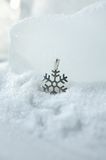
That feeling is what inspires the Travel Jewelry winter collection - jewelry connected with snow, snowboarding, mountains and the atmosphere of the cold season.
Explore the Travel Jewelry winter collection.
You do not have to set a world record to keep your own winter story with you.
Gift Ideas for a Skier: Practical and Meaningful Presents for Winter Enthusiasts
What to Gift a Snowboarder: Practical and Meaningful Gift Ideas for Winter Adventure Lovers
The History of Skis: Evolution, Types, Technology and Skiing in Sport
The History of Snowboarding: Origins, Evolution, Technology and Culture
Types of Skis and Skiing Disciplines: From Cross-Country Skiing to Freeride and Speed Records
Snowboard Types and Riding Disciplines: From Freeride to Olympic Events