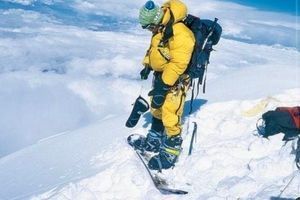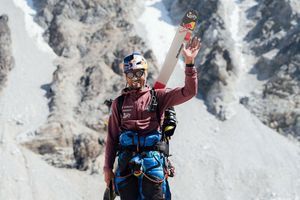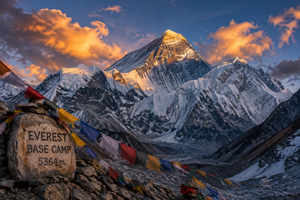
On August 20, 1980, an event took place that forever transformed the mountaineering world and redefined the understanding of human endurance. Italian climber Reinhold Messner reached the highest point on Earth - Mount Everest (8,848 m).
Everything about this climb was extraordinary: no oxygen tanks, no Sherpa support, no backup team, and no pre-fixed ropes. It was an absolute solo ascent executed during the most demanding time of the year.
Who is Reinhold Messner: The Man Who Redefined Mountaineering
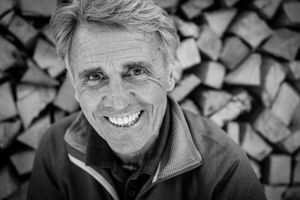
Reinhold Messner is a name synonymous with uncompromising dedication to the mountains. Born in South Tyrol, Italy, he grew up surrounded by the Alps, which shaped his lifelong journey.
Messner made history as the first mountaineer to climb all 14 of the world's eight-thousand-meter peaks, completing every single one in "pure" Alpine style - without supplemental oxygen or heavy expedition camps. His philosophy relied on speed, minimalism, and complete self-reliance.
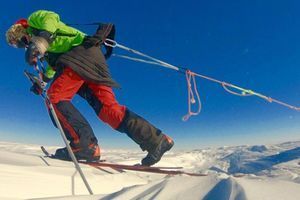
Beyond mountaineering, Messner crossed the Gobi Desert, Antarctica, and Greenland on foot. Today, he is the author of over 60 books, founder of the Messner Mountain Museum (MMM) network, and a researcher dedicated to preserving pristine mountain nature and traditional cultures.
A Solo Challenge During the Monsoon: Why the Route Was Considered Impossible
Most traditional Everest expeditions target a short "weather window" in the spring, during May, when winds ease before the monsoon arrives. Messner chose to go in August - right at the peak of the summer monsoon.
This decision brought constant hazard:
-
Deep fresh snow that buried crevasses and made every single step exhausting.
-
Persistent fog, stripping away visibility and turning the terrain into a white void.
-
High avalanche risk on steep snow slopes.
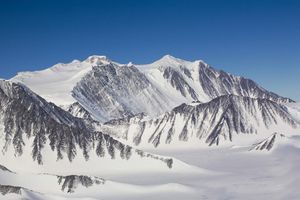
Messner's route approached from the north, from the Tibetan side. Starting from the Rongbuk Glacier and ascending to the North Col, he forged a new path through a formidable ravine later named the Norton Couloir.
Today, this Tibetan route looks vastly different: strict regulations, high permit fees, guided groups, and fixed safety ropes along the way. In 1980, however, it was absolute wilderness where no other expedition existed for hundreds of miles.
The Only Companion in Base Camp: Love and Waiting
Although the climb was completely solo, Messner was not entirely alone at the base of the mountain. Waiting for him at the Rongbuk Glacier base camp was his girlfriend, Nena Holguin.
While Reinhold fought sheer exhaustion above 8,000 meters, Nena spent hours scanning the vast snowfields of Everest through a telescope, searching for a tiny black dot in the white wilderness. She kept a journal documenting those tense days of waiting.
When the exhausted climber returned to the tent three days later - sunburnt, with cracked lips, and severely dehydrated - he collapsed into the snow out of sheer fatigue. Nena’s presence and faith in base camp acted as the mental anchor that helped pull him back from the edge.
Pure Style and the Aesthetics of Oxygen-Free Climbing
Until the late 1970s, physiologists insisted that ascending above 8,000 meters without bottled oxygen would inevitably trigger fatal brain or lung edema. Messner, alongside Peter Habeler, disproved this belief in 1978, and in 1980 Messner proved it again - entirely alone.
For Messner, foreswearing oxygen tanks was a matter of ethics and philosophy:
-
An honest dialogue with the mountain: using oxygen artificially lowers the mountain's height by several thousand meters.
-
Alpine style: minimal gear, high speed, no intermediate high-altitude camps, and no fixed ropes.
-
Absolute focus: in the "death zone," every step requires 10 to 15 deep breaths, and thoughts slow down to survival instincts.
"I go to the mountains not to die, but to live," Messner often stated, emphasizing that true mountaineering lies not in gambling with fate, but in consciously overcoming one's own fear.
"The Crystal Horizon": The Story Firsthand
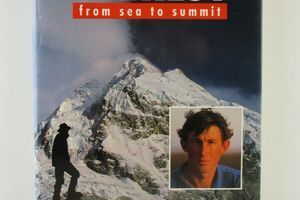
Reinhold Messner recorded this extraordinary experience in one of his finest books, "The Crystal Horizon".
It is far more than an expedition log detailing altitudes and angles. It is a deeply personal, honest account of a human standing alone before the raw grandeur of nature. Messner candidly describes his hypoxia-induced hallucinations, the dread of falling into a crevasse early in the climb, the profound sense of solitude, and the surreal beauty of the Tibetan landscape.
It remains essential reading for anyone seeking inspiration or wanting to understand the philosophy of exploration in its purest form.
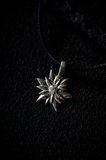
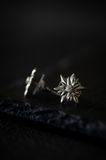
Silver Everest Pendant by Travel Jewelry
Everest has always been more than a physical point on a map at 8,848 meters. It stands as a symbol of personal aspirations, resilience, and the inner drive within each of us.
For those who share a love for the mountains and treasure memories of their own trails and dreams, we created our subtle Silver Everest Pendant.
This compact, finely detailed piece captures the iconic silhouette of the world's highest peak. It serves as a meaningful everyday reminder that even the highest goals are reached step by step, as long as you keep moving forward with purpose.
Conclusion: Your Own Everests
Reinhold Messner's story proves a fundamental truth: most limits and obstacles reside only in our minds. Whether you are climbing a real physical peak or pursuing a personal life goal, the key is staying true to your chosen path and remembering why you started.
Everest Base Camp Trek - One of the Greatest Adventures on Earth
The Climbing Carabiner: The Story of One of the Most Important Inventions in Mountaineering
Mount Everest: History, First Ascents, Routes and Modern Mountaineering