Crossing Antarctica means more than simply reaching the South Pole. It means travelling through one of the harshest environments on Earth, where hundreds or even thousands of kilometres separate an expedition from the nearest help, weather can halt progress for days, and every kilogram of equipment affects the chances of completing the route.
For more than a century, people have attempted to cross the continent in different ways: on skis and dog sleds, with wind-powered kites, and in tracked tractors and specially designed vehicles. Some expeditions became historic successes; others changed course or failed to achieve their original goal. Together, they show that “crossing Antarctica” can describe very different kinds of challenges.

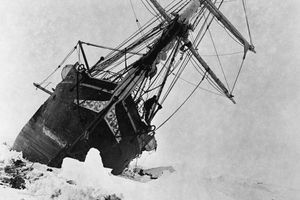
Endurance became trapped in pack ice during Ernest Shackleton’s expedition.
Photo: Frank Hurley, 1915. Historical expedition photograph hosted on Wikimedia Commons.
Why Is Crossing Antarctica So Difficult?
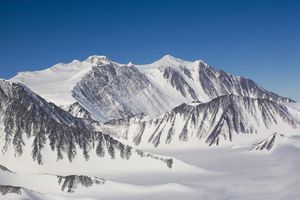
Antarctica is the coldest, windiest and highest continent on Earth by average elevation. Much of a crossing runs not over a smooth plain but across an ice sheet that conceals mountain ranges, basins and irregular bedrock. Even where the horizon looks perfectly flat, wind forms sastrugi - hard ridges of snow that slow skiers and jolt sledges.
Expeditions face several distinct hazards. Near the coast and on ice shelves, deep crevasses and unstable ice can pose a threat. The climb onto the plateau may involve steep glaciers and crevasse fields. Farther inland, altitude, severe cold, whiteouts, headwinds and weeks of monotonous terrain create both physical and psychological strain.
Logistics are just as important. An expedition must calculate food, fuel, tents, clothing, navigation equipment, repair kits and communications gear. The longer the route, the more supplies must be hauled. For teams aiming to travel unsupported, a mistake in those calculations can become life-threatening.
That is why distance alone does not determine how difficult a route is. The start and finish points, elevation gain, ice conditions, mode of travel, access to resupply and the criteria used to define a crossing all matter.
Shackleton and Endurance: The Crossing That Never Happened
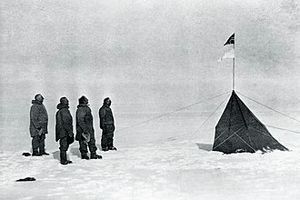
In 1914, British explorer Ernest Shackleton set out on the Imperial Trans-Antarctic Expedition with an ambitious objective: to cross Antarctica from the Weddell Sea to the Ross Sea via the South Pole. Roald Amundsen had already reached the South Pole, and a transcontinental journey was considered one of the last great geographical challenges of the heroic age of polar exploration.
The plan relied on two teams. Shackleton’s party was to land near the Weddell Sea and travel across the continent. A second party, arriving aboard Aurora from the Ross Sea side, was to lay depots along the final section of the route. Success depended not only on the main party but also on the supporting team’s ability to establish supplies in the right places.
But Endurance never reached its intended landing site. In January 1915, pack ice trapped the ship, which was crushed and sank on 27 October. The crew abandoned ship and struggled to survive on drifting ice. They eventually reached Elephant Island, while Shackleton and a small group made a dangerous boat journey to South Georgia to organise a rescue.
They did not cross Antarctica. Yet the expedition became one of the best-known survival stories in polar history: every member of the crew returned alive, even though the original plan had to be abandoned. It is a reminder that in Antarctica, an expedition can fail to begin its intended crossing before its team has even reached the continent.
More about the expedition’s aims and course can be found in the Library of Congress historical material on Shackleton’s book South.
1957-1958: The First Successful Overland Crossing of Antarctica

Tracked vehicles were central to the first successful overland crossing of Antarctica.
Historical photograph from the 1957 expedition. Source: Wikimedia Commons, Commonwealth Trans-Antarctic Expedition collection.
The first successful overland crossing of Antarctica was completed by the Commonwealth Trans-Antarctic Expedition led by British geographer Vivian Fuchs. On 2 March 1958, the team reached Scott Base on the coast of the Ross Sea, completing a route of approximately 3,473 kilometres in 99 days. The journey ran from Shackleton Base, via the South Pole, to Scott Base.
This was not a ski crossing in the usual sense. The expedition used motorised equipment, including tracked tractors and snow vehicles, to carry people, scientific instruments, fuel and food. Yet machines did not eliminate the dangers: vehicles could bog down in soft snow, be damaged by rough terrain or need repairs in places where spare parts were not readily available.
New Zealand explorer Edmund Hillary and his team played an important role. Travelling from the Ross Sea side, they established Scott Base, prepared the route and laid supply depots across the plateau. Hillary’s party was the first in the expedition to reach the South Pole using motorised vehicles. Fuchs approached the Pole from the opposite direction and then continued along the route prepared by Hillary’s team.
The crossing was not the achievement of a single person or machine, but of an entire logistical system: ground teams, vehicles, aerial reconnaissance, bases and supply depots placed along the route. That is why the expedition became a turning point in the history of trans-Antarctic travel.
In December 1957, as part of the same expedition programme, a DHC-3 Otter aircraft made a non-stop flight across the continent from Shackleton Base, via the South Pole, to Scott Base. The overland crossing and the flight were distinct achievements, but both demonstrated how transport and navigation were changing what explorers could accomplish. A timeline of Antarctic exploration is available from Discovering Antarctica.
Typical Routes Across Antarctica
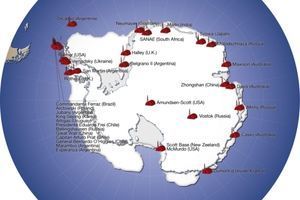
There are several routes described as Antarctic crossings, and their start and finish points do not always coincide. The best-known classic route runs from the Weddell Sea coast, across the South Pole, towards the Ross Sea. This was the general logic of Fuchs’s expedition, although its actual route was defined by specific bases and carefully prepared logistics.
Other expeditions have started from the Ronne Ice Shelf or near the Antarctic Peninsula and finished on the Ross Sea coast or near Mirny Station. Such routes can be longer because they cross a substantial part of the continent diagonally. The international expedition of 1989-1990, for example, travelled from Seal Nunataks near the Antarctic Peninsula to the Soviet Mirny Station, passing through the South Pole.
It is important to distinguish a full crossing from a journey to the South Pole. An expedition that starts on the coast and ends at the Pole has completed only part of a transcontinental route. Likewise, reaching the Pole of Inaccessibility or Dome Argus does not, by itself, mean that a team has crossed from one coast to another.
Unusual Routes: Dog Sleds, Snow Kites and Unsupported Travel
The International Trans-Antarctica Expedition, 1989-1990

Members of the 1989-1990 International Trans-Antarctica Expedition during their long journey across the ice.
Photo: Transantarctica expedition archive, published on Jean-Louis Étienne’s official website.
In 1989-1990, six explorers from different countries completed the first non-motorised crossing of Antarctica. The team, led by American Will Steger and French explorer Jean-Louis Étienne, set out from Seal Nunataks on the Antarctic Peninsula and reached the Soviet Mirny Station on the coast of the Davis Sea, travelling via the South Pole.
The route was approximately 6,048 kilometres long, and the expedition lasted about 220 days. The explorers travelled on skis and carried equipment and food on sledges pulled by dog teams. The team included members from the United States, France, the Soviet Union, the United Kingdom, China and Japan. The expedition also had an international conservation goal: to draw attention to Antarctica’s fragile environment and the need to protect it.
This was a non-motorised crossing, but it should not be described as completely unsupported. The expedition received aircraft assistance after the team could not locate some supplies that had been cached in advance. Such details matter when comparing polar achievements.
Børge Ousland: A Solo Crossing Without Resupply
In 1996-1997, Norwegian polar explorer Børge Ousland completed the first solo, unsupported crossing of Antarctica without external resupply. He started from Berkner Island in the Weddell Sea on 15 November 1996 and reached the McMurdo Sound area on 17 January 1997.
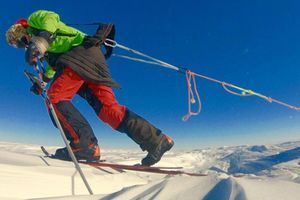
Over 63 days, Ousland covered approximately 2,999 kilometres, hauling a sledge that initially weighed around 185 kilograms. He used skis and a kite to harness favourable winds. Unlike members of a team expedition, he had no partner with whom to share the workload, decision-making or risks. Every delay, navigational error or change in weather was his responsibility alone.
His achievement was not the longest route in history, but the combination of a crossing, a solo journey and no external resupply. It set a new benchmark for autonomy in polar travel.
Verified records of women’s trans-Antarctic achievements can also be compared in the Guinness World Records entry on the first female crossing of Antarctica.
Geoff Wilson: The Pole of Inaccessibility and Dome Argus
In 2019-2020, Australian adventurer Geoff Wilson completed a 5,179-kilometre journey by snow kite in 58 days. He travelled from the Thor’s Hammer area to Novolazarevskaya Station, passing the Pole of Inaccessibility - the point in Antarctica farthest from the coast - and Dome Argus, one of the highest regions of the ice plateau.
The kite helped pull Wilson and his loaded sledge, turning powerful winds from an obstacle into a source of propulsion. He had planned to include the South Pole in his route, but changed his plan because of a fuel leak and concerns that he might not have enough fuel to prepare food until the end of the expedition.
Wilson’s journey is therefore classified as a loop route, not a complete crossing via the South Pole. It is still remarkable: he covered an extraordinary distance without motorised propulsion or external resupply, reaching some of the most remote areas of the continent.
Under Antarctica: A Scientific Kite-Ski Crossing, 2025-2026
During the 2025-2026 season, French glaciologist Heidi Sevestre and explorer Matthieu Tordeur undertook an 80-day expedition of approximately 4,000 kilometres across the Antarctic interior. They travelled on skis using wind kites and reached both the geographic South Pole and the Soviet Pole of Inaccessibility.
This was more than a sporting challenge. The team carried ground-penetrating radar to investigate the structure of the ice sheet and collect data that could help scientists better understand Antarctic ice history and the continent’s potential contribution to global sea-level rise. Sevestre became the first known woman to complete this kite-ski route and reach the Pole of Inaccessibility using a kite.
There is an important logistical detail: specialised polar vehicles transported the team from the coast up onto the high plateau. They then completed the main journey across the plateau on kite skis, hauling their equipment. The expedition is best described as a scientific crossing of the Antarctic interior, rather than a fully unsupported coast-to-coast journey.
Crossing on Specialised Vehicles: The Moon Regan Expedition of 2010
In November and December 2010, the Moon Regan expedition tested an unusual way to travel across Antarctica. Ten participants set out from Union Glacier, reached the South Pole, continued towards the Ross Ice Shelf and then returned along the same route. The total distance was about 4,000 kilometres, and the journey lasted 20 days.
The team used two six-wheeled scientific vehicles and a single-person bio-inspired vehicle that travelled on skis and ran on biofuel. The vehicle was designed to test whether specialised wheeled and ski-based machines could operate reliably in polar conditions and help researchers collect data.
This was reported as the first round-trip crossing of Antarctica using wheeled vehicles. It should not be confused with the first successful overland crossing of the continent in 1957-1958: Moon Regan started and returned to Union Glacier, and the expedition’s distinctive achievement was its transport experiment.
Crossing Antarctica by Air
Overland expeditions take weeks or months, but aircraft made it possible to cross the continent in hours. In December 1957, as part of the Commonwealth Trans-Antarctic Expedition programme, a DHC-3 Otter aircraft made a non-stop flight from Shackleton Base, via the South Pole, to Scott Base. Its route broadly followed the direction of Fuchs’s overland crossing.
The flight was a different kind of achievement from travelling over the surface. It did not require hauling cargo by sledge or navigating crevasses, but depended on aircraft reliability, fuel, navigation, weather and the availability of safe landing areas in an emergency. Aviation also remains crucial to modern overland expeditions, transporting participants, placing supply depots and enabling emergency evacuation.
Women Who Crossed Antarctica

Modern polar explorers continue to expand the limits of unsupported travel in one of the harshest environments on Earth.
Photo: Guinness World Records, feature on Preet Chandi’s polar achievements.
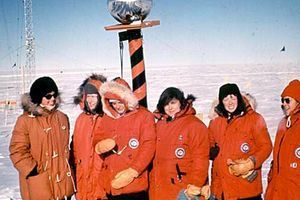
The history of trans-Antarctic expeditions was for a long time almost exclusively male. Women were excluded from many polar programmes, while their participation in scientific research was often restricted by assumptions about physical endurance and life in extreme conditions. Over time, however, women became full participants in polar science and completed some of the most challenging ski journeys in Antarctic history.
Liv Arnesen and Ann Bancroft: The First Female Crossing, 2000-2001
Norwegian explorer Liv Arnesen and American explorer Ann Bancroft became the first women to cross the Antarctic landmass on skis. Their expedition began on 13 November 2000 in the Queen Maud Land region, crossed the South Pole and ended at the edge of the Ross Ice Shelf on 11 February 2001.
Over 94 days, they covered approximately 2,747 kilometres. They travelled on skis and used wind kites when conditions allowed, each pulling her own supply sledge. The expedition was unsupported in the sense that they received no resupply along the route. It also demonstrated the value of teamwork: the two explorers could share the workload, support each other and make decisions together in an environment where every mistake cost time and energy.
Felicity Aston: The First Woman to Cross Antarctica Alone on Skis
In 2011-2012, British polar explorer Felicity Aston travelled 1,744 kilometres from the Ross Ice Shelf region to Hercules Inlet via the South Pole. The journey took 59 days. She became the first woman to complete a solo ski crossing of Antarctica.
Unlike Arnesen and Bancroft, Aston travelled without a kite or another means of propulsion: she pulled her sledge herself. However, supplies were delivered along the route, and part of her journey followed a prepared trail to the South Pole. Her achievement is therefore best described as the first solo ski crossing by a woman, rather than a completely unsupported expedition with no assistance of any kind.
Preet Chandi: Pushing the Limits of Solo Polar Travel
British Army medical officer Preet Chandi, also known as Polar Preet, has become one of the most prominent contemporary polar explorers. In 2021-2022, she completed a solo expedition to the South Pole without external resupply, and later returned to Antarctica for further challenges and record-setting journeys.
Her story is important to the wider history of women in polar exploration, but reaching the South Pole must be distinguished from crossing the entire continent. A solo journey to the Pole is not, by itself, a trans-Antarctic crossing; Chandi is included here as an example of how women continue to extend the limits of unsupported polar expeditions.
The achievements of Arnesen, Bancroft and Aston cannot be reduced to a single “first” record. A team crossing, a solo crossing, travel using a wind kite and a journey without a propulsion aid are different challenges, each requiring its own preparation and criteria.
The Most Challenging Sections of a Crossing
The most exhausting parts of a trans-Antarctic journey often occur where the terrain changes. Climbing through the Transantarctic Mountains may involve glaciers, steep slopes and crevasse fields. The high plateau tests explorers with cold, altitude, wind and long distances between support points. Near the coast, teams must assess the condition of shelf ice and the safety of the route onto the continent.
For skiers and sledge teams, sastrugi and headwinds can be especially draining. Snow kiting requires suitable wind direction and strength: in the wrong conditions, a kite offers no help and can make control more difficult. Motorised vehicles face their own challenges, including fuel consumption, breakdowns, traction and the possibility of repairs far from a base.
There is also the human factor. An expedition must function as a system in which navigation, pace, nutrition, sleep, communication and psychological endurance are equally important. In such an environment, completing a crossing means more than covering the distance: it means retaining the ability to make sound decisions day after day.
Can Antarctica Be Crossed Today?
Yes, but it remains a major expedition rather than an ordinary tourist route. Modern polar travellers may choose skis, snow kites, motorised vehicles or a combination of methods. Some expeditions receive logistical support; others aim to travel without resupply; scientific teams combine crossings with measurements of ice, climate and geology.
When comparing expeditions, it is important to look beyond the reported distance. The exact start and finish points matter, as does whether the route passed through the South Pole, whether supplies were delivered externally, whether engines or kites were used, and whether the team returned along the same route. These criteria help distinguish a full crossing from a loop journey, a trip to the Pole or a transport experiment.
Crossing Antarctica remains a test in which human endurance depends on science, technology, preparation and respect for the environment. The stories of Shackleton, Fuchs and Hillary, Ousland, Wilson, Moon Regan, Sevestre and Tordeur, Arnesen, Bancroft and Aston show just how different the routes across one continent can be.
Antarctica’s icy landscapes inspire more than explorers. Its moving lines, frozen waves and wind-sculpted forms also find an echo in jewellery. Travel Jewelry’s Icy Wave earrings carry this theme into a different scale - a reminder of the power, movement and beauty of the icy world.
There is no single universal record for crossing Antarctica. Each route must be assessed according to its purpose and conditions: crossing the continent in vehicles, travelling on skis, harnessing the wind or going alone without resupply are different achievements. Together, they tell the story of humanity’s continuing effort to explore the limits of what is possible.
Women in the History of Antarctic Exploration: Pioneers, Scientists and Polar Explorers
Mountaineering in Antarctica: Mountains, Volcanoes and Unclimbed Peaks
Vinson Massif: Climbing Antarctica’s Highest Peak
Piolets d'Or 2026: Winners, Outstanding Ascents and Special Awards
Ski Travel: The History of Ski Touring, Ski Expeditions and Winter Journeys
Gift Ideas for a Skier: Practical and Meaningful Presents for Winter Enthusiasts