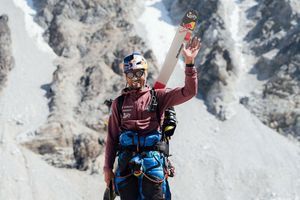
There are mountains people return to again and again not because they cannot leave them behind, but because a particular line on the map still feels unfinished. For French alpinist Tiphaine Dupérier, Nanga Parbat became exactly that kind of mountain.
In 2019, she made her first attempt on 8,125-meter Nanga Parbat with Boris Langenstein. In 2024, they returned to the mountain's Rupal side with David Göttler, but had to turn around at 7,524 meters. Then, in June 2025, the three climbers finally completed the Schell Route in alpine style to the summit.
After reaching the summit, Tiphaine Dupérier and Boris Langenstein made the first ski descent from the summit of Nanga Parbat and the first ski descent of the Rupal side. For this and other outstanding projects, Tiphaine received the Piolets d'Or Special Mention for women's mountaineering in 2026. Official Piolets d'Or page about Tiphaine Dupérier's Special Mention.

Tiphaine Dupérier - alpinist, mountain guide and skier
Tiphaine Dupérier comes from the Bauges massif in the French Alps. She now lives in Haute-Tarentaise and works as a mountain guide and ski patroller. Earlier in her career, she was a member of the Groupe Excellence Alpinisme National, a program designed to train some of France's strongest young alpinists.
Her career shows why the simple label "alpinist" does not quite capture what she does.
Tiphaine works at the intersection of several mountain disciplines. She undertakes demanding climbs in high mountains and then uses skis wherever the terrain allows it. Her projects have taken her to Pakistan, Nepal, Alaska, the Caucasus and other mountain regions.
For her, skis are not simply a way to descend faster after a climb. In many of her projects, finding a difficult and beautiful descent line is itself one of the main objectives.
Nanga Parbat: a story that lasted seven years
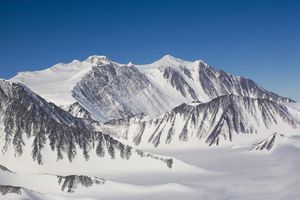
Nanga Parbat rises to 8,125 meters and is the ninth-highest mountain in the world. It is regarded as one of the most demanding peaks in the Himalaya, while the Rupal Face is one of the highest mountain walls on Earth.
For Tiphaine and Boris Langenstein, the story with this mountain began back in 2019.
That year they attempted the Kinshoffer Route on the Diamir side. Because of health problems, Tiphaine stopped just below 8,000 meters, while Boris continued higher. They later decided to return and attempt a different line.
But the main objective remained unfinished.
They did not simply want to reach the summit of Nanga Parbat. They were interested in a different side of the mountain and a different line.
The Rupal Face and the Schell Route
In 2024, Tiphaine, Boris and David Göttler returned to Nanga Parbat, this time on the Rupal side.
Their objective was the Schell Route, established in 1976. It is a serious and rarely repeated route that had been climbed fewer than ten times before their 2025 attempt.
The team climbed to 7,524 meters, but conditions did not allow them to continue. Once again, they had to turn around.
This is an important part of the story. In the high mountains, the outcome is not always measured by how high you manage to climb. Sometimes the most important decision of an expedition is the moment when a team decides to turn back.
Tiphaine and her partners did not regard 2024 as the end of the project.
They came back.
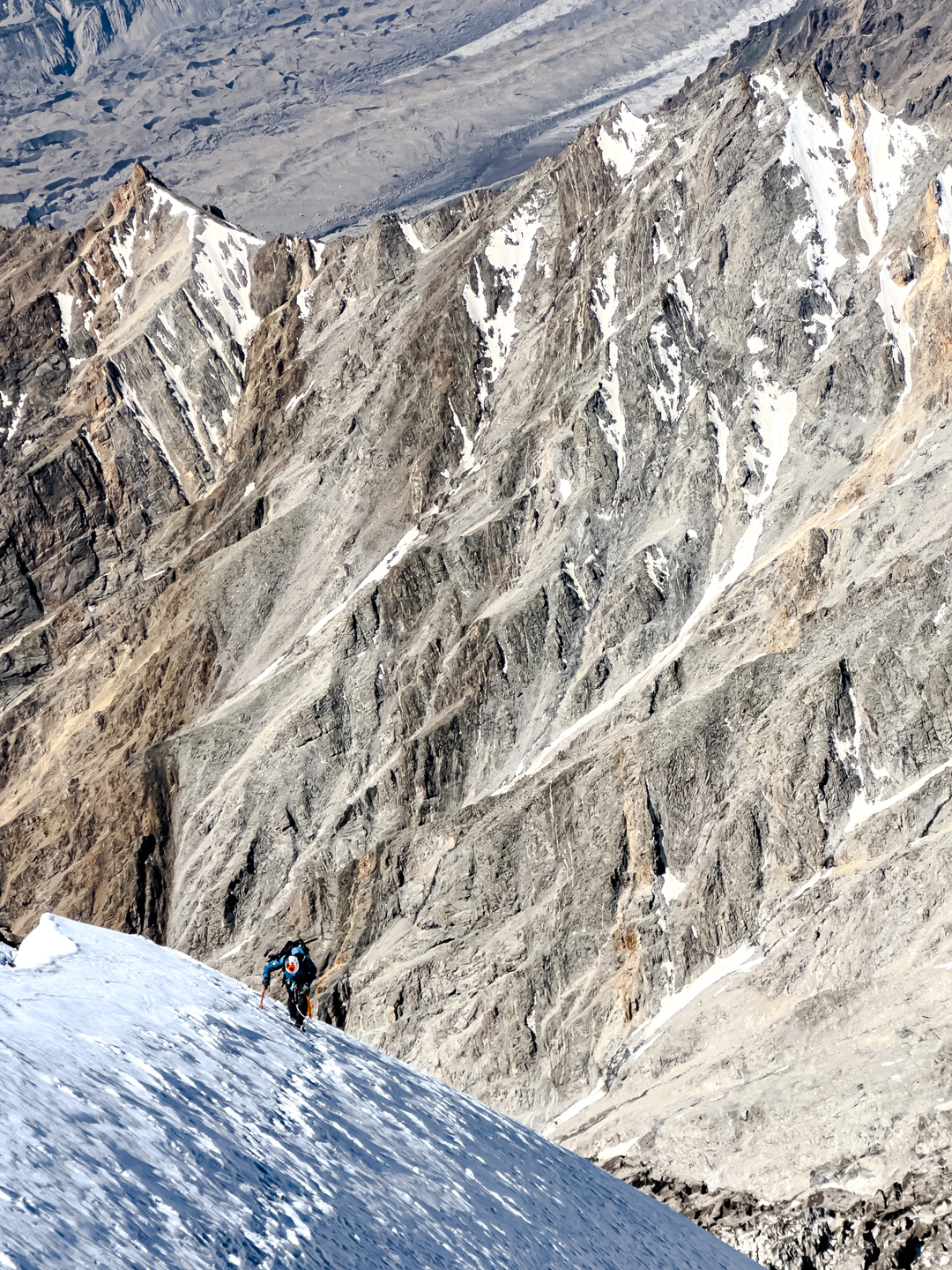
2025: the summit after two unsuccessful attempts
Before returning to Nanga Parbat in 2025, the team first acclimatized in Nepal. They climbed Baruntse, at 7,129 meters, before travelling to Pakistan.
On June 21, Tiphaine Dupérier, Boris Langenstein and David Göttler left base camp.
The next few days became the culmination of a seven-year story.
The team climbed approximately 3,500 vertical meters on the Schell Route in alpine style - without supplemental oxygen and without fixed ropes installed in advance. The route crosses the Rupal Face, reaches the Mazeno Ridge and then continues toward the summit of Nanga Parbat.
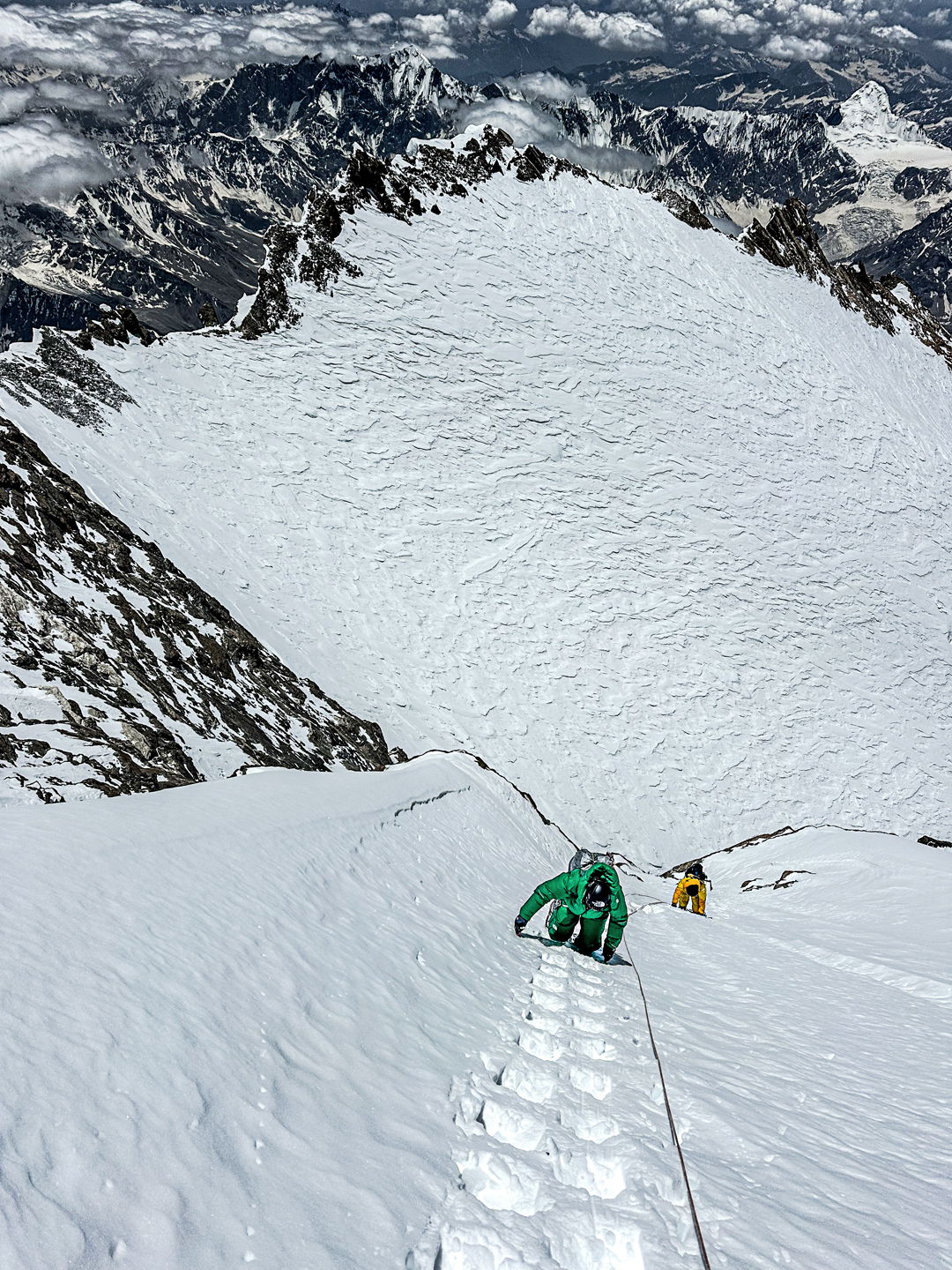
At 3:30 p.m. on June 24, the three climbers reached the summit.
After seven years of attempts, Tiphaine was finally standing on top of Nanga Parbat.
But for her and Boris, this was only half of the plan.
From the summit - onto skis
In high mountains, descending after reaching a summit is already a separate challenge. On Nanga Parbat, it becomes especially demanding because of the extreme altitude, the character of the terrain and unstable snow conditions.
Tiphaine and Boris carried their skis to the summit.
And then they began the descent.
It was the first ski descent from the summit of Nanga Parbat and also the first ski descent of the mountain's Rupal side.
But calling it simply "a ski descent" would be a huge simplification.
On one section, a lack of snow forced them to remove their skis. They then had to negotiate difficult terrain and make a 30-meter rappel. After that, they continued descending on skis.
They spent their first night at around 7,600 meters. The following day they descended to about 7,400 meters and then continued toward base camp, skiing much of the upper part of the route. Tiphaine's detailed account of the ascent and descent was published in the American Alpine Journal.
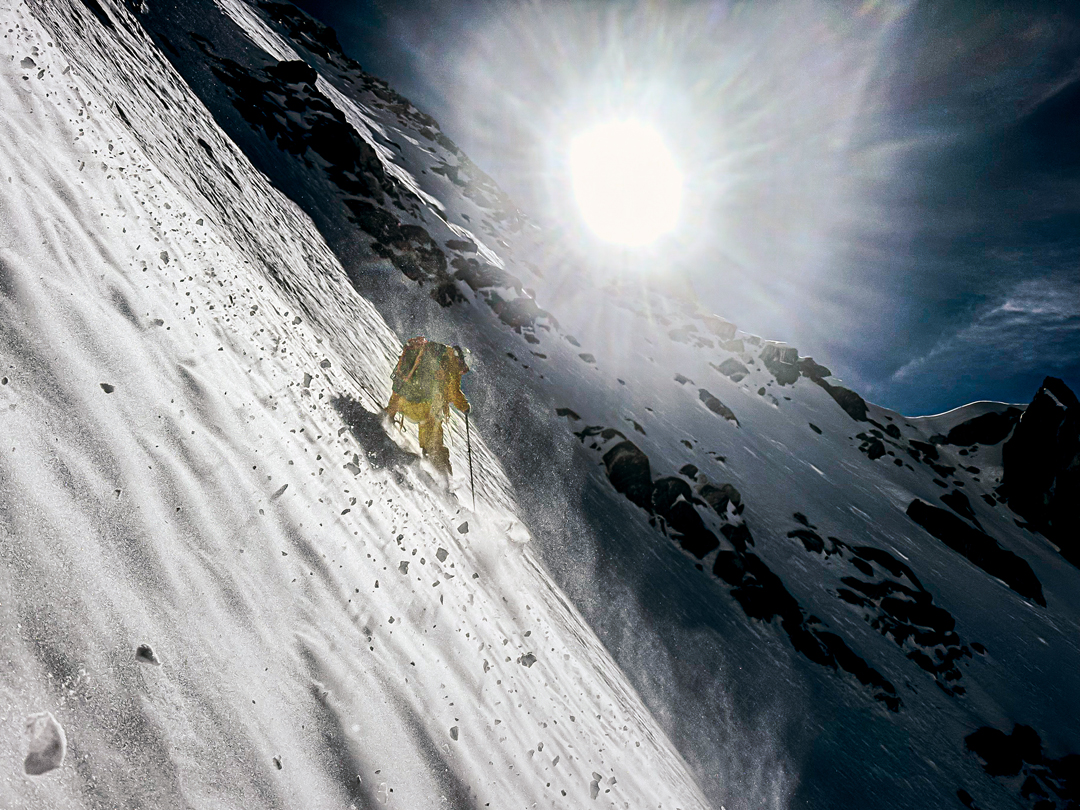
When the mountain does not end at the summit
This probably explains Tiphaine Dupérier's style better than anything else.
For many alpinists, the summit is the main objective of a route. For Tiphaine, the summit can be the point where the next part of the idea begins.
Her earlier projects show the same logic. In 2021, she made first ascents and ski descents in the Rakaposhi and Hindu Raj areas, as well as the first ski descent of the French Buttress on 8,035-meter Gasherbrum II.
In 2022, she completed a demanding ski descent of Denali's southwest face through the Cassin, McCartney-Roberts, West Rib and Chicken Corridor lines.
In 2023, together with Nouria Newman, she made the first ski descent of the northwest face of one of Ushba's secondary summit towers.
These are only some of her projects. In 2025, before returning to Pakistan, she also climbed Baruntse in Nepal.
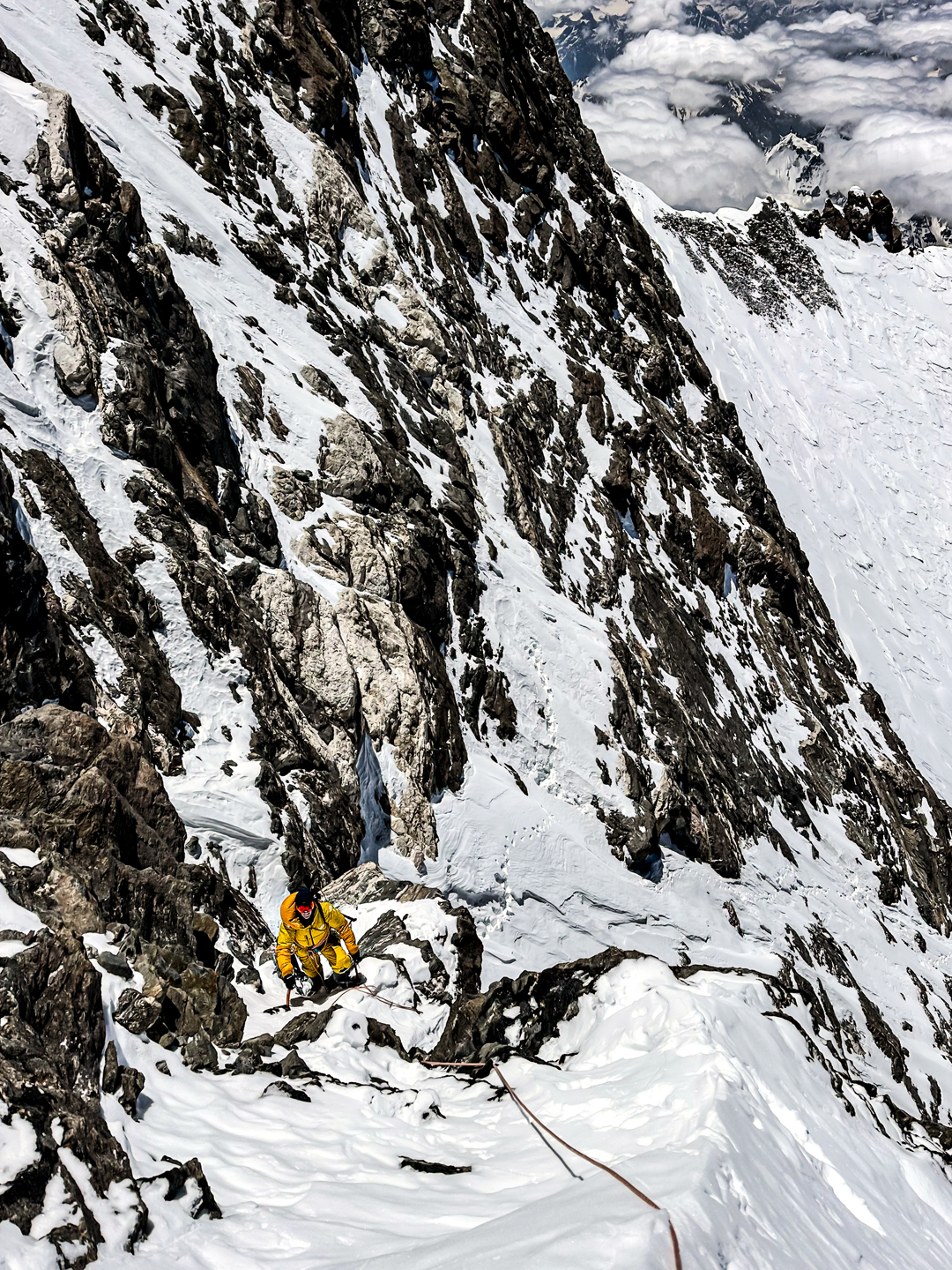
What the Piolets d'Or Special Mention really means
In 2026, Tiphaine Dupérier received the Piolets d'Or Special Mention for women's mountaineering.
This distinction has a somewhat different logic from the main Piolet d'Or.
The Special Mention can recognize a remarkable ascent by an all-female expedition, a woman who played a key role in a mixed team, or an individual female climber for a body of outstanding achievements over the years. In Tiphaine's case, the jury recognized her overall career, with particular emphasis on her 2025 Nanga Parbat project.
And that detail matters.
The award is not simply a formula of "a woman climbed an eight-thousander."
Tiphaine Dupérier received it for the style, difficulty and consistency of her projects - for combining high-altitude mountaineering with demanding ski descents over many years.
Not a record for the sake of a record
There is another aspect of her story that distinguishes her approach from simply chasing numbers.
Seven years of work on Nanga Parbat do not look like an attempt to tick another eight-thousander off a list as quickly as possible.
2019 - the first attempt.
2024 - a new route and a retreat at 7,524 meters.
2025 - a return, the complete ascent of the Schell Route and the first ski descent from the summit.
It is a story about persistence, but not blind stubbornness.
The team made the decision not to continue when conditions became unacceptable. The ability to wait, return and change the plan is one of the most important qualities of experienced mountaineering.
A winter collection for people who love mountains and skiing
Tiphaine Dupérier's story is especially interesting because two things meet so naturally in it - mountains and skis.
For her, skis became a way of experiencing a mountain differently. Not simply returning from the summit, but searching for a personal descent line, reading the terrain, snow and conditions, and continuing the route in another way.
At Travel Jewelry, we also like the idea that our mountain passions can stay with us long after we leave the mountains.
The Travel Jewelry Winter Collection includes jewelry inspired by winter sports, including a "Skis" pendant. For one person it can be a symbol of a favorite sport, for another a memory of winter mountains, and for someone else a small reminder of the next route.
A story that is not over yet
Tiphaine Dupérier received her Piolets d'Or Special Mention in 2026, but the award feels more like the conclusion of one stage than a final full stop.
Her career continues where demanding mountains, skis and the desire to find a new line meet.
And the Nanga Parbat story shows something important: sometimes a great ascent is not only about reaching a summit. You need an idea that makes you want to come back.
For Tiphaine, that idea was a ski descent from Nanga Parbat.
Seven years.
Two unsuccessful attempts.
One of the mountain's most demanding routes.
And finally - a summit from which a completely different descent began.
Peter Habeler: The Climber Who Changed the Meaning of "Without Oxygen"
Piolets d'Or 2026: Winners, Outstanding Ascents and Special Awards
Piolets d'Or - The Golden Ice Axe: History, Awards and Legendary Climbs
Ski Mountaineering: History, Evolution and the Most Challenging Ski Descents
The History of Skis: Evolution, Types, Technology and Skiing in Sport
Gift Ideas for a Skier: Practical and Meaningful Presents for Winter Enthusiasts