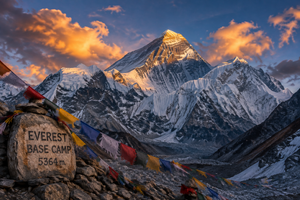
For a long time, Antarctica was a place where women were rarely allowed to go. During the polar expeditions of the last century, men travelled to unknown shores, overwintered at stations and mapped the icy continent, while women were often denied even the chance to try. Yet women never disappeared from this history. At first, they travelled to Antarctic waters aboard research and whaling vessels. Later, they joined scientific teams, spent winters at stations, led expeditions, crossed the frozen wilderness alone and climbed the continent’s highest peaks.
This is not only a story of records. It is a story of curiosity, endurance, scientific commitment and the right to take part in exploring the world. Its protagonists include polar explorers, geologists, meteorologists, biologists, doctors, mountaineers and travellers. Some became well known; others remain in expedition archives. Each helped change perceptions of who can work and succeed in Antarctica.

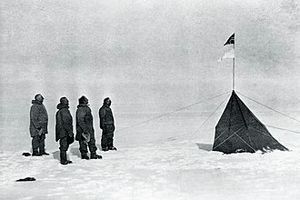
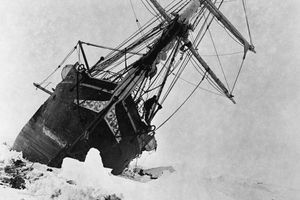
Photo: photographer unknown, Norwegian Whaling Museum collection / Store norske leksikon. Historical background and photo source.
When Antarctica was considered “no place for women”
At the beginning of the twentieth century, polar expeditions were expensive, dangerous and physically demanding. Organisers often believed women had no place on such journeys. When Ernest Shackleton sought crew members for his 1914 expedition, a well-known story goes, he even received letters from three women who wanted to join. They were not accepted.
These barriers did not mean women lacked interest or ability. They travelled on polar vessels, documented expeditions, worked with scientific data and insisted on the opportunity to conduct research on the continent itself. Their path was uneven: sometimes a woman’s presence aboard an Antarctic ship was news in its own right, while participation in fieldwork required established rules to change.
The first women near Antarctica’s shores
Ingrid Christensen and Mathilde Wegger: seeing the continent
In 1931, Norwegians Ingrid Christensen and Mathilde Wegger travelled to Antarctic waters aboard the vessel Thorshavn. They remained on board and did not land on the continent, but they are among the earliest women documented as having seen Antarctica. The International Association of Antarctica Tour Operators provides a detailed account of this chronology. Their presence surprised explorer Douglas Mawson, who encountered the vessels during his own expedition.
Christensen returned to Antarctica in later years. On 30 January 1937, she, her daughter Augusta Sofie Christensen and their companions landed near Scullin Monolith in East Antarctica. Ingrid Christensen is widely regarded as the first woman to set foot on the Antarctic mainland. Historical sources sometimes differ in how they define the first mainland landing, however, so it is important to distinguish visits to Antarctic islands from landings on the continent itself.
Caroline Mikkelsen: the 1935 landing
In February 1935, Caroline Mikkelsen, who was travelling with her whaling-captain husband, Klarius Mikkelsen, went ashore on the Tryne Islands near the Antarctic coast. She is often described as the first woman to set foot on Antarctic land. The debate comes down to geography: Mikkelsen landed on an island, while Christensen is associated with a landing on the mainland in 1937.
These stories show why historical “firsts” need to be described precisely. The first woman to see Antarctica, the first to land on Antarctic land, and the first to set foot on the mainland are not necessarily the same person. Each journey, however, expanded the boundaries of what was considered possible.
Jackie Ronne and Jennie Darlington: wintering in Antarctica
In 1947-1948, an American expedition led by Finn Ronne worked on the Antarctic Peninsula. His wife, Edith “Jackie” Ronne, and Jennie Darlington accompanied the expedition. They spent the Antarctic winter on the continent and became the first women to overwinter in Antarctica.
This was much more than a brief visit. Overwintering meant months of isolation, limited contact with the outside world, extreme cold, polar-night darkness and the challenge of living in a small team. Jackie Ronne kept a record of the expedition and helped document its progress. Her account became an important record of everyday life in conditions that had previously been described mostly by men.
Their participation did not mean that all barriers disappeared. Women were still often excluded from scientific fieldwork, and some polar programmes remained closed to them for decades. Nevertheless, Ronne and Darlington’s winter on the continent was a major milestone in the history of women’s lasting presence in Antarctica.
Science in Antarctica: Lois Jones and the 1969 team
In 1969, geochemist Lois Jones led the first all-women American scientific team to work in Antarctica. The team included entomologist Kay Lindsay, geologist Eileen McSaveney and chemistry student Terry Lee Tickhill. They studied the McMurdo Dry Valleys, one of the continent’s harshest yet scientifically fascinating regions.
Jones’s team investigated highly saline lakes and other geological features of the valleys. For Jones, access to fieldwork was not only a professional necessity but also a matter of equal opportunity: without making her own observations, she could not fully carry out the research that became the subject of her doctoral work.
On 12 November 1969, Jones and her colleagues, along with New Zealand scientist Pam Young and journalist Jean Pearson, flew to the geographic South Pole. They became the first women to visit it. The U.S. National Science Foundation recounts the event and the work of Jones’s team. It was a turning point: the Pole, long a symbol of men’s polar achievements, finally welcomed women as participants in research rather than exceptional visitors.
Despite the historic nature of the achievement, the questions women faced were revealing. The media asked whether they would wear makeup and how they would look after their hair in field conditions - questions unlikely to have been put to male scientists. Jones later recalled these questions as examples of the prejudice the women encountered.
From field research to station leadership
Over time, women began working across Antarctic programmes as geologists, biologists, meteorologists, doctors, engineers and logistics specialists. British geologist Janet Thomson initially analysed Antarctic samples in laboratories. In 1976, she became the first British woman to carry out fieldwork on the continent as part of the American Antarctic programme. She later also worked for the British Antarctic Survey.
During the 1980s and 1990s, women increasingly took on positions of responsibility. German doctor Monika Puskeppeleit spent a winter at Georg von Neumayer Station in the late 1980s and became the first German woman doctor to overwinter in Antarctica. Such examples show that working on the continent requires a broad range of skills - from medicine and science to managing a team in isolation.
Liv Arnesen: a solo journey to the South Pole
On 24 December 1994, Norwegian polar explorer Liv Arnesen reached the geographic South Pole after 50 days of skiing alone. She set out from the Hercules Inlet area, hauled a sled carrying her equipment and covered approximately 1,200 kilometres. Arnesen became the first woman to reach the South Pole solo, without outside assistance or resupply during the route.
The numbers alone cannot convey what the journey involved. Arnesen had to set her own pace, assess the weather, travel through snowdrifts and navigate around crevasses. In Antarctica’s white expanse, distances can be deceptive; winds can change conditions abruptly, and a navigational mistake can be costly. Her achievement became an important milestone in the history of women’s polar journeys.
Liv Arnesen and Ann Bancroft: crossing Antarctica
In 2001, Liv Arnesen and American polar explorer Ann Bancroft crossed Antarctica on skis, also using sails to harness the wind. Over 94 days, they covered approximately 2,747 kilometres. Their expedition was the first crossing of the continent by an all-women team in this format.
This was a different model of travel from Arnesen’s solo journey to the South Pole in 1994. As a team, the two explorers could support one another, share the workload and make decisions together. Crossing the continent still required sustained endurance, discipline and the ability to work in conditions where even ordinary daily tasks become physically demanding.
Felicity Aston: a solo journey across the continent

Photo: Felicity Aston’s official website. Photo source and information about her work.
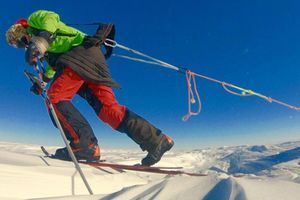
In 2011-2012, British polar explorer Felicity Aston crossed Antarctica alone on skis. In 59 days, she covered approximately 1,744 kilometres, passing through the South Pole. She became the first woman to ski across the continent alone.
Aston was no newcomer to polar conditions: she had previously worked as a meteorologist for the British Antarctic Survey, including at Rothera Research Station. Her experience brought scientific training together with an extreme journey. During the crossing, she travelled for long days, hauled her equipment on a sled and had to maintain physical and mental focus in a vast, monotonous landscape.
One distinction matters when describing polar expeditions: “solo” does not always mean “without any support at every stage.” It is important to distinguish travelling alone from receiving no resupply along the route, external assistance, or completing a fully autonomous journey. These details determine how accurately an explorer’s achievement can be described.
Preet Chandi: new milestones in polar travel

Photo: Guinness World Records. Photo source and record description.
Preet Chandi, a British Army medical officer and polar explorer of Indian heritage, made a solo journey to the South Pole during the 2021-2022 season. She became the first woman of colour to complete a solo expedition to the Pole. Chandi later continued her polar journeys and set further records for the speed and distance of solo routes.
Her expeditions drew attention to more than athletic achievement. Chandi has spoken about the importance of seeing polar explorers from different backgrounds, with different life experiences and professions. Her story shows that the image of a polar explorer is not fixed: new generations are taking on the challenge and changing perceptions of who can make such a journey.
Women on Vinson Massif: Antarctica’s highest peak
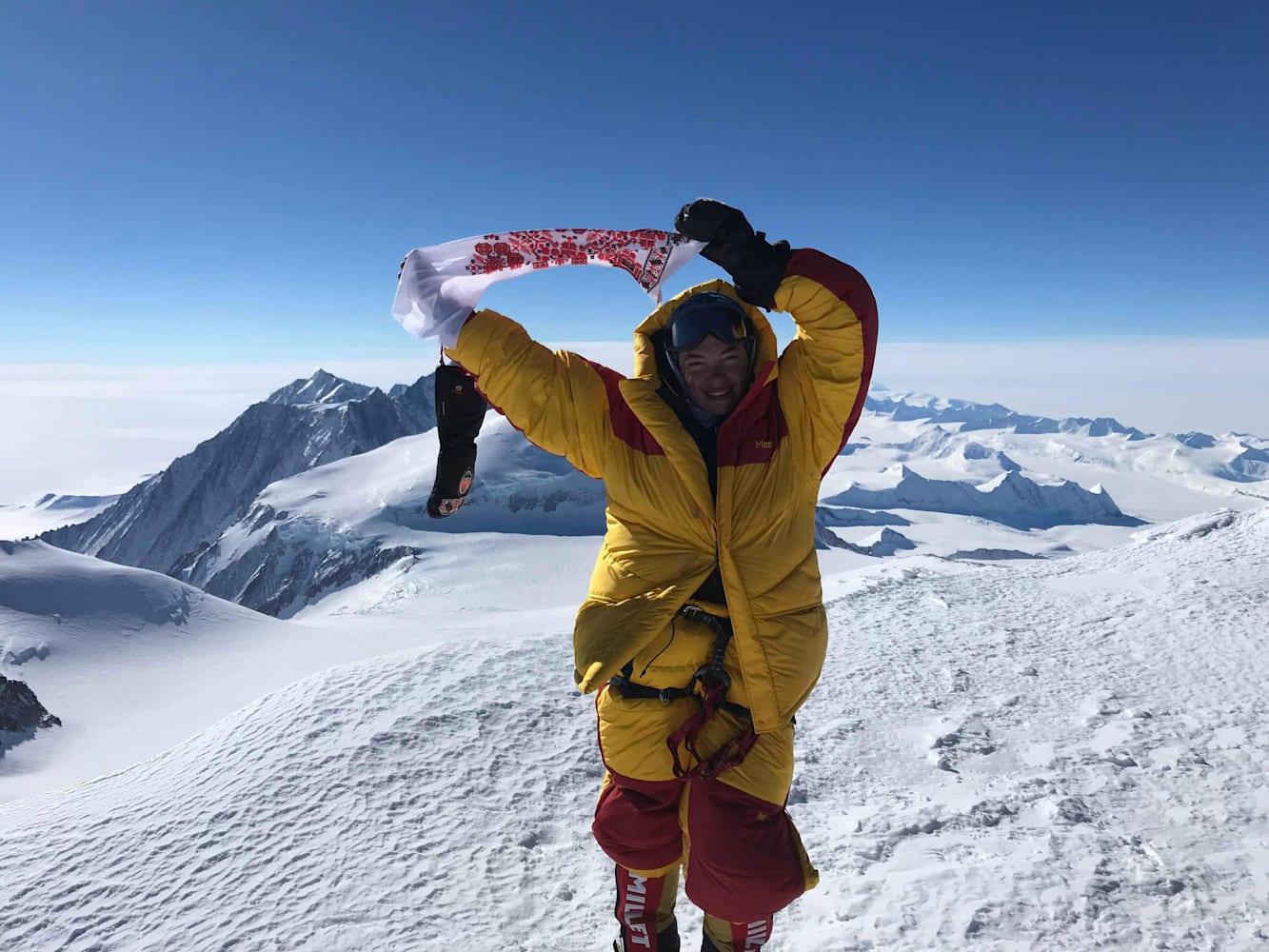
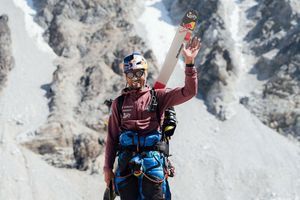
Photo: Red Bull, feature on Tetyana Yalovchak. Photo source and story of the climb.
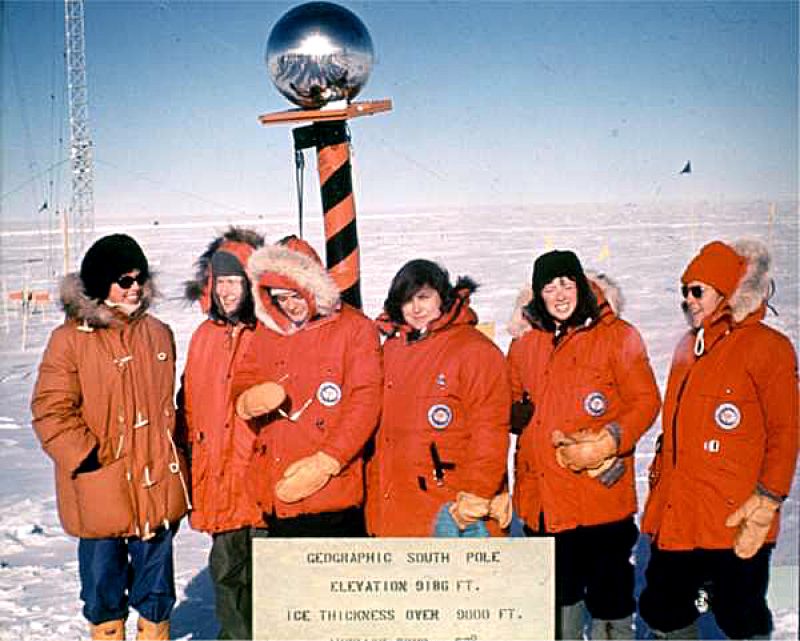
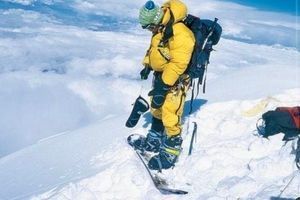
Photo: U.S. Navy, published by the U.S. National Science Foundation. Story and photo source.
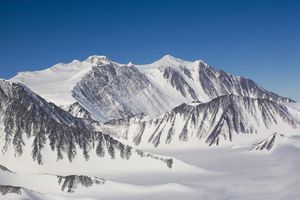
In western Antarctica rises Vinson Massif, whose highest point reaches 4,892 metres. The elevation alone does not convey the difficulty of the climb: mountaineers face severe cold, strong winds, remoteness and the challenge of spending extended periods at altitude in a harsh climate.
In 1988, American mountaineer Lisa Densmore became the first woman to climb Vinson Massif. Her achievement opened a new chapter in the history of women’s mountaineering in Antarctica. Vinson later became an important objective for climbers completing the Seven Summits - ascents of the highest points on all seven continents.
Tetyana Yalovchak holds a special place in Ukrainian mountaineering. In December 2017, she climbed Vinson and completed her Seven Summits project, becoming the first Ukrainian woman to complete it. Her journey to Antarctica was the result of years of preparation and climbs on other continental peaks.
On 27 December 2019, Oksana Litynska climbed Vinson, completing her own Seven Summits project. Another Ukrainian mountaineer, Iryna Karahan from Dnipro, reached Vinson in January 2022 as part of a team. Her experience highlights an important feature of Antarctica: even compared with higher mountains elsewhere in the world, the cold can be the decisive challenge.
These climbers’ stories matter for more than their records. Every ascent involves years of training, financial costs, complex logistics and decisions made under risk. Reaching a summit is the result of preparation and teamwork, not simply one person’s willpower.
Ukrainian women at Akademik Vernadsky Station

Photo: published in a report on a Ukrainian Antarctic expedition.
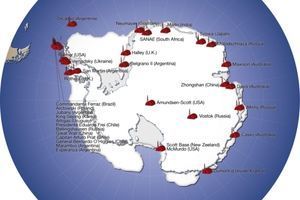
Ukraine’s history of women in Antarctica has its own distinctive features. According to the National Antarctic Scientific Center of Ukraine, the second Ukrainian Antarctic Expedition arrived at Akademik Vernadsky Station in March 1997. For the first time, four Ukrainian women overwintered there: meteorologists Svitlana Krakovska and Liudmyla Mankivska, cook Halyna Kolotnytska and geophysicist Maryna Orlova. They were to spend a year at the station, carrying out their professional duties as part of an isolated team.
Svitlana Krakovska later became a prominent Ukrainian climatologist. Her story shows how experience at a station can form part of a wider scientific career. In Antarctica, meteorological observations are not abstract records of temperature and wind: they help scientists understand atmospheric processes and climate change, with implications far beyond the polar region.
After this early participation, Ukrainian expeditions remained predominantly male for a long time. According to the National Antarctic Scientific Center, an informal practice of excluding women from annual Ukrainian overwintering teams emerged after the 1997-1998 expedition. Ukrainian women returned to wintering expeditions in 2019-2020. This period shows that change in science depends not only on individual courage but also on selection rules and institutional decisions.
Today, Ukrainian women working in Antarctica represent a range of fields. Biologists study living organisms and Antarctic ecosystems; geophysicists investigate physical processes; meteorologists collect atmospheric data; and doctors care for the team far from ordinary medical infrastructure. Station work requires professionalism, mutual support and the ability to live and work in a small group for many months.
Anzhelika Hanchuk: the first woman to lead a Ukrainian annual expedition

Photo: My Vin, feature on Anzhelika Hanchuk’s appointment as expedition leader. Photo source and article.
In January 2026, the National Antarctic Scientific Center announced that meteorologist Anzhelika Hanchuk would lead the 31st Ukrainian Antarctic Expedition for 2026-2027. She had previously worked at Akademik Vernadsky Station as part of the 27th expedition in 2022-2023, conducting meteorological and other observations. She is the first woman to lead a Ukrainian annual Antarctic expedition.
Her appointment symbolises the changes that have taken place over several decades: from the first Ukrainian women to overwinter at the station to a woman entrusted with leading an entire team. An expedition leader is responsible not only for scientific work but also for coordinating tasks, daily life, safety and the interactions of people in an extremely remote place.
Why these stories matter
The history of women in Antarctica is more than a chronology of first landings, overwintering, climbs and crossings. It is a story of how science and society have changed. Women not only gained access to expeditions; they also contributed to geology, climatology, biology, medicine, logistics and polar research. They showed that working in Antarctica requires expertise, preparation and shared responsibility - not conformity to stereotypes.
No single article can include every name. Alongside the celebrated pioneers, hundreds of women continue to take measurements, repair equipment, prepare meals, care for colleagues, manage logistics, analyse data and keep stations running. Not all set records or make the headlines, but Antarctic research would be impossible without their work.
Their contribution is impossible to overstate. They are all different, all remarkable, and each is beautiful in her own way. The history of women in Antarctica is not over; it is being written right now in laboratories, at stations, on mountain routes and across endless expanses of ice.
The snowflake is one of Antarctica’s symbols: delicate in appearance, yet part of a world where nature demands respect and endurance. The memory of the women who helped open up this continent can be like that too - varied, unique and far stronger than it may first appear. A piece of jewellery inspired by this shape can become a personal reminder of the beauty of the polar world and of the people whose stories helped us understand it.
The “Snowflake” pendant by Travel Jewelry: view the piece on our website.
Mountaineering in Antarctica: Mountains, Volcanoes and Unclimbed Peaks
Vinson Massif: Climbing Antarctica’s Highest Peak
Skiing in Antarctica: From Early Polar Expeditions to Descents from Mountain Summits
Tiphaine Dupérier: Seven Years to Nanga Parbat and a Ski Descent from the Summit
Gift Ideas for a Skier: Practical and Meaningful Presents for Winter Enthusiasts