Above 8,000 metres, a snowboard is no longer just equipment for a fast ride downhill. It becomes one more complex system to manage in a place where every movement costs energy, the cold can quickly numb your fingers, and a mistake on the slope may leave no second chance. Finding a line down is only part of the challenge: you must reach it, assess the snow, negotiate rock barriers and retain enough strength to complete the route.
There are 14 mountains on Earth higher than 8,000 metres, but that does not mean a documented snowboard descent has been completed from every summit. It is important to distinguish a descent from the summit itself from riding the upper slopes, tackling individual sections of a route or completing a continuous descent to a defined point. Ski descents are not counted as snowboard descents here, and attempts are not presented as completed routes.
Everest: Marco Siffredi's Line
The best-known chapter in this story belongs to French snowboarder and mountaineer Marco Siffredi. In 2001, he reached the summit of Everest and descended its northern side via the Norton Couloir to Advanced Base Camp. It is widely regarded as the first continuous snowboard descent from the summit of the world's highest mountain to that point.
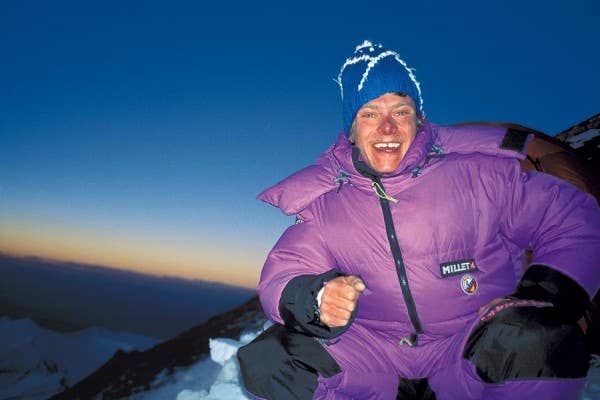
The preparation and the descent were anything but simple. In the freezing cold, a binding broke; a Sherpa managed to repair it. Siffredi then rode down a steep couloir and across glaciated terrain. He used supplemental oxygen during the ascent but left the oxygen equipment behind before riding down. It is therefore accurate to describe the descent itself as having been made without oxygen, but not the entire climb-and-descent project.
A day before Siffredi, Austrian snowboarder Stefan Gatt had also reached the summit. He began descending on his board, but removed it on a difficult section and continued on foot. He resumed riding lower down, yet a lack of snow prevented him from completing the route to Advanced Base Camp on his snowboard. That distinction explains why Siffredi is generally credited with the first continuous descent.
In 2002, Siffredi returned to Everest to attempt the Hornbein Couloir, a more ambitious line on the north face. He reached the summit but disappeared after beginning his descent. His tracks ended high on the mountain, and his body was never found. The cause of his disappearance remains unknown. His story became not only a legend of boldness, but also a reminder of the price an extreme line can demand.
Contemporary accounts of the first descent and the later attempt are preserved in the American Alpine Club report and a separate report on the north-face attempt.
Manaslu: A Modern Descent Without Supplemental Oxygen
In September 2019, Bulgarian snowboarder Vladimir Pavlov reached the summit of Manaslu, the world's eighth-highest mountain, and began his descent on a snowboard. According to his own account, he rode from the summit to approximately 5,000 metres, just above base camp. The route included several rappels and walking transitions between camps, so it was not a continuous ride from the summit to the bottom. Pavlov reported that he did not use supplemental oxygen during the descent and that he opened a new snowboard line between Camps 4 and 3.

This example shows how to read accounts of high-altitude achievements: it matters not only how high the summit is, but also where the descent began, where the board had to be removed, whether oxygen was used and how far the athlete travelled. Pavlov's own Project8000 account describes the elevations, transitions and goals of the project.
The Eight-Thousanders: Why Snowboard Descents Remain Rare
There are 14 peaks on Earth above 8,000 metres, but the history of snowboarding on them is uneven. The best-known documented stories are associated with Everest, Cho Oyu and Manaslu. On other eight-thousanders, complex terrain, avalanche danger, unstable snow, ice barriers and logistical challenges have made it difficult for similarly well-known completed snowboard routes from the summit to emerge. That does not mean nobody has ever ridden on their slopes; it means that individual sections, attempts and ski descents should not be confused with a full snowboard route.
K2, Kangchenjunga, Lhotse, Makalu, Dhaulagiri, Nanga Parbat, Annapurna I, Broad Peak, Gasherbrum I and Gasherbrum II all present different terrain, but each poses serious challenges for a rider. Steep slopes may leave little room to turn, snow conditions can shift from hard crust to unstable wind-loaded drifts, and rock bands or crevasses may force a transition to technical climbing. Reaching the summit alone does not mean that a safe, continuous snowboard descent is possible.
Shishapangma has a particular place in this story. In 2001, Marco Siffredi planned a descent from the mountain, but strong winds prevented him from fully carrying out the plan. It matters not as a record, but as a reminder that plans and actual conditions can diverge even after a successful summit climb.
Seven-Thousanders: Where Extreme Snowboarding Took Shape
Major high-altitude snowboarding stories are not limited to the eight-thousanders. Seven-thousanders and peaks just below that range can offer equally technical challenges: steep couloirs, narrow passages, huge vertical drops and remoteness from help. These mountains have given riders opportunities to test themselves before taking on even more demanding projects.
Dorje Lhakpa (approximately 6,988 m) is one of the clearest examples in Siffredi's career. In 1999, he and Bertrand Delapierre reached the summit and snowboarded down to base camp. That same year in the Alps, Siffredi made the first snowboard descent of the Nant Blanc face on the Aiguille Verte, where some sections reached an angle of around 55-60 degrees. These routes are not on eight-thousanders, but they help explain how the culture of extreme descents developed before Siffredi turned to Cho Oyu and Everest.
To assess such achievements, altitude alone is not enough. The vertical drop, slope angle, snow quality, need for protection and continuity of the route all matter. A descent from a nearly 7,000-metre summit involving technical transitions can be every bit as demanding as a shorter but continuous descent from a higher mountain.
Why a Snowboard Descent Is More Than a Ride After the Ascent
At high altitude, an athlete must solve several problems before strapping in. The route needs to allow turns while also offering a way through rock bands, crevasses and ice barriers. Snow may be hard, wind-affected or unstable; sometimes there simply is not enough of it to ride to the next camp. A board can be a hindrance on narrow ridges, and sections requiring rope protection may interrupt the descent.
Supplemental oxygen used during the ascent also matters. If a climber leaves the oxygen equipment behind before descending, that does not mean the entire project took place without oxygen. In the same way, riding from the upper part of a slope is not the same as descending from the summit, and several rideable sections do not amount to a continuous descent. These details determine what a headline-making record actually represents.
Modern high-altitude snowboarding depends not only on technique and courage, but also on logistics, acclimatisation, choosing a weather window, glacier conditions and support from a team. Siffredi's and Pavlov's stories have different outcomes, but both show that success is measured by more than a beautiful line in the snow: it also depends on decisions made before and during the descent.
Snowboarding as a Symbol of Freedom and a Passion for the Mountains
For most people, snowboarding brings to mind a resort, a winter holiday and those first turns on a slope. For those devoted to big mountains, it can become part of a far more demanding story - one about preparation, respect for terrain, finding a line of one's own and taking responsibility for every decision.
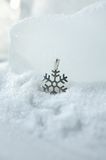
That spirit is reflected in the Snowboard pendant by Travel Jewelry. It is a small piece of jewellery for people drawn to winter slopes, movement and the feeling of freedom in the mountains. It cannot replace equipment or experience, but it can serve as a personal symbol of a love for snowboarding - whether your next ride is on a groomed run or your dream takes you to remote mountains.
The history of descents from the eight-thousanders is still unfolding. For most of the 14 peaks, there is no confirmed completed snowboard descent from the summit, and that is not a gap to be filled at any cost. It is an honest boundary of the documented record - and a reminder that in the big mountains, achievement is not only about drawing the first line down, but also knowing when not to attempt it.
Ski Descents from the Eight-Thousanders: The Story of Great Descents from the World's Highest Peaks
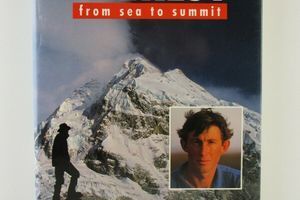
Sea to Summit: How Tim Macartney-Snape Walked from the Sea to the Summit of Everest
Snowboard Types and Riding Disciplines: From Freeride to Olympic Events
Ski Mountaineering: History, Evolution and the Most Challenging Ski Descents
The History of Snowboarding: Origins, Evolution, Technology and Culture
What to Gift a Snowboarder: Practical and Meaningful Gift Ideas for Winter Adventure Lovers