In August 1927, a letter arrived from Moshi, a small town at the foot of Kilimanjaro. Its author, Sheila Macdonald, had just returned from an expedition and was trying to fit everything she had experienced into a few pages: the cold, the exhaustion, a stubborn lantern, a lost trail, a bonfire in the darkness and a bottle of champagne that she and her climbing partner had carried all the way to Africa’s highest point. The letter was dated 2 August 1927, just two days after the ascent. Nearly a century later, it remains the best way to meet not only the mountaineer who made history, but the person behind the achievement.
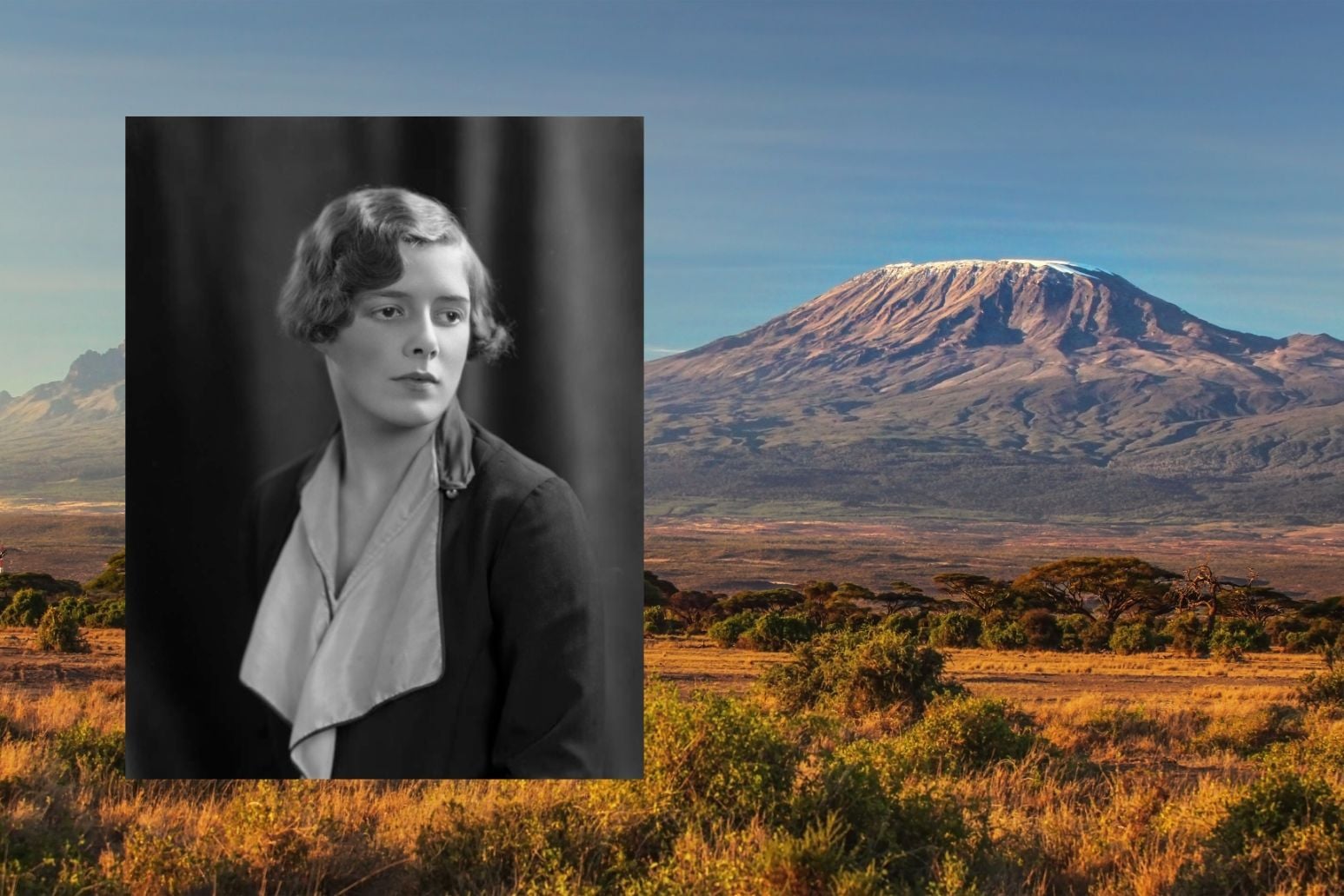
Her name is not as widely remembered as those of many male explorers of her era. Yet Sheila’s story deserves attention for more than the record. Her account has an unusual tone for an expedition report: instead of a solemn catalogue of achievements, it is the lively recollection of someone who remembers not only the height of the summit, but also frozen tea, a mound of earth mistaken for an animal in the dusk, and the practical absurdity of drinking champagne straight from the bottle in the cold.
1. A Young Woman Who Had Been at Home in the Mountains Since Childhood
Sheila Macdonald grew up in a family where mountains were not an exotic curiosity but part of everyday life. Her father, Claude Macdonald, was a member of the Alpine Club, one of the world’s oldest mountaineering associations. According to contemporary British newspaper reports, Sheila had begun climbing in Scotland with her father at the age of twelve.
Later, her travels took her to Mount Etna and Stromboli. After climbing Stromboli, Sheila and a friend returned by a small boat in rough seas - an episode that newspapers later cited as evidence of her appetite for adventure. A 1927 newspaper profile described her as an active young woman who enjoyed outdoor sports and riding.
Contemporary newspapers described her as 22 in 1927, while the National Portrait Gallery records her lifespan as 1902–1987. Because of this discrepancy, her exact age at the time of the expedition should not be treated as conclusively established. What matters more is that Sheila already had mountain experience of her own. She was not an inexperienced passenger joining someone else’s adventure.
In 2016, The Guardian republished an archival report originally printed by the Manchester Guardian on 30 September 1927. The newspaper presented her climb as the first time a woman had reached Kilimanjaro’s summit. It also noted that Sheila had continued upward after one of the men was forced to stop.
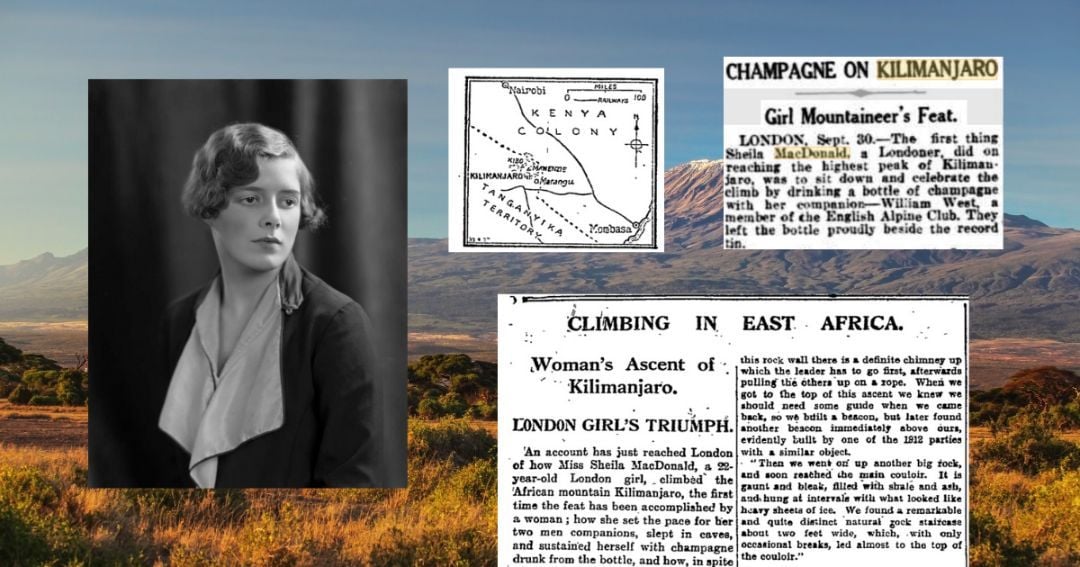
2. An Expedition That Began in Mombasa
Sheila travelled to Kilimanjaro with William C. West, a member of the Alpine Club, and Major O. Lennox-Browne. They met in Mombasa and continued by railway into what was then the British-administered territory of Tanganyika. In her letter, Sheila jokingly called the train to Moshi the “water train”: it stopped roughly every four miles to deliver water to small stations. The journey took much of the day, and by the time they arrived, the passengers were covered in red dust.
From Moshi, the expedition travelled by Ford lorry to Marangu, carrying its equipment and provisions. There they met Mlang’a, a local Chagga leader who helped arrange fourteen porters to carry the loads towards the mountain hut. Sheila recalled that he offered the visitors eggs, milk and chicken, while she gave him a postcard showing Kilimanjaro.
Her letter also mentions a messenger who summoned people with the sound of a horn. Sheila remembered the porters gathering before setting off with the expedition. This episode matters not as an exotic detail, but as a reminder that the climb was never simply the undertaking of three European participants. It depended on the work of local porters, guides, a cook and people who helped organize the journey. Sadly, most of them remain unnamed in her account.
The first major objective was Mawenzi, the jagged, deeply eroded volcanic massif east of Kibo. On 28 July, Sheila, West and Lennox-Browne reached its highest point, then known as Hans Meyer Spitze. At the summit they found an old metal container holding records left by two German expeditions in 1912, and added their own names to the same sheet.

But the altitude was taking its toll. Sheila felt dizzy, while West was so unwell that he could not eat. After a night near Mawenzi, they decided to descend to a lower elevation, rest and only then continue towards Kibo. The next morning they discovered that their tea, ink and the mixture of whisky and lime West carried had frozen overnight. Even the smallest everyday things were reminders of how severe the conditions had become.
3. Sheila Cave and the Lantern That Would Not Stay Lit
On 30 July, the party crossed the plateau between Mawenzi and Kibo and headed for Hans Meyer’s Cave, where they planned to spend part of the night. But the four porters chosen for the final approach did not know the cave’s exact location. The group had to search among the rocks for shelter. Eventually Sheila found a comfortable hollow with a dry sandy floor and good protection from the wind.
She promptly named it “The Sheila Cave”. There is something revealing about that small gesture: even in the middle of a demanding expedition, she had not lost her sense of humour and could still enjoy a little playfulness.
The plan was ambitious: leave at midnight and reach the summit around dawn. But the party had only one lantern, and it proved unreliable - going out five times. Instead of setting off in the dark, they had to wait for daylight, sheltering beside a rock. Sheila recalled sitting there for about three hours until it was light enough to move.
A small detail that says a great deal about the expedition. In 1927, the team set out for a mountain almost 6,000 metres high with a single lantern, limited equipment and route notes on paper. What might seem like a minor inconvenience today could change the entire plan of an expedition.
4. Six Metres at a Time: The Final Climb
The ascent of Kibo was nothing like a gentle walk. The slope was covered with loose volcanic sand, stones and fragments of rock. Every step forward seemed to slide partly backwards. After three hours of hard work, the climbers felt they had made very little progress.
At around 18,000 feet (approximately 5,486 metres), their pace fell to almost absurdly short intervals. According to Sheila, they moved about twenty feet - roughly six metres - before stopping to catch their breath. She wrote that no matter how deeply she breathed, it still felt as if her lungs were getting nowhere.
At one point Sheila found a firmer section of rock and moved slightly ahead. When she looked back and could not see the others, she called out several times. Eventually West appeared from behind the rocks - alone. Lennox-Browne could no longer take another step and had remained lower down. West was also feeling unwell, but he continued.
Sheila admitted that by then she had wondered more than once whether she had enough strength to go on. But when she saw West climbing alone, she gathered herself and followed. They drank a little of the whisky-and-lime mixture, rested and continued towards the crater rim near Johannes Notch. From there they passed Stella Point and followed the rim towards Kaiser Wilhelm Spitze, the name then used for Kibo’s highest point.

On 31 July 1927, Sheila Macdonald and William West reached the highest point. In her letter, she described the final metres in almost physical terms: they were practically crawling towards the summit, step by step, even though their goal was already in sight. When they finally reached the stone cairn, the relief was immense.
They signed the summit register kept inside the cairn and then shared a bottle of champagne they had brought from Moshi especially for the occasion. They drank Lennox-Browne’s share for him, too. The cold and altitude made it necessary to drink straight from the bottle, and there was more foam than champagne. Sheila dryly remarked that it was better than nothing.
5. An Icy Bowl, a Difficult Descent and a Bonfire in the Dark
The crater impressed Sheila as much as the summit itself. She described it as an enormous bowl of ice: glaciers hung from the walls, two large greenish-blue ice lakes lay below, and cracks and ice cavities could be seen near the edges. She admitted that she had never seen anything like it.
It was too cold to stay for long. They took a few photographs and began descending. The loose volcanic ash and small stones that had made the ascent so difficult now allowed them to slide downhill - a technique Sheila called glissading. In less than two hours they had descended the steep section, but almost immediately took the wrong turn and found themselves in a narrow ravine ending at a drop of about eighty feet (roughly twenty-four metres).
They had to turn back and climb again towards the cave. There they rested for twenty minutes, drank tea and set off for Pieters Hut. But dusk was quickly turning into darkness. The two climbers lost their way and had to stop. To signal the people at the hut, they built a large bonfire.
They were found at about ten in the evening. The porters came with large torches made from aromatic branches. Sheila remembered sparks flying as the men waved the burning branches around. The next morning the party walked about twenty-five miles to Marangu, descending roughly 8,000 feet in seven hours. After such a day, even the hut’s simplest grass bedding must have felt like luxury.
6. Was Sheila Really the First?
The history of this first ascent is more complicated than a newspaper headline might suggest. Before 1927, several women had already reached different sections of Kibo’s crater rim. Gertrude Benham reached the eastern edge of the crater; Mrs Kingsley Latham reached the point now known as Stella Point; and Miss Stuart Watt reached Johannes Notch. These were significant achievements, but they did not mean that the climbers had reached Kibo’s highest point.
After the ascent, a dispute arose over who could claim the distinction of being first. William West addressed it in a separate letter, published in the same 1928 issue of the Alpine Journal. He reviewed earlier claims, compared route descriptions and examined the summit-register entries. His conclusion was clear: none of the women previously mentioned had a confirmed record of reaching the highest point, whereas the summit register carried the names Sheila G. Macdonald and William C. West, dated 31 July 1927.
The most accurate way to describe Sheila’s achievement, therefore, is that she became the first woman whose ascent of Kibo’s highest point was documented in the summit register and supported by contemporary mountaineering records. This wording does not diminish the women who had explored the crater and reached parts of its rim before her. It simply distinguishes between different points on the mountain.
The most valuable source for this story is the original 1928 Alpine Journal publication, “Kilimanjaro in 1927”. It contains Sheila’s letter as well as West’s correspondence about the disputed first ascent. It is a rare case in which we can follow an event through both a participant’s personal account and a contemporary examination of mountaineering records.
7. The Person Behind the Record
After returning, Sheila did not try to turn the climb into a grand legend. Her conclusion was remarkably simple: she would not have wanted to miss the adventure, but she could not say she wished to climb Kibo again. Mawenzi, on the other hand, she would gladly climb dozens of times.
Those words perhaps reveal more of her character than any formal title. She remembered not only the summit, but also the beauty of rugged, rocky Mawenzi. There is no need to portray her as fearless: in her letter she speaks openly about doubt, exhaustion, breathlessness and moments when she was not sure she could continue. But she did continue - and left behind an honest, witty and unusually detailed account.
Perhaps that is why her story still feels so fresh. Sheila does not appear as an unreachable heroine. She notices small things, jokes, gets tired, loses her way, appreciates a warm cup of tea and acknowledges the people who helped her reach the mountain’s highest point. At the same time, she accomplished something extraordinary for her era: she reached Kilimanjaro’s highest point and left her name there.
I would not have missed the adventure, but I would not particularly want to climb Kibo again. Mawenzi, however, I would gladly climb dozens of times.
A free translation of the closing lines of Sheila Macdonald’s letter, written in Moshi on 2 August 1927.
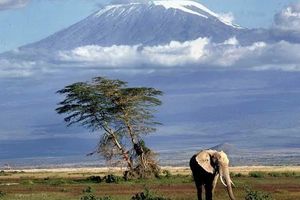
A mountain as a personal story. For Sheila, Kilimanjaro was more than Africa’s highest point. It was a journey along unfamiliar trails, through cold nights, alongside people who helped the party, and towards the moment for which they had carried a bottle of champagne all the way from Moshi.
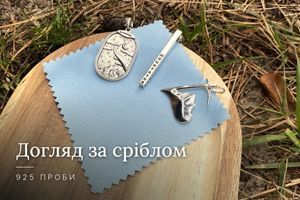
At Travel Jewelry, we have dedicated a piece of jewellery to this mountain: the Kilimanjaro pendant in 925 sterling silver. It is a small symbol of a mountain that can mean something different to everyone - a dream of travel, the memory of an ascent or a place one wishes to return to in thought.
Read Also
- Mount Everest: History, First Ascents, Routes and Modern Mountaineering
- Everest Base Camp Trek - Complete Guide to Nepal’s Most Famous Trek
- Mallory and Irvine: The Mystery of the First Ascent of Everest
- Beyond the Limits: Reinhold Messner’s Solo Ascent of Everest Without Oxygen
- Mount Kazbek: History, Legends and Climbing
- The Climbing Carabiner: The Story of an Essential Mountaineering Invention
- Ski Mountaineering: History and the Most Challenging Ski Descents
- The History of Skis: Evolution, Types and Technology
- Ski Travel: The History of Ski Touring and Expeditions
- The Tyrol Declaration and the Ethics of Mountain Sports
- Piolets d’Or: History, Awards and Legendary Climbs
- Climbing Shoes: History, Types and Evolution