Modern competitive climbing has an international governing body behind its competitions, world rankings, championships and Olympic programme. Today it is known as World Climbing, although until recently the organisation was recognised around the world as the IFSC - the International Federation of Sport Climbing.
The name change was a significant moment for the climbing community. Yet the organisation's story reaches much further back: from the first international contests on natural rock to standardised artificial walls, television broadcasts, Olympic medals and Para Climbing. World Climbing does more than stage competitions. It helps shape the rules and structures that guide competitive climbing around the world.
What Is World Climbing?
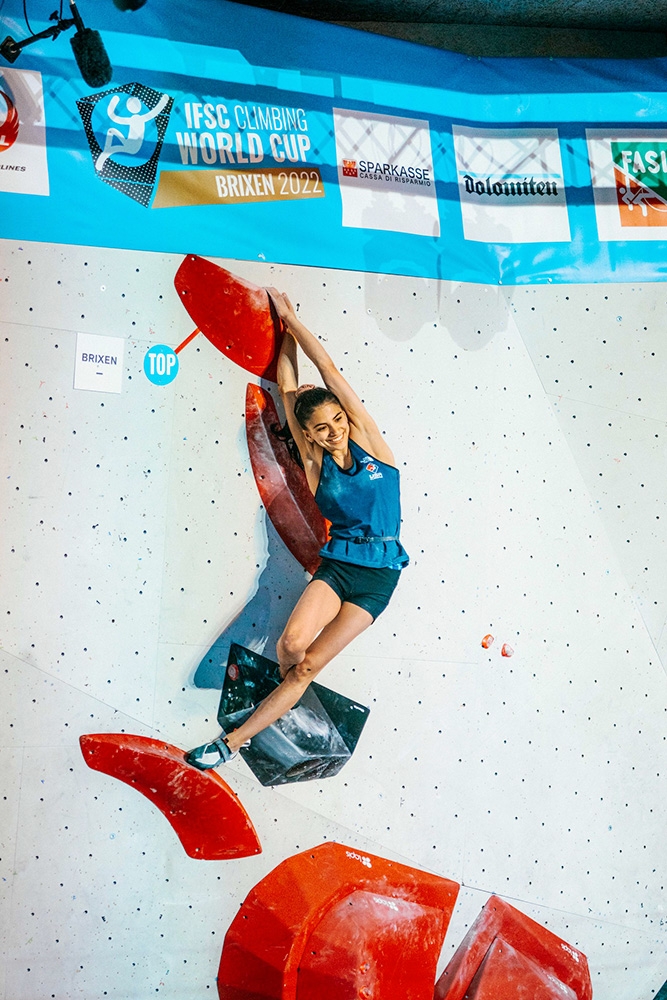
World Climbing is an international, non-governmental, non-profit sports organisation responsible for governing competitive climbing worldwide. It establishes the rules for international events, coordinates the work of national federations and continental bodies, organises World Championships and international series, sanctions official competitions, and trains judges and other technical officials.
Its work extends well beyond the competitions themselves. The federation is also responsible for sporting integrity, anti-doping policies, athlete safety and health, the education of officials, youth development and the growth of Para Climbing. In other words, World Climbing provides a shared framework in which athletes from different countries can compete under the same rules.
It is worth distinguishing World Climbing from other international mountain organisations. The UIAA, for example, has a much broader remit covering mountaineering, mountain activities, ethics and equipment safety standards. World Climbing focuses specifically on competitive climbing and its international sporting calendar. The two organisations are historically connected: competitive climbing developed within the UIAA before gaining its own independent governing body.
More about the federation's current role and history is available on the official World Climbing website.
From the First Competitions to the Creation of the IFSC
Organised sport climbing began to take shape in Europe during the 1980s. One of the key milestones was SportRoccia, first held in 1985 in the Valle Stretta near Bardonecchia, Italy. Strong climbers gathered on natural rock for lead climbing contests. The event attracted spectators and demonstrated that climbing could develop not only as part of mountaineering, but also as a competitive sport in its own right.
SportRoccia returned in 1986, this time in Arco. The finals drew thousands of spectators and attracted television coverage. Gradually, competitions moved onto artificial walls. This was a major step forward: organisers could control the conditions, set routes of different difficulty levels and stage events without depending on the character of a particular cliff or the weather.
An international competition series emerged in 1988, followed in 1989 by the first World Cup events in Lead and Speed. The first World Championship took place in Frankfurt in 1991. Competitive climbing was becoming an international system that required common rules, a calendar, judging procedures and formal representation for national federations.
In 1997, the International Council for Competition Climbing (ICC) was established within the UIAA. Its purpose was to give competitive climbing greater autonomy and the tools needed for further development. The following year saw the formal arrival of a third discipline: Bouldering. After test events in 1998, the first Bouldering World Cup was held in 1999, and the discipline joined the World Championship programme in 2001.
In 2006, the UIAA supported the creation of an independent international federation to govern competitive climbing. On 27 January 2007, 57 national federations founded the International Federation of Sport Climbing (IFSC) in Frankfurt. Competitive climbing now had a dedicated international organisation capable of developing its own sporting system.
The important distinction: the IFSC did not emerge from nowhere in 2007. It was the next stage in a structure that had been developing within the UIAA since 1997, while international competitions had already been taking place since the 1980s.
The Three Main Disciplines of Sport Climbing
World Climbing competitions are built around three main disciplines: Boulder, Lead and Speed. Each has a different format, demands a different combination of physical abilities and tests an athlete's technique and mental preparation in its own way.
Boulder - Solving a Climbing Problem
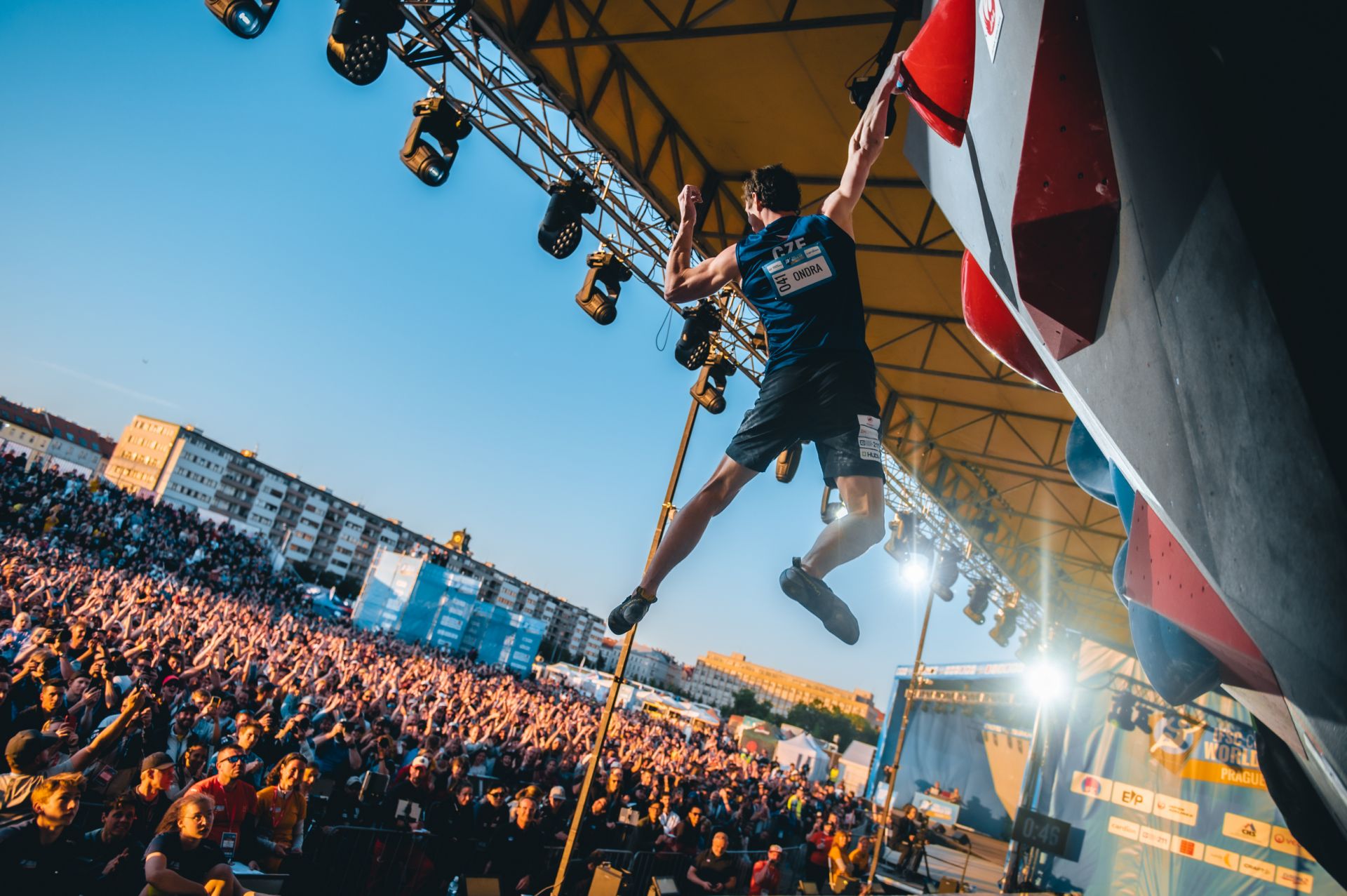
In Boulder, athletes attempt short climbing routes known as problems on relatively low walls equipped with landing mats. No rope is used. The goal is to complete as many problems as possible in as few attempts as possible.
Bouldering often feels like solving a physical puzzle. One problem may depend on explosive power and a dynamic jump; another may require balance, precise footwork or the ability to hold an awkward body position. That is why even a very strong climber may not complete a problem on the first attempt.
Lead - Climbing as High as Possible
In Lead, athletes climb a high route while protected by a rope. At international competitions, the wall is at least 15 metres high, and climbers are usually given up to six minutes for their attempt. The winner is the athlete who reaches the highest point. If a climber initiates a move towards the next hold but fails to establish control on it, a plus sign may be added to the result.
Lead requires endurance, accurate route reading and careful energy management. Climbers must assess the sequence of moves in advance, identify places to rest and avoid spending too much energy on the opening section. On the final metres, finger strength is only part of the equation: tactics and composure matter just as much.
Speed - Racing on a Standardised Wall
Speed is the easiest discipline to explain: two athletes start simultaneously on identical parallel routes, and the first to hit the finish pad wins. The wall is 15 metres high, and the holds and sequence of moves are standardised.
Unlike Boulder and Lead, where routes change from one competition to another, Speed athletes train on the same fixed route. Explosive power, rhythm, coordination and automatic movement patterns are essential. A small mistake or a loss of contact with the wall can decide the race.
Together, the three disciplines show just how varied climbing can be: from solving a complex movement problem to enduring a long route and sprinting up a vertical wall.
How Climbing Became an Olympic Sport
Recognition by the International Olympic Committee was one of the biggest turning points in the history of competitive climbing. In 2016, at the IOC Session in Rio de Janeiro, climbing was approved as an additional sport for the Tokyo 2020 Olympic Games. Before that, it had already appeared in the programme of the Buenos Aires 2018 Youth Olympic Games.
The Olympic debut took place in 2021 at Tokyo 2020. Athletes competed in a combined format bringing together Speed, Boulder and Lead. To win, climbers had to perform at a high level across all three disciplines, despite their very different demands. Slovenia's Janja Garnbret and Spain's Alberto Ginés López became the first Olympic champions.
The format changed at Paris 2024. Speed received its own medal events, while Boulder and Lead remained combined. This allowed the competition to better accommodate specialist athletes and increased the number of medal events.
The next step is planned for Los Angeles 2028. For the first time, Boulder, Lead and Speed will each have separate men's and women's medal events. Six sets of medals will be awarded, and the athlete quota will rise to 76. The Olympic programme will therefore reflect the structure of modern competitive climbing more accurately.
The International Olympic Committee explains the changes to the Olympic format, while the latest LA28 decisions are available through the official World Climbing channels.
Para Climbing - Another Important Direction for the Sport

Para Climbing has become one of the areas that the federation has steadily developed in recent years. The first international competition for athletes with disabilities took place in 2006, before the IFSC was founded. The first IFSC Para Climbing Cup followed in 2008, and Para Climbing joined the World Championship programme in 2011.
Classification in this discipline is about more than simply grouping athletes by diagnosis. The system considers how particular functional impairments affect performance in climbing. This helps create fairer competition categories. They include athletes with visual impairments, limb deficiencies, and limitations in strength, mobility or range of movement.
In 2025, the International Paralympic Committee confirmed Para Climbing's place in the Los Angeles 2028 Paralympic Games. The sport's Paralympic debut is planned to feature eight medal events and 80 athletes - 40 men and 40 women. Competitions will use the Lead format, with sport classes determined by athletes' functional characteristics.
This decision matters beyond elite sport. Paralympic status raises the profile of Para Climbing, creates more opportunities for funding, training and international competition, and helps a wider audience understand how diverse climbing can be. Details are available on the official LA28 website.
Why the IFSC Became World Climbing
On 10 December 2025, the IFSC officially introduced its new name and global identity: World Climbing. National federations had approved the move to a new name earlier, in 2023, and the new visual system became the next stage of that transformation.
The rebrand was not a rejection of the organisation's history. It was intended to present the sport more broadly and make the federation's identity easier to understand for an international audience. The acronym IFSC was familiar mainly to people who already followed competitions. The name World Climbing directly connects the organisation with the global climbing community - athletes, national federations, coaches, judges, organisers and fans.

The new logo is built around an image of a world formed from climbing holds and interwoven routes. Its colour system represents the sport's three main disciplines: Boulder, Lead and Speed. The design highlights the way the federation brings different styles of competition together within one international community.
Competition names changed as well. From the 2026 season, the leading international circuit became the World Climbing Series, replacing the IFSC World Cup name. The World Climbing Para Series is also being developed. This is more than a change of logos on event banners: the federation is gradually introducing its new identity across the calendar, broadcasts, digital platforms and the work of continental organisations.
How the International Structure Works
World Climbing does not operate separately from national sports structures. Its members are national federations that represent climbing in their respective countries. They register athletes for international competitions, develop national calendars, build teams and take part in the work of the international federation's governing bodies.
At continental level, five bodies operate: World Climbing Africa, Asia, Europe, Oceania and Pan America. They help coordinate regional championships, series and the development of climbing across their respective continents. This structure makes it possible to combine unified international rules with the different sporting realities of each region.
The General Assembly is the key forum for national federation representation and major decisions. The Executive Board provides leadership and implements the approved policies. Dedicated commissions work on technical rules, judging, Para Climbing, medical matters, anti-doping and other areas.
What Lies Ahead for World Climbing?
Several developments will shape the federation's next few years. The first is preparation for LA28, where all three disciplines will have separate medal events. The second is the Paralympic debut of Para Climbing, which will open a new chapter in the history of international climbing. The third is the expansion of the competition calendar and the involvement of more countries and athletes.
The balance between elite competition and the wider climbing culture will be just as important. International events bring attention to the sport, but long-term development begins at national and local level: in youth programmes, clubs, climbing gyms, coaching systems and accessible facilities.
World Climbing has inherited almost four decades of international competition history - from the first SportRoccia events to today's global series. Its new name reflects an ambition to make climbing an even more visible global sport. The coming Olympic and Paralympic cycles will show how successfully the federation can turn that growth into lasting development.
Climbing Shoes - A Small Symbol of a Big Passion
Some pieces of climbing equipment are instantly recognisable even outside the climbing gym. Climbing shoes are one of them. Their distinctive shape has become a symbol of precision, technique and a particular way of interacting with rock: sometimes an entire move depends on how confidently the foot can stand on a tiny hold.
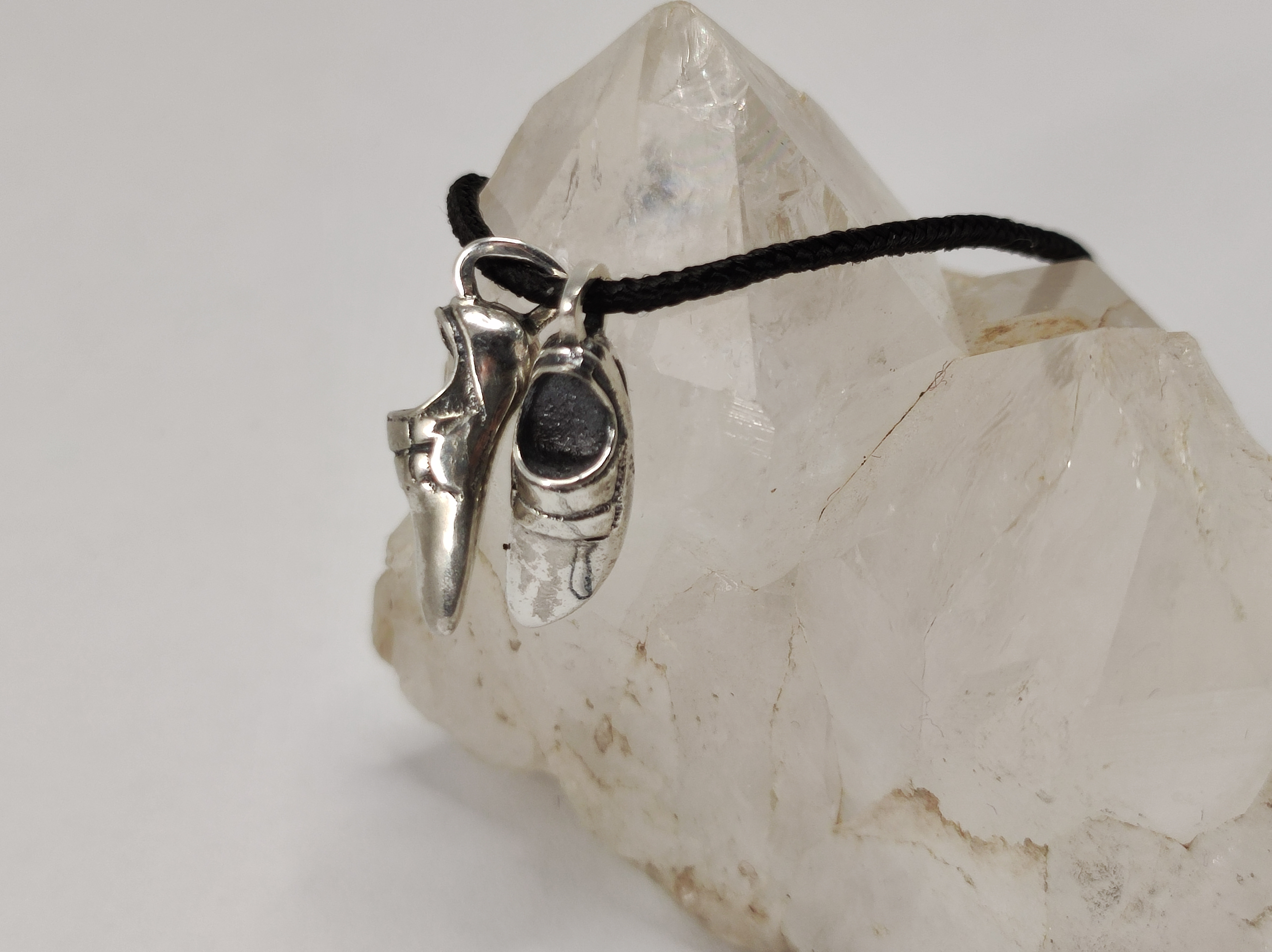
Climbing Shoes Pendant by Travel Jewelry
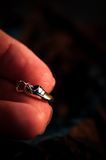
We translated the recognisable shape of a climbing shoe into a piece of jewellery made from 925 sterling silver with an oxidised finish. The pendant is designed for people who spend time at climbing gyms or on outdoor routes and want a small reminder of their passion even when they are away from the wall.
One important detail: the left and right climbing shoes are sold separately. You can choose a single pendant or put together a pair.
Explore the Climbing Shoes pendant
Related Articles
- Climbing Shoes: History, Evolution and Modern Types
- The Climbing Carabiner: The Story of One of the Most Important Inventions in Mountaineering
- UIAA: History, Standards and Safety in Mountain Sports
- What to Gift a Rock Climber: Ideas for People Who Love the Vertical World
- The Tyrol Declaration and the Ethics of Modern Mountain Sports